Maddy summaryHB 372 amends New Mexico's Off-Highway Motor Vehicle Act to update vehicle definitions and registration fees. It sets a $17 registration fee (with $5 covering division costs and $12 going to a motor vehicle fund) and an optional up to $40 user fee for off-highway vehicles like ATVs, snowmobiles, and recreational off-highway vehicles. The bill also clarifies nonresident permit fees ($17 for two years) and updates safety rules, such as prohibiting operation under the influence and restricting vehicle use near livestock structures. These changes directly affect off-highway vehicle users and improve fee enforcement and fund distribution systems.
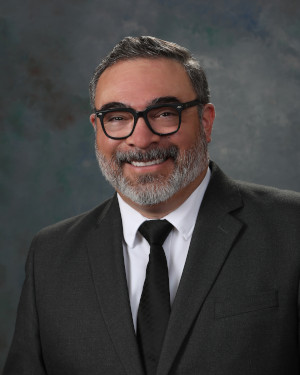
Rep. Ray Lara
Sponsored bills
Maddy summaryHB 277 modifies how much local funding school districts must contribute for state-funded building projects. It specifically reduces the required local share for small, high-poverty districts with limited ability to raise funds through property taxes. To qualify, districts must have residential tax rates of $8 or less per $1,000 valuation, fewer than 800 students, and over 70% of students eligible for free/reduced lunch. The bill adjusts the existing funding formula to provide greater state support to these districts, making capital projects more accessible. This change directly affects struggling school districts that cannot meet standard local contribution requirements.
Maddy summarySB 58, the Child Care Facility Licensing Act, requires child care facilities in New Mexico serving more than four nonresident children to obtain a license from the Early Childhood Education and Care Department. License-exempt facilities (operating in a home setting for four or fewer children) may choose to register with the department instead, allowing them to access federal food programs and child care assistance. The department will inspect facilities, enforce compliance through rules on safety and operations, and can revoke licenses or impose penalties for violations, especially those involving child safety risks. This bill establishes clear licensing requirements, registration options, and enforcement mechanisms to ensure child care facility standards.
Maddy summaryHB 469 restructures the composition of New Mexico's Border Authority, expanding it from seven to nine members with specific representation requirements. The new structure includes two state department secretaries, three private-sector members with defined professional backgrounds (e.g., accounting, logistics, or economic development), and representatives from municipalities/counties near ports of entry. It also establishes professional qualification standards for the Executive Director position and amends definitions related to border development projects. The bill directly affects how the Border Authority governs infrastructure projects at ports of entry, including transportation systems, commercial facilities, and utility infrastructure.
Maddy summaryThis House Memorial requests legislative committees to study financial and governance issues related to New Mexico's spaceport laws (the Regional Spaceport District Act and Spaceport Development Act). It specifically examines whether counties that contribute funds to spaceport development have fair representation in decision-making and whether current rules allow counties to avoid financial responsibility without consent. The study would assess imbalances in contributions versus control, potentially leading to future legislative changes. It does not change existing laws but aims to ensure fairer cost-sharing and governance for affected counties and the spaceport authority.
Maddy summaryHouse Memorial 44 requests the Legislative Education Study Committee to form a working group during the 2025 interim to study rising health insurance premiums for New Mexico school employees and the current contribution structure under the Public School Insurance Authority Act. The act currently requires school districts to cover 80% of premiums for employees earning under $50,000 annually, 70% for $50,000-$60,000, and 60% for $60,000+. The working group would include state agencies, the Public School Insurance Authority, and school district representatives to analyze these costs. The memorial does not enact new policy but seeks a study to inform future decisions, though it was postponed indefinitely in June 2025.
Maddy summaryHB 537 requires New Mexico's public colleges and universities (excluding specialized institutions like the military academy) to appoint a full-time staff member as a "homeless student liaison" starting in 2026. The liaison must identify students experiencing homelessness (using FAFSA data), connect them with campus and community resources for basic needs, assist with financial aid applications, and help manage coursework. The bill also mandates training for faculty/staff to recognize homelessness and requires the Higher Education Department to administer annual student surveys on homelessness. It appropriates $500,000 for training and survey costs in fiscal year 2026.
Maddy summaryHB 144 establishes a regular riding circuit for Otero County magistrates to hold court sessions in Chaparral, amending the statute to require the two magistrates in Otero District to rotate court operations to Chaparral on a scheduled basis. This procedural bill directly affects the Otero County magistrates' court system by formalizing court visits to Chaparral, which is a community currently served by the Alamogordo-based court. The bill was introduced in 2025 but was postponed indefinitely by the legislature on June 3, 2025. It does not change substantive law but adjusts court scheduling logistics.
Maddy summaryHB 157 creates new licensing requirements for school administrators in New Mexico, including site administrators (such as principals and assistant principals) and superintendents. The bill sets higher qualifications and standards for these licenses and establishes a new School Administrator Development Act to guide training and certification. It also delays the repeal of existing administrator licenses, allowing current license holders to continue working while transitioning to the new system. This bill directly affects school administrators, school districts, and state agencies that employ them.
Maddy summaryHB 137 creates the Strategic Water Supply Program to reduce New Mexico's reliance on fresh water by funding projects that reuse treated brackish groundwater (highly salty groundwater) or treated oil/gas "produced water" (a byproduct of drilling). It establishes a dedicated fund financed by a 5-cent fee per barrel on oil/gas produced water, which will support grants and contracts for eligible water reuse projects. To qualify, projects must meet environmental standards, provide financial guarantees, advance economic development goals, and include a community benefits plan detailing public engagement. The program directly affects oil/gas operators (via the fee), state water agencies (DE, EMNRD, State Engineer), and communities where water reuse projects are implemented.