Maddy summaryThis bill, known as the Guarantee Access to Arts and Music Education Act of 2026, amends the Elementary and Secondary Education Act to expand federal funding for arts and music programs in public schools. It directly affects school districts and educators by allowing Title I funds to support sequential, standards-based instruction in dance, media arts, theater, visual arts, and music. The legislation requires these programs to be taught by certified educators and aligns them with state academic standards to ensure quality instruction. Additionally, the bill allows targeted assistance schools to use federal funds for supplies, professional development, and equipment needed for arts and music education.
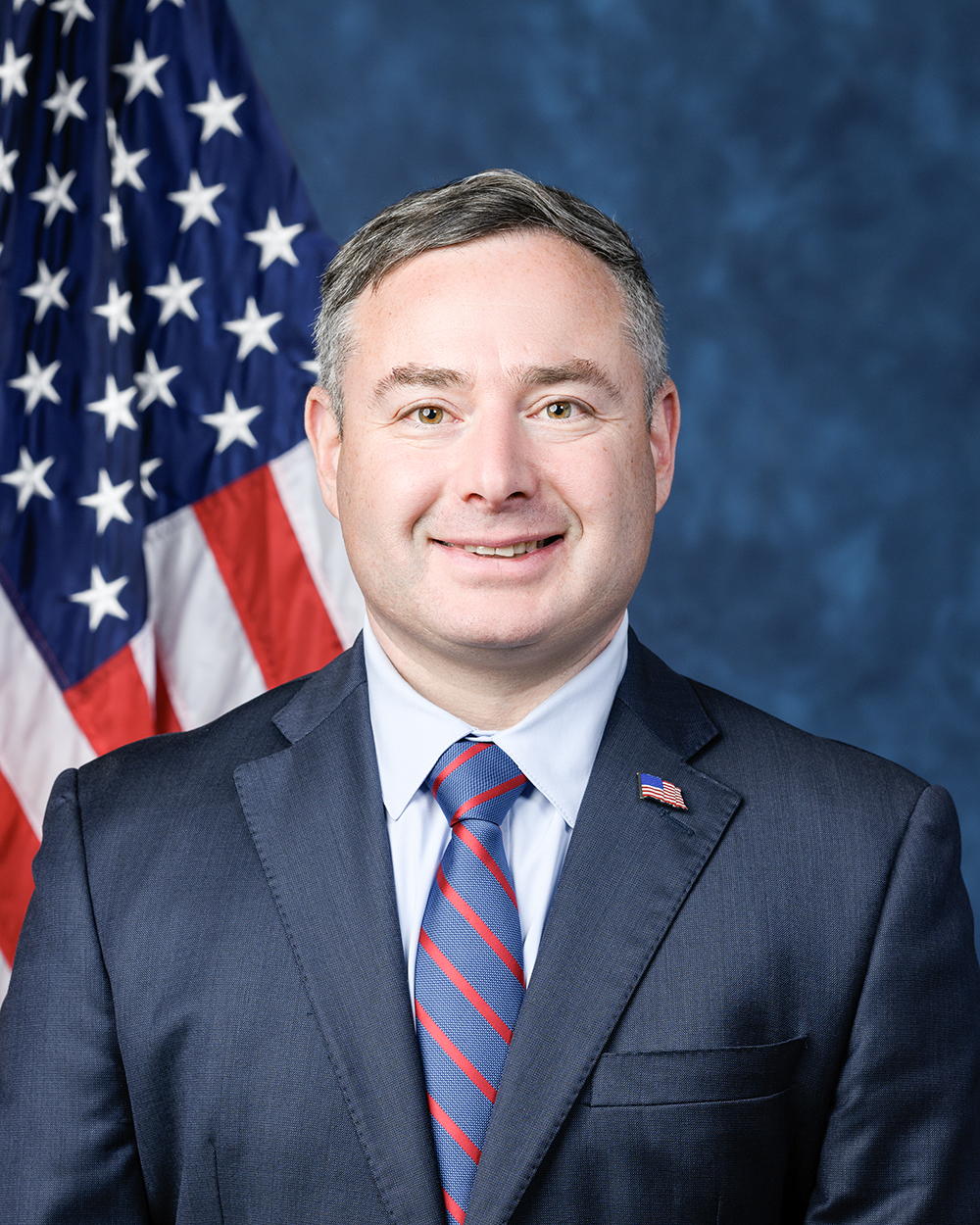
Rep. Eugene Simon Vindman
Sponsored bills
Maddy summaryThis bill, the PrEP Access and Coverage Act of 2026, requires most health insurance plans to cover HIV prevention medication without charging patients any out-of-pocket costs. It directly affects people with private insurance, government health programs like Medicare and Medicaid, military health care, and the Indian Health Service. The law mandates that insurance companies cannot require pre-approval for these medications, cannot charge deductibles or copayments for them, and cannot deny or charge higher premiums for life, disability, or long-term care insurance based on someone taking HIV prevention medication. The bill also creates a new public education campaign to increase awareness about HIV prevention options and provides federal funding to states and community organizations to expand access to these services.
Maddy summaryThe INCREASE Housing Affordability Act creates a new tax credit for converting commercial buildings (like offices) into residential housing. Property owners who convert eligible buildings can claim a tax credit equal to 15% of qualified conversion costs, with limits of $200,000 per residential unit or $10 million per building. The bill also provides bonus credits for projects with rent-restricted units for lower-income residents (10-20% more credit) and for paying prevailing wages (15% more credit). To qualify, buildings must have been nonresidential for at least 15 years and undergo substantial conversion (with expenditures exceeding adjusted basis or $15,000).
Maddy summaryThis bill, known as the Direct File Act of 2026, would establish a government-run online system allowing taxpayers to prepare and file their individual income tax returns for free. The legislation prohibits the Treasury Department from entering into agreements that restrict its ability to provide tax preparation or filing services, and it voids any existing contracts with such restrictions. The program would use IRS data to simplify filing, include customer support, be available in multiple languages, and allow users to file even if they are not required to. It also enables taxpayers in participating states to file state and local returns alongside their federal returns, with funding provided to states that meet certain standards.
Maddy summaryThe DISCLOSE Act of 2026 aims to increase transparency in election spending and prevent foreign influence. It expands the ban on foreign money to cover federal, state, and local elections, including ballot initiatives and judicial nominations, and criminalizes using corporations to conceal these funds. The bill mandates that organizations spending over $10,000 on campaign-related activities, such as independent expenditures or judicial nomination advocacy, disclose their beneficial owners and top donors. Additionally, it establishes new "Stand By Every Ad" disclaimers for political communications, requiring the highest-ranking official to approve the message and, for certain ads, list their top funders. These provisions directly affect non-candidate organizations, individuals involved in political and judicial nomination spending, and foreign nationals.
Maddy summaryHR 7736, the RELIEF Act, requires U.S. Customs and Border Protection to refund tariffs collected under the International Emergency Economic Powers Act (IEEPA) on imports entered on or after January 1, 2025. It directly affects importers of record by mandating automatic refunds within 90 days of the bill's enactment, without requiring them to submit applications or protests. The bill directs Customs to use existing data to calculate and disburse refunds for all affected tariff collections, including entries involving goods withdrawn from warehouse for consumption. This policy change eliminates the need for importers to seek refunds through separate processes, streamlining the recovery of overpaid duties.
Maddy summaryHRES 1080 is a symbolic resolution recognizing and celebrating Black History Month 2026, focusing on its theme "A Century of Black History Commemorations." It highlights historical figures and events central to Black history, including Carter G. Woodson’s founding of Negro History Week (the precursor to Black History Month), Juneteenth, and key moments like the 1865 Charleston commemoration. The resolution emphasizes how Black history commemorations counter historical erasure and affirm Black contributions to U.S. history, referencing figures like Mary McLeod Bethune and W.E.B. Du Bois. As a ceremonial resolution, it has no binding effect but aims to raise awareness of Black achievements through official recognition.
Small Business Artificial Intelligence Advancement Act This bill directs the National Institute of Standards and Technology (NIST) to develop or identify resources for small businesses to address concerns relating to the use of artificial intelligence (AI). Resources must be generally applicable, technology neutral, and based on relevant voluntary international standards, among other requirements. NIST must coordinate with the Small Business Administration with respect to the distribution of these resources. NIST must also review and update the resources at least biennially.
Maddy summaryHR 2969, the Finding ORE Act, authorizes the U.S. Secretary of the Interior to enter into memorandums of understanding (MOUs) with partner countries that supply critical minerals and rare earth elements. The bill requires these MOUs to include cooperative mapping of mineral reserves, give U.S. or allied foreign country companies the "right of first refusal" for development, and facilitate U.S. private-sector investment through financial institutions like the Development Finance Corporation. It also mandates data protection for mapping information against unauthorized access by non-partner or non-allied countries. This legislation directly affects partner foreign countries (mineral sources), U.S. companies, and the U.S. Geological Survey, focusing on securing supply chains through international scientific collaboration.
Law-Enforcement Innovate to De-Escalate Act This bill removes less-than-lethal projectile devices (e.g., certain TASERs) from regulation under the Gun Control Act. The term less-than-lethal projectile device means a device that (1) is not designed or intended to expel (and may not be readily converted to discharge) commonly used ammunition or projectiles exceeding a velocity of 500 feet per second; (2) is designed and intended to be used in a manner not likely to cause death or serious bodily injury; and (3) does not accept (and cannot be readily modified to accept) an ammunition feeding device. The bill also requires the Bureau of Alcohol, Tobacco, Firearms and Explosives to determine whether a device satisfies the definition of a less-than-lethal projectile device within 90 days of a request.