

In committee Sep 24, 2026
0 co-sponsors
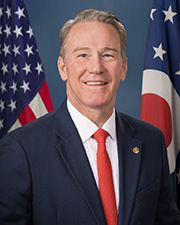
Sen. Jon Husted
Total votes
440
all sessions
Attendance
100%
of floor votes
Higher than 92% of chamber peers
With party
97%
of cast votes
Near the chamber average
Bipartisan score
1%
crosses aisle rarely
Near the chamber average
Sponsored
219
bills & resolutions
Lower than 91% of chamber peers
Committees
17
assignments
219 bills and resolutions
Sponsored bills
Total
219
Primary
56
Co-sponsor
163
This page
219
matching current filters
A resolution honoring the life, service, and legacy of the Honorable Jon Llewellyn Kyl, former Senator for the State of Arizona.
Maddy summaryThis resolution formally honors the life, service, and legacy of Jon Llewellyn Kyl, a former U.S. Senator from Arizona who passed away at age 84. It details his career highlights, including his time in the House of Representatives, his long tenure in the Senate, and his work on issues such as water policy, national security, and crime victims' rights. The bill directs the Secretary of the Senate to share this tribute with the House of Representatives and Kyl's family, while also ordering the Senate to adjourn for the day as a mark of respect.
Passed Sep 23, 2026
1 co-sponsor
Connected Vehicle Security Act of 2026
Maddy summaryThe Connected Vehicle Security Act of 2026 restricts the importation, sale, and use of connected vehicles and related technology from China, Russia, Iran, and North Korea to protect national security. Starting in 2027, the bill generally bans these vehicles if they originate from or are controlled by these countries, with separate restrictions on software and hardware taking effect in 2030. The Secretary of Commerce is authorized to issue specific exemptions for items that do not pose a security risk and must publish a list of approved products. The law also requires companies to submit declarations confirming their vehicles comply with the rules and imposes heavy fines for violations.
TechnologyOpposes TechnologyBill restricts importation, sale, and use of connected vehicles and related technology from specific countries, limiting market access and technological availability.
TransportationOpposes TransportationBill restricts importation, sale, and use of connected vehicles from specific countries, limiting vehicle availability and technology access.
In committee Sep 22, 2026
1 co-sponsor
A resolution designating the week of September 14 through September 20, 2026, as "Interscholastic Athletic Administration Week".
Maddy summaryThis resolution designates the week of September 14 through September 20, 2026, as Interscholastic Athletic Administrators Week to honor the contributions of school sports leaders. It formally recognizes these administrators as essential educational figures who support student safety, academic success, and personal development. The Senate also commends the National Interscholastic Athletic Administrators Association for its work in providing professional training and advocacy for this group.
In committee Sep 17, 2026
0 co-sponsors
In committee Sep 16, 2026
0 co-sponsors
TEAM USA Act
Maddy summaryThe TEAM USA Act would amend the Higher Education Act to limit the number of international student athletes on varsity sports teams at colleges that receive federal financial assistance. Under this bill, no more than 20 percent of a team's official roster could consist of international student athletes, or just one such athlete if the team has fewer than ten members. The legislation defines an international student athlete as someone who is not a U.S. national or permanent resident, or who receives athletic financial aid from a foreign Olympic or Paralympic committee. Institutions would be required to report their roster demographics annually to the Secretary of Education and relevant athletic associations, with these rules taking effect for the 2029-2030 academic year.
EducationOpposes EducationThe bill limits international student participation in college sports, potentially restricting educational access for certain students, which weakens educational opportunities.
ImmigrationOpposes ImmigrationThe bill would restrict the number of international student athletes allowed on college sports teams, limiting opportunities for non-U.S. nationals or permanent residents.
In committee Sep 14, 2026
0 co-sponsors
A bill to designate the facility of the United States Postal Service located at 201 East Grant Avenue in Georgetown, Ohio, as the "Ulysses S. Grant Post Office Building".
This bill designates the facility of the United States Postal Service located at 201 East Grant Avenue in Georgetown, Ohio, as the "Ulysses S. Grant Post Office Building".
In committee Sep 14, 2026
0 co-sponsors
No Fentanyl on Social Media Act of 2026
Maddy summaryThis bill requires the Federal Trade Commission (FTC) to produce a report within one year of enactment, analyzing how minors access fentanyl (including fake pills) through social media platforms. The report must cover the prevalence of this access, health and safety risks to minors, how sellers use platform features to market drugs, and current measures by platforms and law enforcement. It also mandates consultation with stakeholders like parents, platforms, and medical experts before publishing. The bill does not create new laws or penalties but focuses on gathering data to inform future policy decisions.
In committee Sep 14, 2026
0 co-sponsors
Foreign Robocall Elimination Act
Maddy summaryThe Foreign Robocall Elimination Act establishes a taskforce to address unlawful robocalls made into the United States from foreign countries. The taskforce, composed of government agency representatives and private sector experts from telecommunications and related industries, must produce a report within 360 days detailing the scale of foreign-originating robocalls, their financial impact, and solutions like improved caller ID authentication technology and international cooperation. The report will specifically study call origins, identity theft losses, enforcement strategies, and incentives for foreign countries to collaborate on combating these calls. This bill directly affects federal agencies (including the FCC, FTC, and Department of Justice) and the telecommunications industry by mandating a collaborative effort to develop actionable recommendations for Congress.
Passed Aug 10, 2026
1 co-sponsor
National Plan for Epilepsy Act
National Plan for Epilepsy Act This bill requires the Department of Health and Human Services (HHS) to establish a national plan, form an advisory council, and take other actions to address epilepsy. The requirements sunset on December 31, 2035. Specifically, the bill requires HHS to carry out a National Plan for Epilepsy to prevent, diagnose, treat, and cure epilepsy. In carrying out the plan, HHS must implement activities such as coordinating research and services across all federal agencies and soliciting public comments. Also, HHS must establish an Advisory Council on Epilepsy Research, Care, and Services. The advisory council must report to HHS and Congress every two years with an evaluation of federally funded efforts. Additionally, HHS must annually report to Congress with recommended actions based on its assessments of the nation’s progress on epilepsy.
Passed Aug 10, 2026
1 co-sponsor
Ask Maddy
·
AI policy assistant
Ask Maddy about Jon Husted
Scope: new-hampshire
Hi! I can help you understand Jon Husted's legislative record. What would you like to know?
Try one of these
i
Maddy answers using official bill text and legislative records. Always verify before sharing.
Sources cited inline