Issue · Healthcare

Healthcare (Medical Licensing)

Every healthcare bill, vote, and legislator stance in New Hampshire, automatically classified by Maddy, our AI policy reader.

Total bills
10
2026 Regular Session
Top supporter
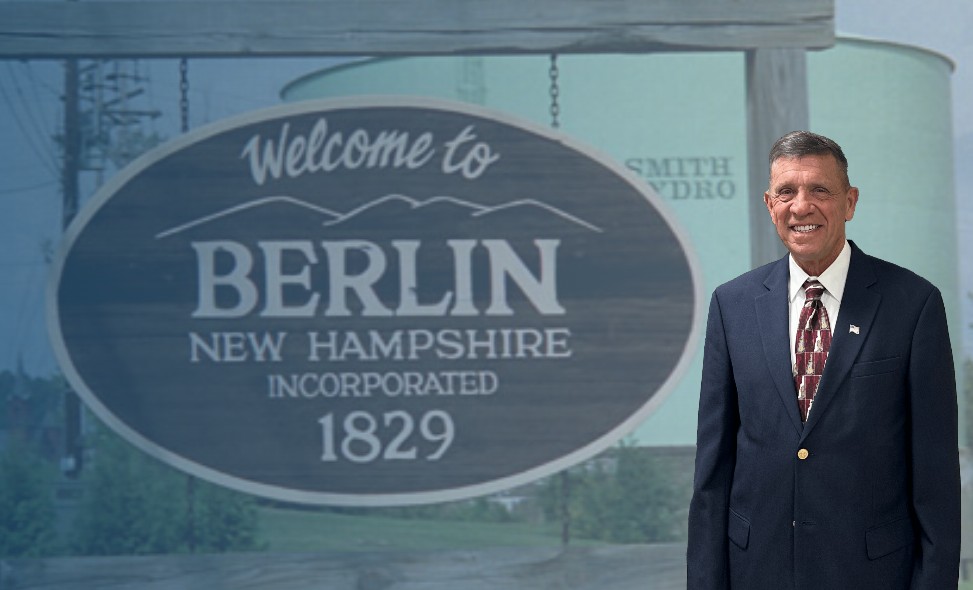
Marc Tremblay
100% support rate
Top opponent
Allan Howland
0% support rate
Ranked legislators
10
5 support · 5 oppose
Key legislators

Who's moving medical licensing in New Hampshire

Legislators moving medical licensing in New Hampshire
Legislator Party Stance Support rate Votes
Marc Tremblay
Marc Tremblay House · District Coos 5
R
Strong +
100% 4
Jerry Stringham
Jerry Stringham House · District Grafton 3
D
Support
75% 4
Mark McLean
Mark McLean House · District Hillsborough 15
R
Support
75% 4
Pete Morency
Pete Morency House · District Coos 5
R
Support
75% 4
Rich Lascelles
Rich Lascelles House · District Hillsborough 14
R
Support
75% 4
Allan Howland
Allan Howland House · District Strafford 20
D
Strong −
0% 4
David Preece
David Preece House · District Hillsborough 17
D
Strong −
0% 4
Dennis Mannion
Dennis Mannion House · District Rockingham 25
R
Strong −
0% 4
Heather Baldwin
Heather Baldwin House · District Grafton 4
D
Strong −
0% 4
Judy Aron
Judy Aron House · District Sullivan 4
R
Strong −
0% 4
Showing 10 of 10 bills

All healthcare bills

signed · New Hampshire · House Jul 10, 2026

HB 1269: relative to qualifications to practice acupuncture.

HB 1269 updates New Hampshire's acupuncture licensing rules to make practice more accessible. It revises educational requirements to allow an associate's degree or 60 college credits instead of a bachelor's degree for licensure, and permits out-of-state practitioners with comparable qualifications to practice. The bill adds a certified acupuncture detoxification specialist to the licensing board and requires annual supervision via phone or electronic means (not in-person) for these specialists during their first two years of certification. These changes take effect 60 days after enactment.
Sub-Topics Medical Licensing
passed both · New Hampshire · House Jun 4, 2026

HB 751: establishing a committee to study licensure of outpatient substance use disorder treatment facilities, authorizing parents to enroll their children in any public school in the state, and creating a limited exemption from parental consent required for certain recordings under the parental bill of rights.

This bill requires outpatient substance use disorder treatment facilities in New Hampshire to obtain certification from the Department of Health and Human Services. It establishes a certification process for facilities providing outpatient services like intensive outpatient, partial hospitalization, and medically managed outpatient treatment, while exempting nonclinical recovery support services and certain other providers. Facilities will pay certification fees to a new "substance use treatment certification fund" that will cover the costs of the certification program. The bill also requires the Department to maintain a public online list of certified facilities and to create a dedicated behavioral health specialist position within the Ombudsman's office to investigate complaints about treatment facilities.
vetoed · New Hampshire · House Apr 9, 2026

HB 349: relative to the practice of optometry and authorization to perform ophthalmic laser procedures.

HB 349 authorizes licensed optometrists who meet specific board-certification criteria to perform three eye laser procedures: laser capsulotomy, laser trabeculoplasty, and laser peripheral iridotomy. It directly affects optometrists seeking to expand their scope of practice, requiring them to complete approved education, training, and experience before performing these procedures. The bill mandates the Board of Registration in Optometry to establish rules for certification, including minimum training standards, proctoring requirements, and outcome reporting for these procedures. The law takes effect 60 days after passage, with no new state funding provided.
in committee · New Hampshire · Senate Feb 12, 2026

SB 452: enabling health care providers to offer certain complementary and alternative health care services.

SB 452 creates a new legal framework allowing unlicensed practitioners to offer certain complementary and alternative health care services (like acupuncture or nutritional counseling not covered by standard medical practice) without needing state licensing. It directly affects unlicensed providers and their patients, requiring providers to disclose their unlicensed status, share qualifications, and obtain written consent before offering services. The bill prohibits providers from performing surgery, prescribing drugs, manipulating spines, or advising patients to stop licensed medical treatments. It also mandates clear client disclosures about the provider's lack of licensure and maintains existing licensing requirements for standard medical practitioners.
Sub-Topics Medical Licensing
failed · New Hampshire · Senate May 14, 2026

SB 640: relative to the use of artificial intelligence to provide services requiring a professional license.

SB 640 prohibits using artificial intelligence to provide services requiring a professional license (such as psychology, mental health, or substance abuse counseling) unless those services are delivered by a licensed professional. The bill specifically bans AI from replacing human professionals in direct client interactions, though it allows AI for administrative tasks like scheduling or billing. It also authorizes the Office of Professional Licensure to collect fees to cover enforcement costs for violations. This applies to all licensed professions in New Hampshire, with additional specific rules for psychologists and mental health practitioners.
failed · New Hampshire · Senate Apr 23, 2026

SB 457: relative to the licensing of physicians who graduated from medical schools outside of the United States or Canada.

SB 457 creates a pathway for international physicians trained outside the U.S. or Canada to obtain a temporary license to practice medicine in New Hampshire. To qualify, applicants must provide proof of completed residency or 5+ years of practice abroad, good standing with their home country's medical regulator, English fluency, U.S. work authorization, and a job offer at a healthcare facility with an Accreditation Council for Graduate Medical Education-accredited residency program. Temporary license holders may only work at such facilities and must maintain good standing for two years to receive a full, unrestricted license. The bill does not require new state funding or create additional positions.
signed · New Hampshire · House Jul 16, 2026

HB 1469: relative to the licensing requirements for massage therapy establishments.

HB 1469 requires massage therapy businesses employing more than one therapist to obtain a state license and undergo regular inspections by the Office of Professional Licensure and Certification (OPLC). The bill establishes new health and safety standards for these businesses, including requirements for direct supervision by licensed therapists and procedures for license renewal and disciplinary actions. It also adds compensation for members of the massage therapists' advisory board and creates a new investigative paralegal position within the OPLC, with funding provided for this role. This legislation directly affects massage therapy businesses, the OPLC, and the advisory board by expanding regulatory oversight and operational requirements.
signed · New Hampshire · House Jul 20, 2026

HB 1772: relative to prescribing ibogaine for investigational use only and adopting the physician associate licensure compact.

HB 1772 creates a New Hampshire grant program within the Department of Health and Human Services to fund state participation in a multistate clinical trial consortium studying ibogaine as a potential treatment for substance use disorder and other neurological or mental health conditions. The bill appropriates $1 (likely a typo for $1 million) to support this effort, requiring grant recipients to be New Hampshire-based entities with proven expertise in neurological/mental health research, matching funds from non-state sources, and FDA-approved trial protocols (including an IND application and breakthrough therapy designation request). Entities must submit quarterly progress and financial reports, and the state must verify matching funds before disbursing grant money. This bill directly affects eligible research institutions participating in the consortium, not the general public.
in committee · New Hampshire · House Mar 5, 2026

HB 1052: relative to qualifications for licensure as a LADC, or licensed alcohol and drug counselor.

HB 1052 amends New Hampshire's licensing requirements for Licensed Alcohol and Drug Counselors (LADCs) by adding a new pathway to licensure. It allows individuals with an internationally certified alcohol and drug counselor credential and 6,000 hours of supervised work experience to qualify for LADC licensure without needing an associate's or bachelor's degree in a related field. This change specifically removes the higher education requirement for applicants using this pathway, as outlined in the bill's amendment to RSA 330-C:17. The bill takes effect 60 days after passage and directly affects professionals with international certification and substantial work experience who lack the standard educational qualifications.
Sub-Topics Medical Licensing
died · New Hampshire · House Aug 20, 2026

HB 1572: relative to licensure as a master licensed alcohol and drug counselor.

HB 1572 modifies licensing requirements for three professions in New Hampshire: master licensed alcohol and drug counselors, recreational therapists, and speech-language assistants. It adds a new education path requiring 60 hours of graduate coursework (in fields like clinical psychology or social work) plus five years of existing New Hampshire licensure for alcohol/drug counselors. For recreational therapists, it specifies that a baccalaureate degree must include "therapeutic recreation" as a major. Speech-language assistants can now qualify with an accredited associate's degree program equivalent to a speech-language pathology program. These changes directly affect individuals seeking or renewing licenses in these occupations.
Sub-Topics Medical Licensing