

Maddy summaryHR 4123, the FIT Procurement Act, modernizes federal information and communications technology (ICT) procurement by requiring new training for federal acquisition staff and streamlining processes to boost small business participation. The bill mandates a cross-functional ICT training program covering cloud computing, AI, cybersecurity, and commercial tech adoption, with learning objectives focused on outcome-based contracting and reducing waste. It increases simplified acquisition thresholds ($250,000 to $500,000) and micro-purchase limits ($10,000 to $25,000) to reduce administrative barriers. The Act also directs the Comptroller General to assess small business participation in federal tech contracts and requires agencies to eliminate unnecessary procedural hurdles for small businesses. These changes directly affect federal procurement staff, small businesses competing for contracts, and executive agencies managing ICT acquisitions.
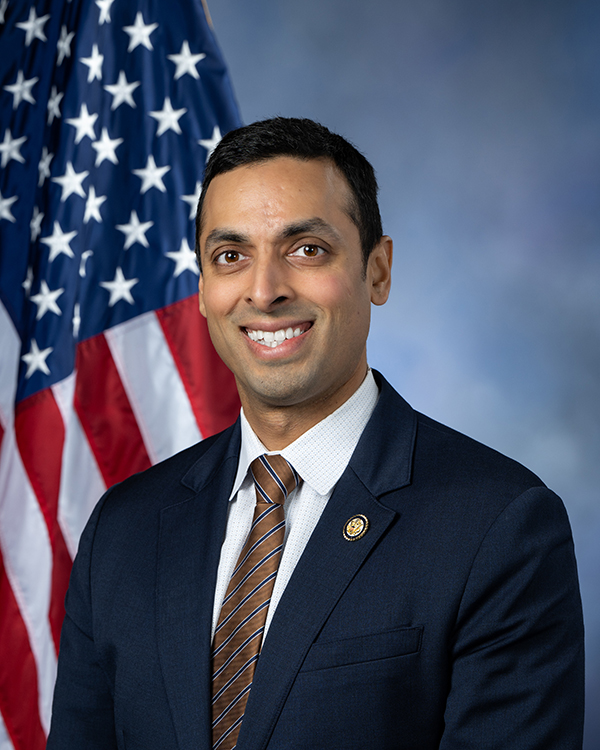
Rep. Suhas Subramanyam
Sponsored bills
Maddy summaryThis bill establishes the INCLUDE Project at the National Institutes of Health (NIH) to advance research on Down syndrome and related health conditions. It requires NIH to fund high-risk studies on trisomy 21, support inclusive clinical trials for people with Down syndrome across all ages, and investigate co-occurring conditions like Alzheimer’s disease and autoimmunity. The law mandates NIH coordination across its institutes, consultation with patient advocates, and biennial reports to Congress detailing funded research and its real-world applications. The project directly affects individuals with Down syndrome, their families, and medical researchers, aiming to improve diagnosis, treatment, and quality of life through targeted scientific efforts.
Maddy summaryThis bill allows craft distilleries to ship distilled spirits directly to consumers in other states, provided both the sending and receiving states permit such transactions. To qualify, the distillery must be independently owned and produce no more than 250,000 gallons annually, while the shipment must be for personal use only and marked to require an adult signature upon delivery. The law also mandates that buyers affirm they are of legal age at the time of purchase, either by showing identification in person or confirming it online or over the phone. If these conditions are not met, state attorneys general can pursue civil actions under existing federal law. The legislation aims to clarify and enable interstate shipping rules specifically for small, independent alcohol producers.
Maddy summaryThis bill requires Medicare Advantage plans to implement electronic pre-approval systems for medical services by 2028 and meet transparency reporting standards starting in 2027. Plans must publicly report data on approval/denial rates, appeal outcomes, response times, and technology use for pre-approval requests, including details on how denials relate to clinical criteria. It establishes a 24-hour response timeframe for certain requests and mandates annual reviews of pre-approval requirements based on data and input from seniors and providers. The law directly affects Medicare Advantage plans, seniors enrolled in these plans, and healthcare providers who submit pre-approval requests. These changes aim to make the pre-approval process faster, more transparent, and more accountable for seniors seeking covered medical services.
Maddy summaryThis resolution expresses support for designating July 10th as Journeyman Lineworkers Recognition Day to honor the workers who maintain the nation's electrical grid. The bill specifically recognizes the dangerous conditions these employees face, such as working at heights near live power lines and responding to disasters like hurricanes and wildfires. It also commemorates Henry Miller, the first president of the International Brotherhood of Electrical Workers, who died on July 10, 1896, while performing his duties. Ultimately, the measure encourages the public to observe this day with reflection on the contributions of lineworkers.
Maddy summaryThe Department of Homeland Security Accountability Act of 2026 requires the Secretary of Homeland Security to report any serious injury or death occurring in DHS custody or resulting from DHS actions within 72 hours to Congress and local representatives. These notifications must include detailed information such as the date and location of the incident, the nationality of the individual involved, specific use of force tactics, and whether medical assistance was provided. The bill also mandates that the Department conduct independent investigations for these incidents, which must include reviewing video footage, placing involved employees on administrative leave, and ensuring autopsies and medical reviews are performed. All investigation reports must be submitted to Congress within seven days of completion, and video recordings of the individuals involved must be preserved for at least five years.
Maddy summaryThe Federal Jobs for STARs Act of 2026 aims to increase hiring opportunities for individuals in the federal workforce who have gained skills through alternative routes like military service, apprenticeships, or community colleges rather than traditional four-year degrees. It requires the Office of Personnel Management to restrict agencies from mandating bachelor's degrees unless absolutely necessary and to create a specific section on federal job websites dedicated to these candidates. Additionally, the bill mandates a study to explore funding options, such as scholarships and tuition assistance, to help current federal employees with these backgrounds pursue further education.
Maddy summaryHR 4398, the Veteran Burial Timeliness and Death Certificate Accountability Act, requires Veterans Affairs (VA) physicians or nurse practitioners to certify the death of a veteran who dies of natural causes within 48 hours of learning of the death. This directly affects veterans' families, who previously faced delays of up to eight weeks in burial and access to survivor benefits due to slow death certifications. The bill mandates annual reports to Congress on VA compliance with the 48-hour rule, including statistics on delays and their causes. The key change is establishing a strict timeline for death certification to prevent unnecessary delays in honoring veterans' final arrangements.
Maddy summaryThe Data Infrastructure Energy Measurement and Standards Act directs the National Institute of Standards and Technology to develop better methods for measuring energy and water use in data centers, including those running artificial intelligence models. This research program aims to create standardized definitions and reporting guidelines that account for different power systems, cooling setups, and varying workload demands. The bill also requires the agency to coordinate with industry experts and international partners to establish global standards while sharing data to improve future energy demand forecasts. To support these efforts, the legislation authorizes $10 million in funding for each of the fiscal years 2027 through 2029.
Maddy summaryThis bill authorizes the presentation of Congressional Gold Medals to the four crew members of the Artemis II mission to recognize their historic achievement in advancing human space exploration. The legislation directs the Speaker of the House and the President pro tempore of the Senate to arrange for the medals, which will feature the faces of the astronauts and be struck by the Secretary of the Treasury. In addition to the gold medals, the bill permits the minting and sale of duplicate bronze versions to help cover production costs, with any proceeds returned to the United States Mint Public Enterprise Fund.