

Maddy summaryThe Data Center Fair Share Act requires electric utilities to ensure that large commercial customers, defined as those with a peak demand of 100 megawatts or more at a single site, pay the full incremental costs for any power grid upgrades needed to serve them. This obligation applies even if the customer later cancels their contract or stops purchasing electricity from the utility. The bill mandates that state regulatory authorities and nonregulated utilities begin considering these new standards within one year of enactment and complete the process within two years. States that fail to implement these federal requirements will face a penalty where 100 percent of their apportioned federal highway funds are withheld starting in the first fiscal year after the deadline passes.
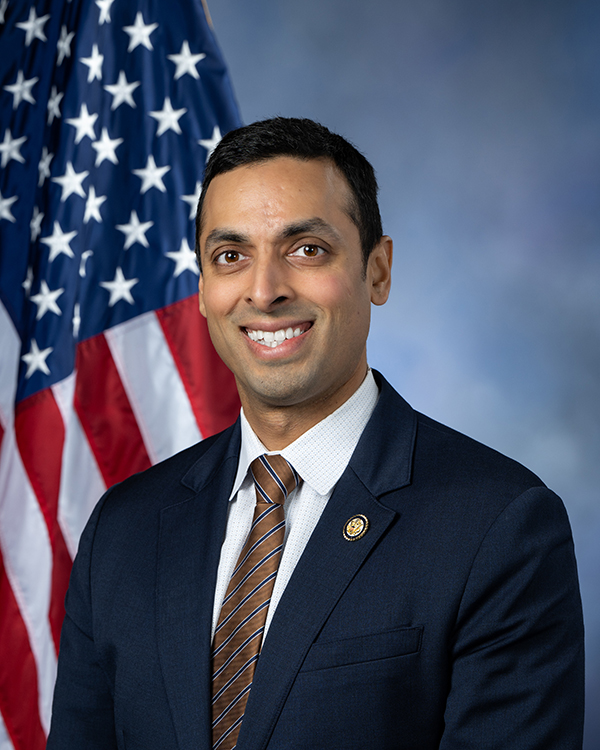
Rep. Suhas Subramanyam
Sponsored bills
Maddy summaryThe Responsible Data Center Siting Act of 2026 directs the Secretary of Energy to create and publish best practices for selecting locations for new data centers. These guidelines must evaluate how proposed sites affect electricity prices, water availability, air quality, local communities, national security, and regional economies. The Department of Energy is required to release these initial recommendations within one year of the bill's passage and update them at least every two years thereafter.
Maddy summaryThis House resolution marks the 25th anniversary of the September 11, 2001 terrorist attacks by formally honoring the memory of the nearly 3,000 victims and recognizing the sacrifices made by first responders, military personnel, and the passengers of United Airlines Flight 93. The bill acknowledges the ongoing health challenges faced by survivors and responders, highlighting the role of the World Trade Center Health Program in providing long-term medical support. It also credits charitable organizations and community groups that have continued to assist victims' families and veterans over the past two decades. Finally, the resolution urges the American public to observe the anniversary with ceremonies and reaffirms Congress's commitment to remembering the events and lessons of that day.
Maddy summaryThe El Salvador TPS Act of 2026 requires the Secretary of Homeland Security to grant Temporary Protected Status (TPS) to individuals from El Salvador. This designation would remain in effect until a date 18 months after September 9, 2026. The bill directly affects eligible residents of El Salvador by providing them with legal protection and work authorization during this specified period.
Maddy summaryThe JARED Act requires individuals who act on behalf of the federal government in foreign political activities without a formal employment contract to obtain security clearances and file annual financial disclosure forms with the Office of Government Ethics. These uncontracted representatives are prohibited from negotiating agreements or accepting deals that directly benefit themselves, their families, or associated organizations from the foreign governments they engage with. The Office of Government Ethics must publish quarterly public reports detailing these disclosures and any violations found. Penalties for non-compliance include removal from the role, loss of security clearance, civil lawsuits, and potential imprisonment for knowingly engaging in prohibited financial negotiations.
Maddy summaryThe No Pardon Paydays Act of 2026 requires the Pardon Attorney to submit a detailed written analysis to Congress within 30 days of any presidential pardon. This report must include the recipient's full criminal history and an assessment of their risk for reoffending or posing a danger to communities. Additionally, the bill restricts pardoned individuals from making political contributions exceeding $1,000 to committees supporting the President or entities advocating for their reelection. The Federal Election Commission would enforce these contribution limits and could refer violations for criminal prosecution.
Maddy summaryThe Government Travel Transparency Act requires the Comptroller General to submit quarterly reports to Congress and publish them online regarding how specific high-ranking federal officials use government-owned or operated aircraft. These reports must identify any instances where these officials used planes for political activities or Federal elections, as well as personal travel that was less cost-effective than other transportation options. The analysis relies on data from the General Services Administration but is prohibited from disclosing the exact location of an official at a specific time.
Maddy summaryHR 5967 establishes a federal task force led by the FTC and DOJ to combat scams. The task force, including agencies like the FBI, SEC, and Social Security Administration, will develop a national strategy using existing tools such as the Consumer Sentinel Network and Internet Crime Complaint Center. Key actions include public education, coordination with industry (like banks and social media platforms), and enforcement using current laws against fraud and money laundering. The task force must report to Congress within one year and dissolve after 10 years.
Maddy summaryThe Federal Worker Protection Act aims to prevent federal agencies from using non-disclosure agreements (NDAs) to chill whistleblowing by requiring all such contracts to include a prominent notice of employees' rights to report wrongdoing to oversight bodies like Congress and Inspectors General. The bill mandates that the Office of Special Counsel pre-approve NDA templates and establishes a private right of action allowing employees to sue for damages if they face retaliation based on protected disclosures. Additionally, it grants Inspectors General the authority to block non-compliant NDAs and provides them with specific protections against removal for issuing negative certifications regarding agency practices.
Maddy summaryThe BAD DEAL Act of 2026 repeals Section 338 of the Tariff Act of 1930, which previously allowed the President to impose tariffs on foreign countries that engaged in unfair trade practices. This legislation directly affects importers and businesses by removing the legal authority for these specific duties and invalidating any presidential proclamations issued under that section. The bill requires the President to refund all tariffs or other duties collected before, on, or after the enactment date that resulted from actions taken under the repealed provision.