

Maddy summaryHR 1269, the Honoring Our Fallen Heroes Act of 2025, expands benefits for public safety officers (like police and firefighters) who develop certain cancers linked to their work. It adds 22 specific cancers - including lung, mesothelioma, and breast cancer - to the list of conditions presumed to be "exposure-related" and sustained in the line of duty. This presumption applies if the officer served at least 5 years, was diagnosed with the cancer within 15 years after last active duty, and the cancer directly caused death or permanent disability. The bill also establishes a process for adding new cancers every 3 years based on medical evidence from agencies like NIOSH, and allows claims to be filed within 3 years of the law's enactment.
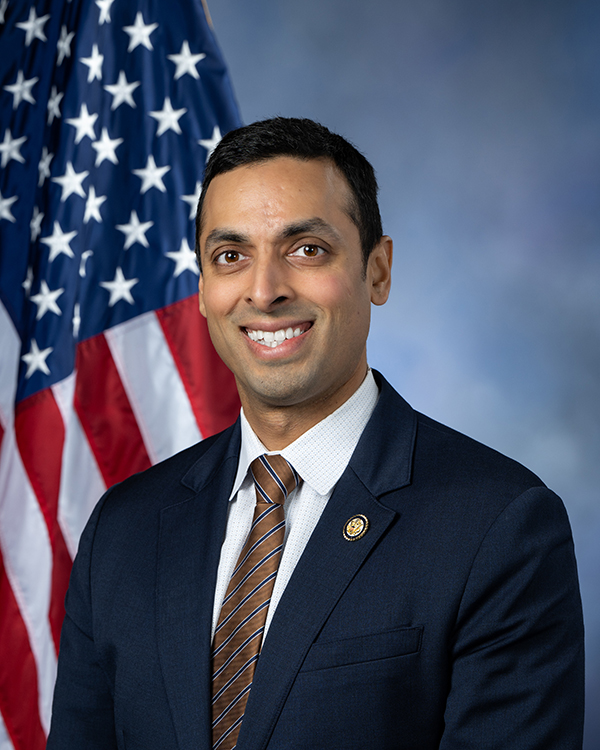
Rep. Suhas Subramanyam
Sponsored bills
Maddy summaryHR 1273 creates a national registry for Korean Americans separated from family members in North Korea after the 1953 Korean War Armistice. The State Department will collect family information to organize future reunions (in-person or via video) in the U.S., South Korea, or third countries, and maintain a private internal database of affected families. The bill requires the State Department to prioritize family reunions in U.S.-North Korea talks, consult with South Korea, and submit annual reports to Congress on registry status, reunion participation, and North Korea's cooperation. It directly affects Korean Americans with living relatives still in North Korea who seek reunification.
Maddy summaryHR 1189, the National Plan for Epilepsy Act, creates a coordinated federal strategy to address epilepsy through a National Plan for Epilepsy. The plan requires the Secretary of Health and Human Services to establish an annual assessment, maintain a diverse Advisory Council (including people with epilepsy, caregivers, and experts), and coordinate research and care across federal agencies. Key provisions include annual progress reports to Congress, data sharing between agencies, and recommendations to improve diagnosis, treatment access, and reduce epilepsy-related disparities. The plan expires December 31, 2035, and directly affects the estimated 3.4 million people in the U.S. living with epilepsy and their caregivers.
Maddy summaryThis bill restricts access to Treasury payment systems (including the Bureau of the Fiscal Service) to only Treasury employees with a "fully successful" performance rating and at least one year of civil service, or contractors/outsiders with security clearances, required privacy/cybersecurity training, ethics agreements, and no conflicts of interest. It treats non-government users accessing these systems as government employees for ethics rules and defines specific actions (like stopping payments) as "personal and substantial participation" in government matters. The Treasury Inspector General must investigate any unauthorized access within 30 days and report to Congress, detailing the breach, security risks, and any halted payments. The bill directly affects Treasury staff, contractors, and any external entities accessing federal payment systems.
Alpha-gal Allergen Inclusion Act This bill expands the definition of major food allergen to include galactose-alpha-1,3-galactose (commonly known as alpha-gal ). Under current law, food labels generally must identify each major food allergen found in labeled food products. (Certain tick bites cause an allergic condition known as alpha-gal syndrome that can result in an allergy to the alpha-gal molecule, which is found in red meat and other products made from mammals.)
Maddy summaryThe SAFE Act requires Medicare to cover falls risk assessments and fall prevention services for seniors aged 65+ who have fallen in the previous year. These services, provided by physical or occupational therapists, will be included in Medicare's annual wellness visits and initial preventive physical exams starting January 1, 2026. The bill also mandates annual reports to Congress beginning in 2027 on falls among seniors aged 65+ that required treatment for fall-related injuries. This policy directly affects Medicare beneficiaries with a documented history of falls by adding targeted preventive care to their covered benefits.
Maddy summaryThis bill expands 529 college savings account flexibility by allowing funds to cover costs for industry-recognized postsecondary credentials, not just traditional degrees. It defines "qualified expenses" to include tuition/fees for recognized credential programs (like certifications or apprenticeships), required testing fees, and continuing education needed to maintain credentials. To qualify, programs must meet specific criteria, such as appearing on state lists under the Workforce Innovation and Opportunity Act or being listed in VA or Defense directories. The change applies to 529 distributions made after the law's enactment, giving families more options to use these accounts for job-focused training.
Maddy summaryThis resolution (HRES 120) expresses the U.S. House of Representatives' condemnation of Azerbaijan's treatment of Dr. Gubad Ibadoghlu, a detained academic and economist. It urges Azerbaijan to immediately release Dr. Ibadoghlu, who was arrested in 2023 without evidence, subjected to severe beatings, poor prison conditions, denied medical care and legal access, and later placed under house arrest with a travel ban. The resolution specifically calls for his "immediate and unconditional release" and directs the Secretary of State to prioritize his well-being and release in diplomatic engagements with Azerbaijan. It directly addresses the Azerbaijani government's actions toward Dr. Ibadoghlu and his family, who face ongoing harassment.
Protect Our Letter Carriers Act of 2025 This bill requires or authorizes certain actions related to the U.S. Postal Service (USPS). The bill requires the Department of Justice to appoint an assistant U.S. attorney in each judicial district to coordinate and supervise the investigation and prosecution of various crimes related to postal services (for example, assault on a postal service employee, breaking into a post office, or obstruction of mails). The bill also requires the U.S. Sentencing Commission to amend sentencing guidelines to provide that the assault or robbery of a postal employee shall be treated the same as the assault of a law enforcement officer. Additionally, the bill authorizes appropriations for the USPS to install high security collection boxes and replace older versions of the universal mailbox key with electronic versions.
Maddy summaryThe Scientific Integrity Act requires federal agencies that fund, conduct, or oversee scientific research to adopt policies preventing political interference in scientific work. These policies must prohibit suppressing, altering, or delaying the communication of scientific findings and ensure hiring and decisions are based on expertise - not politics. Agencies must appoint a Scientific Integrity Officer to enforce the policies, handle complaints, and submit annual reports to Congress and the Office of Science and Technology Policy. The bill directly affects scientists and staff in covered agencies by safeguarding their ability to share research freely and maintain ethical standards in scientific communication.