Maddy summaryThis bill grants the Nor Rel Muk Wintu Nation federal recognition, making it eligible for all federal services and benefits available to recognized tribes. It requires the tribe to submit a membership list within 18 months of enactment, based on their governing document, and defines their service area as Trinity County, California. Crucially, it ensures eligibility for federal programs regardless of whether the tribe has a reservation or where members live. The bill does not alter existing treaty rights or require land-based recognition.
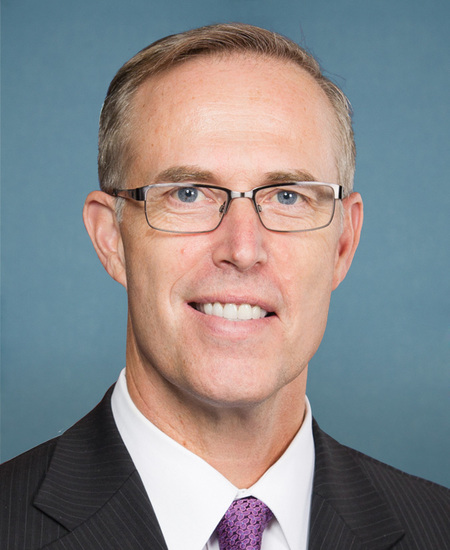
Rep. Jared Huffman
Sponsored bills
Maddy summaryThe WaterSMART Access for Tribes Act amends federal law to improve access to water infrastructure funding for Indian Tribes. It allows the Secretary of the Interior to reduce or waive a tribe's required cost share for water projects if the tribe faces financial hardship. This directly affects tribes receiving WaterSMART grants, making it easier for them to secure federal funding for essential water management improvements without bearing excessive upfront costs. The change modifies existing cost-sharing rules under the Omnibus Public Land Management Act of 2009.
Beaches Environmental Assessment and Coastal Health Act of 2025 or the BEACH Act of 2025 This bill reauthorizes through FY2029 and expands an existing program of the Environmental Protection Agency (EPA) that awards grants to states and local governments to (1) monitor the water quality of coastal recreational waters adjacent to beaches or similar points of access that are used by the public; and (2) notify the public, local governments, and the EPA when the water is not safe for recreational activities. Specifically, the bill expands the program to allow the EPA to award grants for identifying sources of contamination (i.e., pathogens) for coastal recreation waters. It also allows grants to be used for monitoring and notification of contamination in (1) shallow waters upstream from recreational waters, and (2) recreational waters on beaches.
Boundary Waters Wilderness Protection and Pollution Prevention Act This bill protects and preserves approximately 225,504 acres of federal land and waters in a specified area in the Rainy River Watershed of Superior National Forest in Minnesota from certain mining, such as sulfide-ore copper mining. (The area is upstream from the Boundary Waters Canoe Area Wilderness.) Specifically, the bill withdraws those acres from entry, appropriation, and disposal under the public land laws; location, entry, and patent under the mining laws; and operation of the mineral leasing, mineral materials, and geothermal leasing laws. However, the Forest Service is authorized to permit the removal of sand, granite, iron ore, and taconite from national forest system lands within such area if the removal is not detrimental to the water quality, air quality, and health of forest habitat within the Rainy River Watershed. Land or interest in land within such area that is acquired by the United States must be immediately withdrawn in accordance with this bill.
Community Protection and Wildfire Resilience Act This bill establishes a wildfire resilience grant program within the U.S. Fire Administration (USFA), expands an existing U.S. Forest Service (USFS) wildfire risk reduction grant program, and requires the USFA and Government Accountability Office (GAO) to produce various reports and resources relating to wildfire resilience. Specifically, the bill requires the USFA to award grants to state or local governments, tribes, volunteer fire departments, or groups thereof for developing a community protection and wildfire resilience plan or carrying out projects that support strategies described in such a plan. Also, under current law, the USFS’s Community Wildfire Defense Grant program provides grants to at-risk communities for implementing wildfire risk reduction, including reducing hazardous fuels and restoring fire-adapted ecosystems, but excluding activities such as construction and home hardening (e.g., roof upgrades, fire-resistant siding). The bill expands the eligible project types to include construction or modification of a structure to increase fire-resistance and modification of a structure or the adjacent area to reduce exposure to contact with wildfire. Additionally, the bill requires the USFA to develop and publish a map depicting communities at risk from wildfire. The USFA must also provide a report evaluating and ensuring public entities have radio communication capabilities adequate for wildfire management. The bill also requires the GAO to publish a study on potential certification for community protection and wildfire resilience plans, and a report assessing impediments for federal wildfire resilience programs.
Maddy summaryHR 576 makes Executive Order 14096 legally binding by codifying it into federal law. This order directs federal agencies to prioritize environmental justice, focusing on communities disproportionately affected by pollution and environmental hazards. The bill requires agencies to integrate environmental justice considerations into their decision-making processes, directly affecting federal departments managing environmental programs. It transforms an executive directive into a permanent legal requirement, ensuring continued focus on equitable environmental policies.
Maddy summaryThe Prevent Tariff Abuse Act amends the International Emergency Economic Powers Act to prohibit the President from using emergency powers to impose tariffs or import quotas on goods entering the U.S. It adds a specific provision stating the President cannot impose duties, tariffs, or quotas under this law. This directly limits the executive branch's authority during emergencies, preventing the use of emergency powers for trade restrictions. The bill does not affect other trade policies or the President's other emergency authorities.
Maddy summaryHR 429, the Rosie the Riveter Commemorative Coin Act, authorizes the U.S. Treasury to mint and sell three types of commemorative coins ($5 gold, $1 silver, and half-dollar) to honor women who worked on the U.S. home front during World War II. The coins will be sold at face value plus surcharges ($35 for gold, $10 for silver, $5 for half-dollar), with all surcharge revenue directed to the Rosie the Riveter Trust to support the Rosie the Riveter WWII Home Front National Historical Park and related educational programs. The coins must be issued between January 1, 2028, and December 31, 2028, in specified quantities (50,000 gold, 400,000 silver, 750,000 half-dollar), with all costs covered by the sales revenue to avoid net government expense.
Maddy summaryThis bill amends the Robert T. Stafford Disaster Relief Act to prioritize disaster resilience funding for vulnerable communities. It defines "environmental justice communities" (communities of color, low-income, or Tribal areas facing higher environmental risks) and "small impoverished communities" (under 50,000 people, economically disadvantaged), requiring FEMA to prioritize these groups for assistance. The bill increases federal funding coverage to 90% for mitigation projects in these communities (up from 75%) and mandates that projects account for future climate risks in design. It also creates a new federal database to track disaster spending and requires FEMA to provide outreach support to help eligible communities apply for funding.
Maddy summaryThe TRUST in Congress Act requires current and new Members of Congress, along with their spouses and dependent children, to place certain investments - such as stocks, commodities, and derivatives - into a blind trust within 90 to 180 days of taking office. It excludes U.S. Treasury securities and widely held mutual funds from this requirement and exempts investments tied to a spouse’s or dependent child’s primary job. Members must certify the trust’s setup to the House Clerk or Senate Secretary within 15 days, with these records posted publicly online. The act also prohibits dissolving such trusts until 180 days after a member leaves office.