

Maddy summaryHR 3218, the Reproductive Data Privacy and Protection Act, requires law enforcement and government agencies to swear under oath that they will not use reproductive or sexual health information in investigations or legal proceedings. It amends federal wiretap laws (18 U.S.C. § 2518) and communication disclosure rules (18 U.S.C. § 2703) to mandate this protection. The bill defines "reproductive or sexual health information" broadly to include details about abortion, contraception, IVF, pregnancy, sexual health conditions, and related medical services. This directly affects law enforcement, courts, and service providers by legally restricting how sensitive health data can be used in investigations. The law aims to prevent government use of such data to target individuals seeking or providing reproductive care.
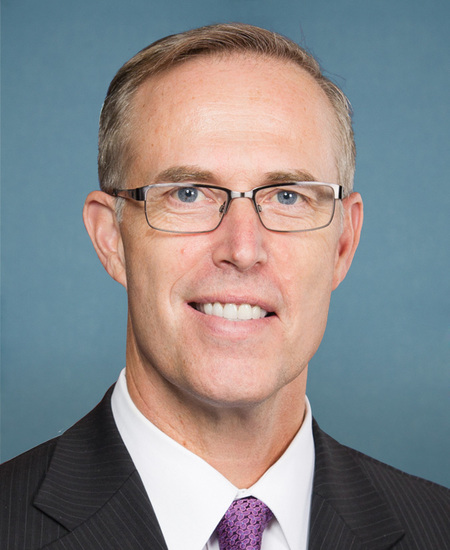
Rep. Jared Huffman
Sponsored bills
Maddy summaryHR 3184, the PFAS Alternatives Act, funds research to develop turnout gear (firefighter safety clothing) without harmful PFAS chemicals, directly affecting firefighters who wear this gear. It authorizes $25 million annually (2025-2029) for grants to eligible organizations to research and test PFAS-free gear, requiring partnerships with firefighting groups to translate findings into practice. The bill also allocates $2 million yearly (2027-2031) for training programs on safe gear use and decontamination. Its goal is to reduce firefighters' exposure to chemicals linked to occupational illnesses during operations.
Maddy summaryHRES 383 is a symbolic resolution expressing congressional support for designating May 4-10, 2025, as Wildfire Preparedness Week. It aims to raise public awareness about wildfire safety and preparedness through educational initiatives, encouraging communities to adopt preventive measures like evacuation planning and reducing human-caused ignitions. The resolution does not create new laws, allocate funds, or directly affect any specific group - it solely promotes awareness of existing wildfire safety practices. It references wildfire statistics and safety strategies but only formally recognizes the week without implementing policy changes.
Maddy summaryHRES 381 designates May 5, 2025, as the "National Day of Awareness for Missing and Murdered Indigenous Women and Girls," calling for public commemoration of victims and solidarity with their families. The resolution urges the public and groups to honor both documented and undocumented cases while recommending the Department of Justice commission a new study on the crisis, citing that the last major study was published in 2016. It does not create new laws or funding but aims to raise awareness about ongoing issues, referencing recent data showing 5,614 Indigenous women and girls reported missing in 2024. This symbolic resolution directly affects Indigenous communities, families, and the public, aligning with prior federal efforts like Savanna’s Act and the Not Invisible Act.
Maddy summaryThe Albatross and Petrel Conservation Act of 2025 establishes conservation measures for albatrosses and petrels in U.S. waters and lands. It requires the Secretaries of Interior and Commerce to protect habitats, manage invasive species threatening these birds, and implement fishing regulations to minimize bycatch in commercial fisheries. The bill creates mechanisms for international cooperation with other countries that are parties to the Agreement on the Conservation of Albatrosses and Petrels. It also establishes procedures for permits and exemptions for certain activities like scientific research while maintaining favorable conservation status for these birds.
Maddy summaryHR 3199, the Captive Primate Safety Act of 2025, bans the import, export, sale, breeding, and possession of certain nonhuman primates (including chimpanzees, gorillas, and lemurs) in interstate or foreign commerce. It directly affects pet owners, breeders, zoos, and wildlife facilities that currently handle these primates. The bill allows limited exceptions for existing owners who register their primates with the U.S. Fish and Wildlife Service within 180 days, agree to stop breeding/selling, and prevent public contact. It amends the Lacey Act to implement these restrictions, with enforcement beginning immediately regardless of regulatory timelines.
Maddy summaryThis bill amends the Migratory Bird Treaty Act to require permits for incidental harm to migratory birds (e.g., from construction or energy projects), directly affecting industries that might unintentionally impact birds. It establishes civil penalties up to $10,000 per violation for unpermitted incidental take and creates the "Migratory Bird Recovery Fund" to collect fees from permit holders, using funds for bird conservation and administrative costs. The bill also mandates annual $10 million funding, requires industry-specific research programs to monitor bird populations, and demands 5-year reports to Congress on conservation progress. These changes shift enforcement from current practices to a structured permit system with clearer accountability for bird protection.
Maddy summaryHRES 376 is a symbolic resolution supporting the designation of May 4, 2025, as a "National Day of Reason." It recognizes reason as essential to scientific progress, democratic institutions, and addressing modern challenges like disinformation and climate change. The resolution encourages all Americans to observe this day and promote critical thinking, evidence-based solutions, and free inquiry. As a non-binding expression of support, it does not create new laws, programs, or direct obligations for any group.
Maddy summaryThis bill requires U.S. Customs and Border Protection (CBP), U.S. Immigration and Customs Enforcement (ICE), and other deputized immigration officers to visibly identify themselves during enforcement actions. Specifically, it mandates that officers display a 12-inch by 6-inch agency identifier on their uniform front or back, ensuring it remains unobscured by armor or accessories. The requirement applies during all "time of action" activities, such as patrols, raids, arrests, or warrant service. The bill directly affects immigration enforcement personnel by standardizing their visible identification during interactions with the public.
Maddy summaryHR 3112, the Better CARE for Animals Act of 2025, strengthens enforcement of the federal Animal Welfare Act by requiring dealers and exhibitors to hold valid licenses for animal sales or transport (Section 4). It expands enforcement authority by allowing the Attorney General to sue violators for up to $10,000 per day, seize animals, and seek injunctions (Section 20), while clarifying that courts can address violations of related rules and regulations. The bill directly affects animal dealers, exhibitors, the USDA, and the Department of Justice, creating clearer pathways for holding violators accountable. Key provisions include updating definitions, broadening inspection powers to cover all regulations, and directing penalty funds toward temporary animal care costs during legal proceedings.