Issue · Healthcare

Healthcare

Every healthcare bill, vote, and legislator stance in Nevada, automatically classified by Maddy, our AI policy reader.

Total bills
7
119th Congress
Top supporter
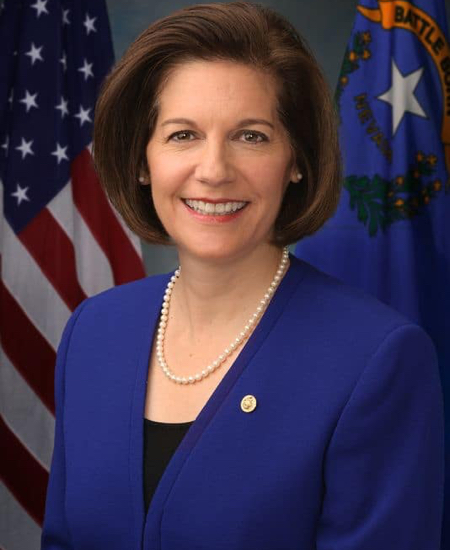
Catherine Cortez Masto
59% support rate
Top opponent
Mark E. Amodei
33% support rate
Ranked legislators
6
5 support · 1 oppose
Key legislators

Who's moving healthcare in Nevada

Legislators moving healthcare in Nevada
Legislator Party Stance Support rate Votes
Catherine Cortez Masto
Catherine Cortez Masto Senate
D
Mixed
59% 223
Jacky Rosen
Jacky Rosen Senate
D
Mixed
56% 221
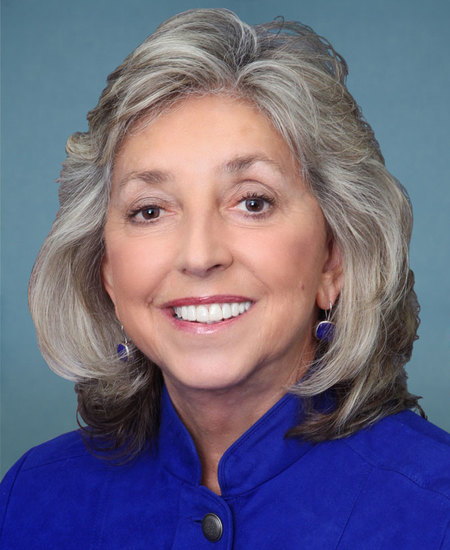
Dina Titus
Dina Titus House · District 1
D
Mixed
56% 208
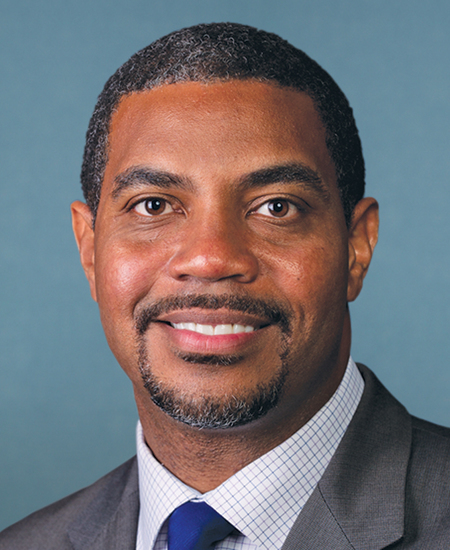
Steven Horsford
Steven Horsford House · District 4
D
Mixed
56% 211
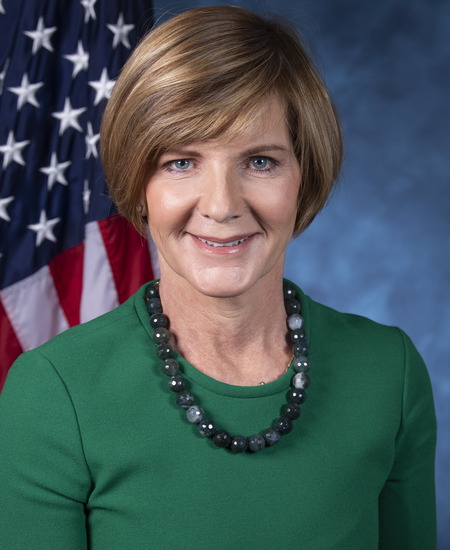
Susie Lee
Susie Lee House · District 3
D
Mixed
56% 210
Mark E. Amodei
Mark E. Amodei House · District 2
R
Oppose
33% 209
Showing 7 of 7 bills

All healthcare bills

in committee · United States · House Feb 6, 2025

HR 1085: CARGO Act of 2025

The CARGO Act of 2025 prohibits the National Institutes of Health (NIH) from funding any research involving live animals conducted outside the United States. It directly affects foreign organizations and researchers who previously received NIH grants for animal research abroad, including projects funded under the $2.2 billion in grants from 2011-2021. The key provision amends the Public Health Service Act to ban NIH support for such overseas research, requiring all animal research funded by the NIH to occur within the U.S. (including territories and the District of Columbia). This change aims to address concerns about inadequate oversight of animal welfare in foreign labs where self-reported data may be inaccurate.
Sub-Topics Public Health
in committee · United States · Senate Mar 25, 2026

SJRES 103: A joint resolution providing for congressional disapproval under chapter 8 of title 5, United States Code, of the rule submitted by the Department of Veterans Affairs relating to "Reproductive Health Services".

SJRES 103 is a congressional disapproval resolution targeting a Department of Veterans Affairs (VA) rule on reproductive health services for veterans. The resolution, if passed, would block the VA rule from taking effect by invoking the Congressional Review Act (Chapter 8 of Title 5, U.S. Code), meaning the rule published in the Federal Register (December 31, 2025) would have no legal force. This directly affects the VA’s ability to implement new guidelines for reproductive health services at its facilities, preserving existing policies instead. The resolution does not create new policy but halts a specific administrative rule.
Sub-Topics Women's Health
in committee · United States · House Jan 27, 2026

HJRES 144: Providing for congressional disapproval under chapter 8 of title 5, United States Code, of the rule submitted by the Department of Veterans Affairs relating to "Reproductive Health Services".

HJRES 144 is a congressional disapproval resolution targeting a specific rule issued by the Department of Veterans Affairs (VA) on December 31, 2025, which addressed "Reproductive Health Services" (90 Fed. Reg. 61310). This resolution directs Congress to disapprove the VA rule under Chapter 8 of Title 5, U.S. Code, meaning the rule would have no legal effect if passed. The bill directly affects the VA's implementation of reproductive health services for veterans, as it seeks to nullify the agency's existing policy. This is a procedural measure, not a substantive policy change, aimed solely at blocking the VA's rule through congressional action.
signed · United States · Senate Jul 16, 2025

S 331: HALT Fentanyl Act

Halt All Lethal Trafficking of Fentanyl Act or the HALT Fentanyl Act This act permanently places fentanyl-related substances as a class into schedule I of the Controlled Substances Act. A schedule I controlled substance is a drug, substance, or chemical that has a high potential for abuse; has no currently accepted medical value; and is subject to regulatory controls and administrative, civil, and criminal penalties under the Controlled Substances Act. Under the act, offenses involving fentanyl-related substances are triggered by the same quantity thresholds and subject to the same penalties as offenses involving fentanyl analogues (e.g., offenses involving 100 grams or more trigger a 10-year mandatory minimum prison term). Additionally, the act establishes a new, alternative registration process for certain schedule I research. The act also makes several other changes to registration requirements for conducting research with controlled substances, including permitting a single registration for related research sites in certain circumstances, waiving the requirement for a new inspection in certain situations, and allowing a registered researcher to perform certain manufacturing activities with small quantities of a substance without obtaining a manufacturing registration. Finally, the act expresses the sense that Congress agrees with the interpretation of the Controlled Substances Act in United States v. McCray , a 2018 case decided by the U.S. District Court for the Western District of New York. In that case, the court held that butyryl fentanyl, a controlled substance, can be considered an analogue of fentanyl even though, under the Controlled Substances Act, the term controlled substance analogue specifically excludes a controlled substance.
in committee · United States · Senate Oct 21, 2025

S 3019: No Big Blockbuster Bailouts Act

S 3019, the "No Big Blockbuster Bailouts Act," amends Medicare's drug price negotiation program to change how orphan drugs (treatments for rare diseases) are handled. It raises the revenue threshold from $200 million to $400 million before orphan drugs become subject to price negotiations under Medicare. This directly affects pharmaceutical companies developing drugs solely for rare diseases, as they will face price negotiations only if their annual U.S. revenue exceeds $400 million. The change applies to initial price negotiations starting January 1, 2028.
in committee · United States · Senate Sep 4, 2025

SRES 374: A resolution expressing the sense of the Senate that Secretary of Health and Human Services Robert Fitzgerald Kennedy Jr. does not have the confidence of the Senate or of the American people to faithfully carry out the duties of his office and should be removed from his position.

SRES 374 is a non-binding Senate resolution expressing that Secretary of Health and Human Services Robert F. Kennedy Jr. lacks the confidence of the Senate and American people to serve in his role. The resolution cites specific actions including the termination of $11 billion in public health funding, mass firings of scientists (notably eliminating 8 Offices of Minority Health), replacing all 17 members of the vaccine advisory committee (ACIP) with critics of vaccines, and dismantling programs supporting maternal health, disability services, and chronic disease research. It alleges these actions violated federal law, undermined scientific integrity, and endangered public health during a measles outbreak. The resolution calls for the Secretary’s removal but has no legal effect, as it is a symbolic statement of disapproval.
in committee · United States · Senate Jan 13, 2026

SJRES 84: A joint resolution providing for congressional disapproval under chapter 8 of title 5, United States Code, of the rule submitted by the Centers for Medicare & Medicaid Services relating to "Patient Protection and Affordable Care Act; Marketplace Integrity and Affordability".

SJRES 84 is a joint resolution seeking to block a rule issued by the Centers for Medicare & Medicaid Services (CMS) under the Affordable Care Act. The rule, published in the Federal Register on June 25, 2025, aimed to improve affordability and integrity in health insurance marketplaces. If approved, this resolution would invalidate the rule under a federal disapproval process, preventing its implementation. This directly affects how health insurance plans are structured and priced for consumers using ACA marketplaces.