Issue · Education

Education

Every education bill, vote, and legislator stance in Nebraska, automatically classified by Maddy, our AI policy reader.

Total bills
8
119th Congress
Top supporter
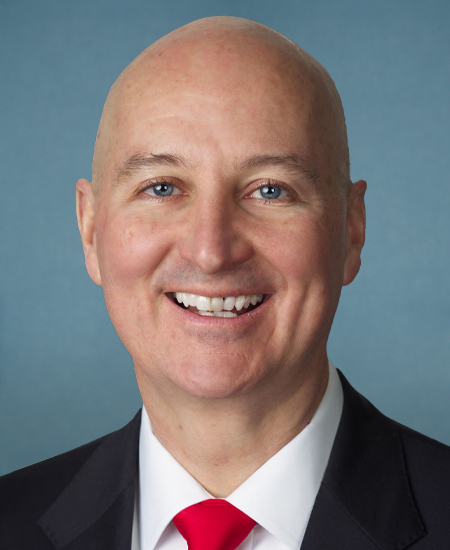
Pete Ricketts
57% support rate
Top opponent
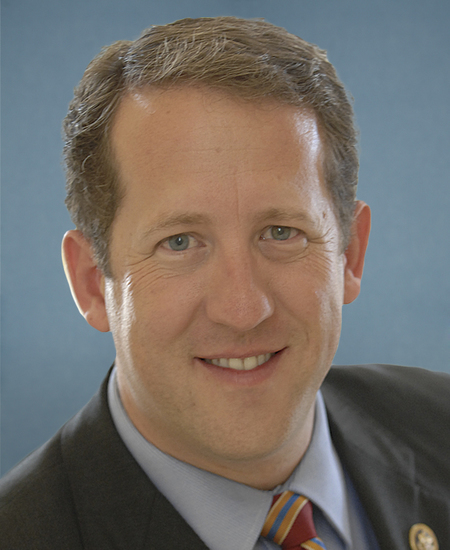
Adrian Smith
33% support rate
Ranked legislators
5
2 support · 3 oppose
Key legislators

Who's moving education in Nebraska

Legislators moving education in Nebraska
Legislator Party Stance Support rate Votes
Pete Ricketts
Pete Ricketts Senate
R
Mixed
57% 167
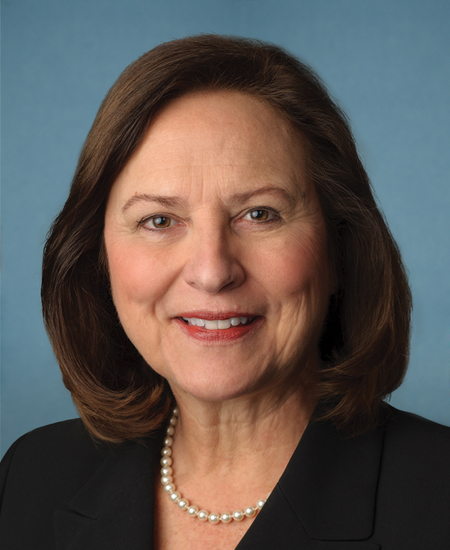
Deb Fischer
Deb Fischer Senate
R
Mixed
57% 168
Adrian Smith
Adrian Smith House · District 3
R
Oppose
33% 129
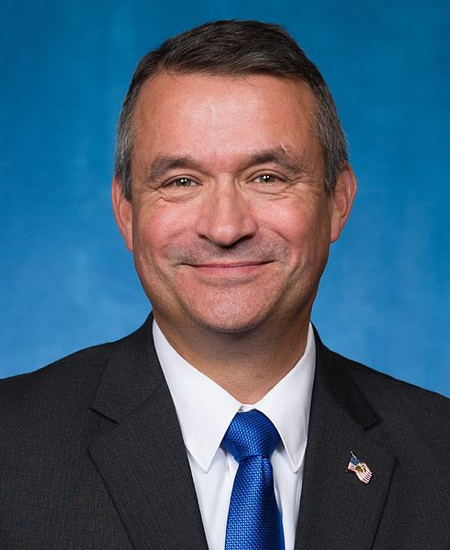
Don Bacon
Don Bacon House · District 2
R
Oppose
33% 131
Mike Flood
Mike Flood House · District 1
R
Oppose
33% 131
Showing 8 of 8 bills

All education bills

in committee · United States · Senate Jul 30, 2026

S 5179: Title IX Clarification Act of 2026

The Title IX Clarification Act of 2026 amends the federal law prohibiting sex discrimination in education to explicitly define "sex" based on biological characteristics. Specifically, it states that sex refers to an individual's biologically determined status as male or female. The bill further defines "female" as someone with a reproductive system that produces ova and "male" as someone with a reproductive system that produces sperm, regardless of congenital anomalies or accidents. These definitions apply to all education programs receiving federal financial assistance starting on the date the law is enacted.
in committee · United States · Senate Mar 26, 2025

S 1147: Defining Male and Female Act of 2025

This bill defines biological sex for federal law by amending Title 1 of the U.S. Code. It specifies that "female" means a person biologically characterized by egg-producing systems at conception, "male" means sperm-producing systems at conception, and "gender identity" is not recognized as replacing biological sex in federal contexts. The law directly affects all federal agencies, departments, and laws requiring interpretation of terms like "sex," "female," or "male" by mandating these biological definitions. It does not create new programs or funding but changes how federal agencies must interpret existing laws and regulations.
in committee · United States · Senate May 13, 2025

S 1745: Dismantling Ideological Policies for Semiconductors and Science Act

This bill would repeal numerous diversity, equity, and inclusion (DEI) requirements in federal STEM programs established under the CHIPS and Science Act. It targets provisions requiring outreach to underrepresented communities, diversity considerations in research programs, data collection on faculty demographics, and DEI-focused funding programs. The bill also repeals the NSF Chief Diversity Officer position and modifies programs to focus on STEM achievements for historically Black colleges and universities (HBCUs) and Tribal Colleges or Universities (TCUs) without race-based activities. The bill would affect federal agencies like the National Science Foundation, Department of Energy, and National Institute of Standards and Technology that administer STEM programs.
Sub-Topics Early Childhood
in committee · United States · House Mar 21, 2025

HR 2272: FAFSA Act of 2025

HR 2272, titled the "FAFSA Act of 2025" (though unrelated to the FAFSA application), would terminate federal student aid eligibility for individuals convicted of specific violent offenses. It directly affects students convicted of assault against police officers or certain riot-related crimes (like inciting violence or participating in riots), requiring them to repay any grants received under the Higher Education Act and converting those grants into unsubsidized loans. Key provisions include automatic loss of future aid, repayment of past grants as loans, and exclusion from all loan forgiveness or discharge programs. The bill takes effect for the first aid year after its enactment, impacting only those with convictions meeting its defined criteria.
in committee · United States · Senate Jun 12, 2025

S 2045: Protecting Endowments from Our Adversaries Act

This bill imposes a 50% excise tax on the fair market value of "listed investments" acquired by large private colleges and universities during a taxable year, and a 100% tax on net income from such investments. It defines "listed investments" as any stock, debt, or derivatives held in entities on government security lists (like the Commerce Department's Entity List or FCC Covered List). The tax applies to private institutions with endowments exceeding $1 billion that aren't state universities, targeting investments in entities deemed national security threats. The law requires the Treasury to establish a consolidated list of these entities within 60 days of enactment, with taxes taking effect for acquisitions and income after the first calendar year following enactment.
in committee · United States · Senate Jan 23, 2025

S 207: Protecting Life on College Campus Act of 2025

This bill prohibits federal funding (directly or indirectly) for colleges and universities that host or are affiliated with campus health clinics providing abortion drugs or abortions to students or staff. Institutions must submit annual reports certifying no such services are offered to remain eligible for federal funds. The law also prevents states from penalizing schools for complying with this funding restriction. It specifically defines "abortion drugs" and "school-based service sites" (excluding hospitals) to clarify coverage.
passed · United States · Senate May 9, 2025

SJRES 7: A joint resolution providing for congressional disapproval under chapter 8 of title 5, United States Code, of the rule submitted by the Federal Communications Commission relating to "Addressing the Homework Gap Through the E-Rate Program".

This joint resolution seeks to block a Federal Communications Commission (FCC) rule that aimed to expand internet access for schools through the E-Rate program, specifically addressing the "homework gap" by increasing funding for student connectivity. The rule, published in the Federal Register on August 20, 2024, would have modified how schools and libraries access broadband under the E-Rate program. If passed, the resolution would cancel this rule, preventing it from taking effect under federal disapproval procedures. This is a procedural action targeting a specific FCC regulatory change, not a new policy.
in committee · United States · Senate Jul 24, 2025

S 2428: STUDENT Act

S 2428, the STUDENT Act, amends the federal charter of the National Education Association (NEA) to restrict its political activities and membership practices. It requires NEA members (public school teachers) to explicitly consent to dues payments (banning payroll deductions), prohibits the NEA from engaging in political lobbying or supporting candidates, and bans advocacy of specific concepts like critical race theory or antisemitic beliefs. The bill also mandates annual reporting to Congress and prohibits strikes by NEA-affiliated staff in public schools. These provisions directly affect the NEA’s operations and its members’ financial and political engagement.