Issue · Budget & Taxes

Budget & Taxes

Every budget & taxes bill, vote, and legislator stance in Nebraska, automatically classified by Maddy, our AI policy reader.

Total bills
33
119th Congress
Top supporter
Adrian Smith
64% support rate
Top opponent
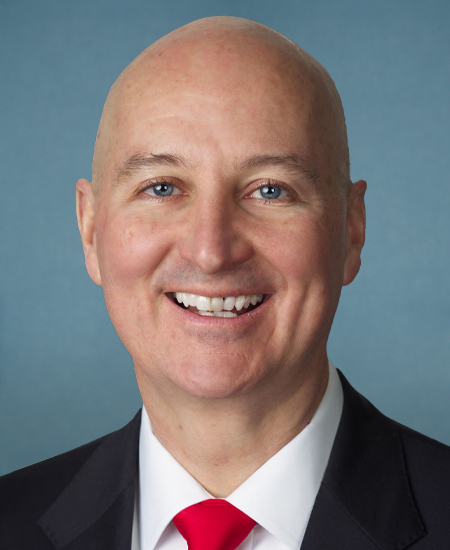
Pete Ricketts
32% support rate
Ranked legislators
5
3 support · 2 oppose
Key legislators

Who's moving budget & taxes in Nebraska

Legislators moving budget & taxes in Nebraska
Legislator Party Stance Support rate Votes
Adrian Smith
Adrian Smith House · District 3
R
Support
64% 183
Mike Flood
Mike Flood House · District 1
R
Support
61% 184
Don Bacon
Don Bacon House · District 2
R
Mixed
58% 186
Pete Ricketts
Pete Ricketts Senate
R
Oppose
32% 274
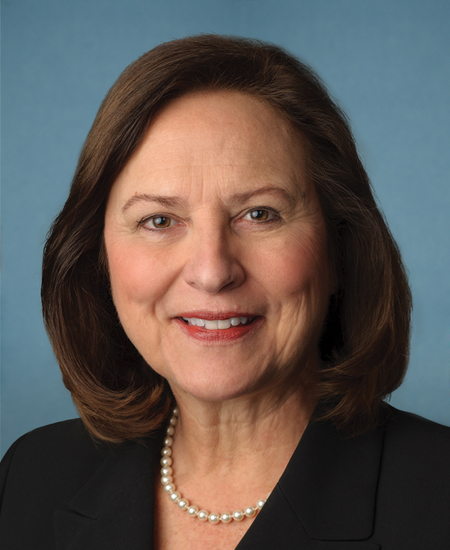
Deb Fischer
Deb Fischer Senate
R
Oppose
32% 272
Showing 1–10 of 33 bills

All budget & taxes bills

in committee · United States · House May 20, 2026

HR 8921: Freedom from Taxes Act of 2026

The Freedom from Taxes Act of 2026 eliminates federal transfer and making taxes on firearms, which directly affects individuals buying or manufacturing guns. By setting these specific taxes to zero, the bill removes the $200 fee previously required when transferring or making certain firearms. The law also adds a time limit to a special tax, ensuring it no longer applies to years beginning after the bill takes effect. These changes would become active on the first day of the first calendar quarter starting more than 90 days after the legislation is signed into law.
passed · United States · Senate May 9, 2025

SJRES 7: A joint resolution providing for congressional disapproval under chapter 8 of title 5, United States Code, of the rule submitted by the Federal Communications Commission relating to "Addressing the Homework Gap Through the E-Rate Program".

This joint resolution seeks to block a Federal Communications Commission (FCC) rule that aimed to expand internet access for schools through the E-Rate program, specifically addressing the "homework gap" by increasing funding for student connectivity. The rule, published in the Federal Register on August 20, 2024, would have modified how schools and libraries access broadband under the E-Rate program. If passed, the resolution would cancel this rule, preventing it from taking effect under federal disapproval procedures. This is a procedural action targeting a specific FCC regulatory change, not a new policy.
in committee · United States · House Jan 14, 2025

HR 400: No taxpayer funding for United Nations Human Rights Council Act

HR 400 prohibits U.S. taxpayer funding for the United Nations Human Rights Council. It requires the Secretary of State to withhold from annual U.S. UN budget contributions any amount allocated to the Human Rights Council, and bans voluntary U.S. contributions to the Council. Funds withheld under this law are canceled immediately and do not count as unpaid dues to the UN. The bill specifically targets the Human Rights Council, leaving other UN activities unaffected.
passed · United States · House Jan 13, 2026

HR 909: Crime Victims Fund Stabilization Act of 2025

HR 909, the Crime Victims Fund Stabilization Act of 2025, modifies how funds from the False Claims Act are deposited into the Crime Victims Fund. It specifies that from 2025 through 2029, certain False Claims Act proceeds (specifically those for qui tam plaintiff payments and government damage reimbursements) cannot be deposited into the fund. This change directly affects the composition of the Crime Victims Fund by excluding these specific revenue streams during the specified period. The bill does not create new benefits or alter victim services; it only adjusts fund allocation rules for existing False Claims Act revenues.
Sub-Topics Victims' Rights
in committee · United States · House Jan 22, 2025

HR 7: No Taxpayer Funding for Abortion and Abortion Insurance Full Disclosure Act of 2025

HR 7 prohibits federal funds from being used for abortions or health insurance plans covering abortion, with exceptions for pregnancies resulting from rape, incest, or when a woman's life is endangered. It blocks federal premium tax credits under the Affordable Care Act for health plans covering abortion (except in specified cases) and requires clear disclosure of abortion coverage and related surcharges in plan materials. The bill allows individuals or employers to purchase separate abortion coverage using non-federal funds, such as out-of-pocket payments, without affecting federal subsidies. It directly affects federal health programs, ACA marketplace plans, and health insurance issuers offering coverage that includes abortion services.
in committee · United States · House Jan 21, 2025

HR 574: ALIGN Act

The ALIGN Act (HR 574) allows businesses to immediately deduct the full cost of certain qualifying equipment and property (like machinery or tools) instead of spreading the deduction over several years. This permanent tax change directly affects businesses that invest in eligible property placed in service after September 2017. The key provision eliminates the previous depreciation rules for these assets, providing an immediate tax benefit to encourage capital investment. It does not change tax rates or apply to all business expenses, only specific types of equipment meeting the defined criteria.
in committee · United States · House Feb 14, 2025

HR 1367: ELITE Vehicles Act

The ELITE Vehicles Act repeals federal tax credits for purchasing new electric vehicles, used clean vehicles, and commercial clean vehicles. It also eliminates the tax credit for installing electric vehicle charging infrastructure. These changes apply to vehicles purchased or with a binding contract entered into 30 days after the bill's enactment. The bill directly affects consumers and businesses that previously used these credits to offset the cost of electric vehicles and charging stations.
in committee · United States · House Mar 18, 2025

HR 2198: To amend the Internal Revenue Code of 1986 to restore the taxable REIT subsidiary asset test.

This bill changes a tax rule for Real Estate Investment Trusts (REITs) that use taxable subsidiaries. It increases the percentage limit for assets held in these subsidiaries from 20% to 25% of a REIT's total assets, directly affecting REIT companies that operate through such subsidiaries. The key provision amends the Internal Revenue Code to restore this higher asset threshold, which had been reduced earlier. The change applies to taxable years starting after December 31, 2025.
in committee · United States · House Feb 13, 2025

HR 1301: Death Tax Repeal Act

HR 1301, the Death Tax Repeal Act, would eliminate the federal estate tax and generation-skipping transfer tax for estates of individuals dying on or after its enactment date. It directly affects individuals inheriting significant assets, as it removes taxes on estates exceeding $10 million (adjusted for inflation) and repeals taxes on large transfers between generations. The bill modifies the gift tax by establishing a $10 million lifetime exemption with annual inflation adjustments, replacing previous tax brackets. It applies to estates, gifts, and transfers occurring on or after the bill's effective date.
in committee · United States · House Apr 10, 2025

HR 2814: Transportation Freedom Act

Transportation Freedom Act This bill reduces taxes on auto companies and repeals specified environmental regulations on cars and trucks. The bill establishes a new tax deduction equal to 200% of eligible wages paid or incurred by domestic producers of automobiles or automobile components, subject to limitations. It also allows an entity to reduce (and adjust) its financial statement income (for purposes of calculating liability for the alternative minimum tax) by the amount of eligible wages it elects to deduct. The bill nullifies the 2024 rules of the Environmental Protection Agency (EPA) regarding (1) the finalization of specified greenhouse gas (GHG) programs and the reduction of emissions from certain light-duty and medium-duty vehicles (e.g., cars and trucks that are under a certain weight) starting with model year 2027, and (2) phase three of GHG emission standards for heavy-duty vehicles (e.g., school buses and tractor-trailer trucks). It also repeals the 2024 rules of the National Highway Traffic Safety Administration (NHTSA) regarding corporate average fuel economy (CAFE) standards for certain cars, trucks, and vans.  Additionally, the bill eliminates (1) the option given to California to set standards for car emissions that are more stringent than those set under the Clean Air Act, and (2) the option for other states to adopt California's standards.  NHTSA and the EPA must establish new CAFE and GHG standards, respectively, for vehicles that are economically practicable and technologically feasible. The GHG standards may not require the production or sale of electric vehicles.
Showing 1 to 10 of 33 bills
1 2 3 4 Next