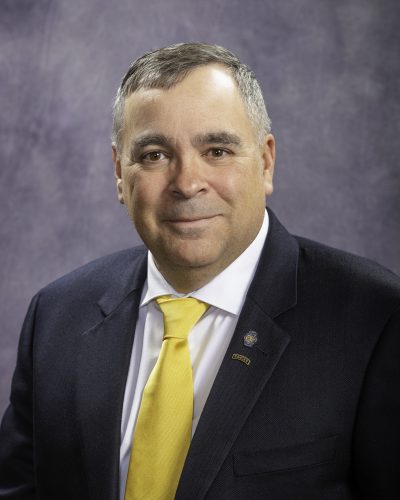
HB 343 requires school districts to establish a program allowing students to be released from regular school attendance for religious instruction, upon written request from a parent or guardian. This program must provide at least one hour of released time per week for religious instruction. The bill also mandates that school districts adopt a policy to award academic credit for completed religious instruction courses. Credit evaluation must be based on secular criteria, such as class hours and course materials, without regard to the religious content. Public school property or funds cannot be used for the religious instruction itself.
HB 462 aimed to enhance academic excellence by revising education laws related to curriculum and instruction. It would have established a process for the Superintendent of Public Instruction, in collaboration with a committee and an external nonprofit partner, to identify and recommend high-quality instructional materials (HQIM) during content standard revisions. Contingent on legislative funding, the bill would have provided reduced-cost access to these recommended HQIM and aligned professional development for school districts choosing to adopt them. This initiative sought to support teachers and improve curriculum for students across the state.
SB 181 generally revises Montana's Indian Education for All laws to strengthen the state's commitment to preserving American Indian cultural integrity. The bill requires all certified school personnel and students to receive instruction in American Indian studies, emphasizing tribal consultation and the use of Indian language and cultural specialists. It places additional accountability and reporting requirements on the Board of Public Education, the Office of Public Instruction, and school districts, particularly regarding the financial oversight of state funds for these programs. This legislation aims to improve the delivery and accountability of American Indian education across Montana's public education system.
SB 278 revises education laws to enhance "advanced opportunities" for qualifying students in grades 6-12. The bill establishes and defines "Advanced Opportunity Facilitators" to coordinate learning opportunities between school districts, students, families, and external organizations. School districts employing these facilitators can use a portion of their existing Advanced Opportunity Aid to pay them and receive additional Quality Educator Payments for these positions. This aims to support individualized pathways for career and postsecondary educational success for students.
SB 258 clarifies the state legislature's authority regarding how public school funding is adjusted for inflation. It amends existing law that outlines how the Superintendent of Public Instruction calculates an annual inflation factor for various school entitlements, which is capped at 3%. This bill explicitly states that the legislature can, through its appropriation and lawmaking authority, provide inflationary adjustments that differ from these standard calculations and may exceed the 3% cap. This affects the financial resources allocated to public schools across the state.
HB 251 revises laws concerning public charter schools, establishing a definition for "public charter school district" to clarify its governing authority as a non-taxing entity. The bill requires the Office of Public Instruction to provide a fiscal analysis for charter school applications and mandates the Board of Public Education to limit costs for new schools, prioritizing those emphasizing personalized and proficiency-based learning. It removes the Board of Public Education's authority to waive statutory requirements in charter contracts. Additionally, the bill allows public charter school districts to receive other forms of public funding and donations, and defines financial obligations for a child's resident school district when serving students with disabilities.
HB 449 is a bill that eliminates the statutory reference to the Adult Basic Education Fund and its distribution within the Montana Code Annotated. It achieves this by repealing section 20-7-712, which outlines this fund and its distribution. This change primarily affects the legal framework governing adult basic education funding in Montana by removing this specific statutory provision, with an effective date of July 1, 2025.
HB 509 expands Montana's educator loan forgiveness program to cover all newly hired public school teachers in the state, with priority given to those hired in schools designated as "impacted" (where critical teacher shortages exist). It allows eligible teachers to receive up to $5,000 annually in loan repayment assistance over four years ($3,000-$5,000 per year for state-funded aid, plus an additional $5,000 from schools/districts). If funding falls short, the program prioritizes teachers in impacted schools and prorates payments proportionally among them. The bill takes effect July 1, 2025, applying to applications submitted on or after that date.
HB 471 revises education laws concerning human sexuality and identity instruction in public schools, impacting students, parents, and school districts. The bill requires written parental or guardian permission for a child to attend "identity instruction" and allows parents to withdraw their child from "human sexuality instruction" as an excused absence. It mandates that schools provide advance notice to parents about these instructions and make all related curriculum materials publicly available for inspection. Additionally, the bill prohibits entities that provide abortion services from offering or furnishing materials for human sexuality or sexually transmitted disease instruction to students or personnel.
HB 512 mandates that all new school buses purchased on or after January 1, 2026, must be equipped with lap-shoulder belts for each passenger. School districts using these buses would be required to adopt and enforce a seat belt usage policy and ensure belts are properly maintained. The bill provides exceptions for school districts that cannot afford such buses, following a public vote. Additionally, it limits the liability of the state, counties, and school districts in personal injury cases where passengers fail to use or improperly use the belts, provided an enforceable policy is in place.