Maddy summaryHRES 906 would change House rules to require a 60% vote of members present and voting to censure, disapprove, or remove any House member, delegate, or resident commissioner from committee assignments. Currently, a simple majority (50%+1) could trigger these actions, but this bill raises the threshold to a supermajority. The change applies directly to all voting members of the House and affects disciplinary procedures for members. This is a procedural rule change that makes it harder to take formal disciplinary actions against House members.
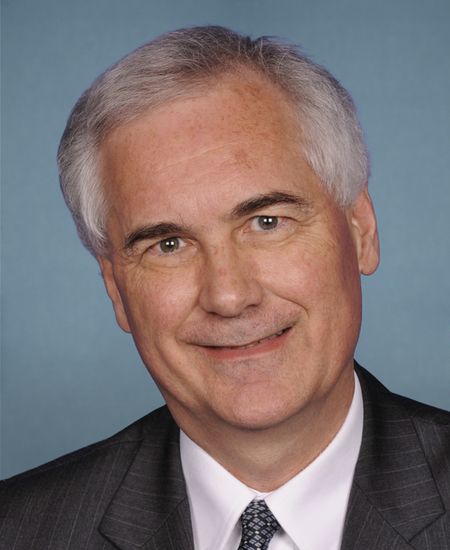
Rep. Tom McClintock
Sponsored bills
Maddy summaryHR 6019 repeals a requirement that Senate offices must be notified when legal requests seek Senate data. Specifically, it removes Section 213 of the 2026 appropriations act, which mandated that Senate offices be informed about legal processes requesting disclosure of Senate data. This change directly affects Senate offices by eliminating a procedural notification step for legal requests involving their data. The bill makes no other policy changes, solely removing this specific administrative requirement.
This bill designates the facility of the United States Postal Service located at 28201 Franklin Parkway in Santa Clarita, California, as the "Deputy Ryan Clinkunbroomer Post Office Building".
Maddy summaryThis bill amends the Immigration and Nationality Act to add new grounds for deporting non-citizens. It makes any non-citizen deportable if they have been convicted of a felony or two misdemeanors (under either state or federal law) after entering the United States. The key provision expands deportation eligibility beyond previous standards by explicitly including state misdemeanor convictions alongside federal offenses. This change directly affects non-citizens with specific criminal records, potentially increasing deportation risks for those with certain convictions. The policy alters the legal standard for removal but does not change sentencing or enforcement procedures.
Maddy summaryThis bill would require all states to recognize valid concealed carry permits issued by other states, allowing permit holders to carry concealed handguns (excluding machine guns) in any state that either issues such permits or doesn't prohibit concealed carry. It directly affects law-abiding gun owners with valid permits from their home state, ensuring they can carry in states with similar permit systems or no prohibitions. Key provisions include treating valid permit documents as proof of legal carry (reducing officer stops), shifting the burden of proof to prosecutors if challenged, and allowing civil lawsuits for violations with attorney's fee awards. The bill does not override state laws restricting firearms on private property or government land, nor does it affect federal gun restrictions like those in section 922(q).
Maddy summaryHRES 719 is a House resolution honoring Charles "Charlie" James Kirk, the founder of Turning Point USA who was assassinated on September 10, 2025. The resolution condemns his assassination and all political violence, extends condolences to his family, and calls on Americans to reject violence while promoting civil discourse. It specifically recognizes Kirk's legacy as a defender of constitutional principles and his role in inspiring youth through free speech and faith-based civic engagement. As a commemorative resolution, it does not enact policy changes but formally expresses the House's stance on honoring his life and legacy.
Maddy summaryHRES 695 is a commemorative resolution honoring Charlie Kirk, a conservative speaker and Turning Point USA leader, following his assassination on September 10, 2025, in Orem, Utah. The resolution condemns the attack, offers condolences to his family, and recognizes first responders. It reaffirms the First Amendment right to peaceful assembly and emphasizes that violence cannot silence democratic participation. This non-binding resolution does not create new laws or policies but serves as a symbolic tribute to Kirk's memory and the principles of democratic engagement.
Maddy summaryThis bill adds a new tax exclusion to the Internal Revenue Code, allowing individuals to exclude certain wildfire relief payments from their taxable income. It directly affects wildfire victims who receive compensation for losses like property damage, additional living expenses, or emotional distress from federally declared wildfires (after 2014), but only if the payments aren’t covered by insurance. The exclusion prevents double tax benefits by disallowing deductions for expenses already covered by the excluded payments, and it expires for payments received after December 31, 2032. The provision applies to payments received after December 31, 2025.
Maddy summaryThe Cell-Site Simulator Warrant Act of 2025 requires law enforcement agencies to obtain warrants before using cell-site simulators (devices that mimic cell towers to track or intercept phone communications), with strict requirements for demonstrating necessity and minimizing disruption to communications. The bill prohibits most uses of these devices without a warrant, including the use of evidence obtained through unauthorized surveillance, and establishes specific procedures for emergency use with subsequent warrant applications within 48 hours. It requires transparency about potential disruption to emergency services (including 911 calls) and mandates regular reporting on usage to Congress. The law applies to federal and state law enforcement, with specific exceptions for intelligence gathering, research, and correctional facility contraband interdiction systems.
Maddy summaryThe PRIME Act exempts custom slaughter facilities from federal meat inspection requirements when they follow state laws and sell meat exclusively within the same state. It specifically allows facilities to slaughter animals and prepare meat without federal oversight if the products go only to household consumers or local businesses (like restaurants, hotels, or grocery stores) serving consumers directly in that state. The bill clarifies that this exemption does not override stricter state regulations governing custom slaughter or meat sales. This primarily affects small-scale slaughter operations and local food businesses operating within a single state's borders.