Repeal Insurance Plans of the Multi-State Program Act or the RIP MSP Act This bill repeals the multi-state insurance plan program. (The multi-state plan program requires the Office of Personnel Management (OPM) to contract with insurance issuers to provide a qualified health plan through the health insurance exchanges in multiple states.) The OPM must report about the process and timeline for ending the program within 60 days.
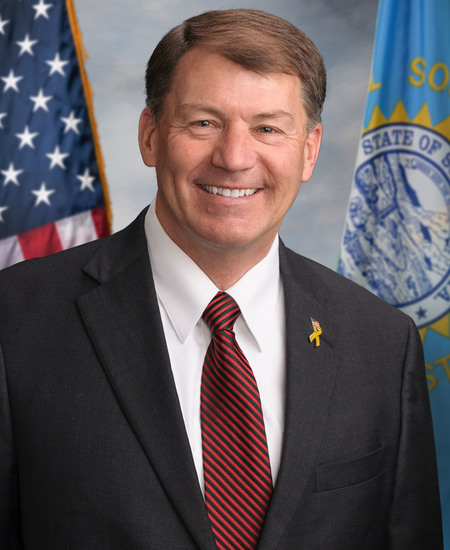
Sen. Mike Rounds
Sponsored bills
Military PFAS Testing Disclosure Act This bill requires the Department of Defense (DOD) to publicly disclose the results of any testing for perfluoroalkyl or polyfluoroalkyl substances, commonly referred to as PFAS, conducted on or at areas surrounding DOD military installations in the United States and National Guard facilities. DOD must also disclose the expected timing and location of any planned testing for PFAS at the specified sites. DOD may satisfy the disclosure requirements by publishing the information, data sets, and results relating to the testing on a publicly available DOD website or in the Federal Register. Prior to conducting any testing for PFAS, DOD must provide notice to (1) the managers of the public water system serving the areas located immediately adjacent to the military installation being tested, (2) the municipal government serving the areas located immediately adjacent to the military installation being tested, and (3) all Restoration Advisory Board members for the military installation where the testing is to occur. DOD must test for all PFAS for which a method of measurement in drinking water has been validated by the Environmental Protection Agency.
Disclose Government Censorship Act This bill requires officers and employees of the legislative and executive branches to disclose communications with providers of interactive computer services (e.g., internet service providers) regarding restricting speech. Specifically, executive and legislative branch officers and employees must disclose their communications with a provider or operator of an interactive computer service regarding action to restrict access to material posted by another information content provider. The bill makes exceptions for legitimate law enforcement and national security purposes. The disclosure must be made within seven days of the date on which the communication is made. The bill establishes penalties for violations.
Guaranteeing Healthcare Access to Personnel Who Served Act This bill addresses the administration and provision of health care to veterans through the Department of Veterans Affairs (VA) and non-VA providers. First, the bill provides statutory authority for the eligibility thresholds for when a veteran must receive non-VA care under the Veterans Community Care Program (VCCP) for primary care, mental health care, noninstitutional extended care services, specialty care, or specialty services. Additionally, the bill establishes access to care standards for non-VA care under the VCCP, meaning a veteran's appointment must be within specified distances and time frames. Among other requirements, the VA must also implement an 18-month pilot program to allow certain veterans to use a website or mobile application to request, schedule, and confirm medical appointments with VCCP providers; ensure that VCCP third party administrators and credentials verification organizations comply with specified requirements to help ensure that certain health care providers are excluded from providing non-VA health care services; develop a strategic plan to ensure the effectiveness of the telehealth technologies and modalities delivered by the VA; and establish an online health care education portal for veterans. The bill requires the Government Accountability Office to report on (1) the VA program under which third parties provide transportation for veterans who are seeking VA services or benefits, (2) VA telehealth services, and (3) the VA's Foreign Medical Program. Finally, the Paperwork Reduction Act does not apply to the voluntary collection of information during research conducted by the Veterans Health Administration.
Safeguard Tribal Objects of Patrimony Act of 2021 This bill prohibits the exportation of Native American cultural items and archaeological resources that were illegally obtained; provides for the return of such items, including voluntary returns; and establishes and increases related criminal penalties. The bill requires the Department of the Interior and the Department of State to each designate a liaison to facilitate and hold trainings and workshops on the voluntary return of human remains and cultural items. Additionally, Interior must refer individuals and organizations to Indian tribes and Native Hawaiian organizations to facilitate the voluntary return of human remains and cultural items; convene an interagency working group; and convene a Native working group consisting of representatives of Indian tribes and Native Hawaiian organizations to provide advice on issues concerning the return of, and illegal trade in, human remains and cultural items. The bill also increases from 5 years to 10 years the maximum prison term for an individual convicted of selling, purchasing, using for profit, or transporting for sale or profit human remains or cultural items that were illegally obtained.
Conservation Reserve Program Flexibility Act of 2021 or CRP Flexibility Act of 2021 This bill modifies the Conservation Reserve Program (CRP) to permit emergency haying during the primary nesting season to respond to drought or other emergencies. (Under current law, emergency haying is only permitted outside of the primary nesting season.) Under CRP, the Department of Agriculture provides annual payments to agricultural producers to take highly erodible and environmentally sensitive land out of production and install resource-conserving practices.
This bill authorizes the Office of the National Cyber Director to accept officers or employees of the United States or members of the Armed Forces on a detail from an element of the intelligence community or from another element of the federal government on a nonreimbursable basis for up to three years. The Office of the National Cyber Director is the principal advisor to the President on cybersecurity policy and strategy and, among other duties, leads the coordination and implementation of national cyber policy and strategy.
This resolution declares that the Pledge of Allegiance has been a valuable part of life for the people of the United States for generations and defends its constitutionality.
This resolution designates July 24, 2021, as National Day of the American Cowboy.
Credit Access and Inclusion Act of 2021 This bill allows for the reporting of certain positive consumer-credit information to consumer reporting agencies. Specifically, a person or the Department of Housing and Urban Development may report information related to a consumer's performance in making payments either under a lease agreement for a dwelling or pursuant to a contract for a utility or telecommunications service. However, information about a consumer's usage of any utility or telecommunications service may be reported only to the extent that the information relates to payment by the consumer for such service or other terms of the provision of that service. Furthermore, an energy-utility firm may not report a consumer's outstanding balance as late if the firm and the consumer have entered into a payment plan and the consumer is meeting the obligations of that plan. Specified provisions that establish civil liability with respect to furnishers of information to consumer reporting agencies shall not apply to any violation of the bill. The Government Accountability Office must report on the consumer impact of such reporting.