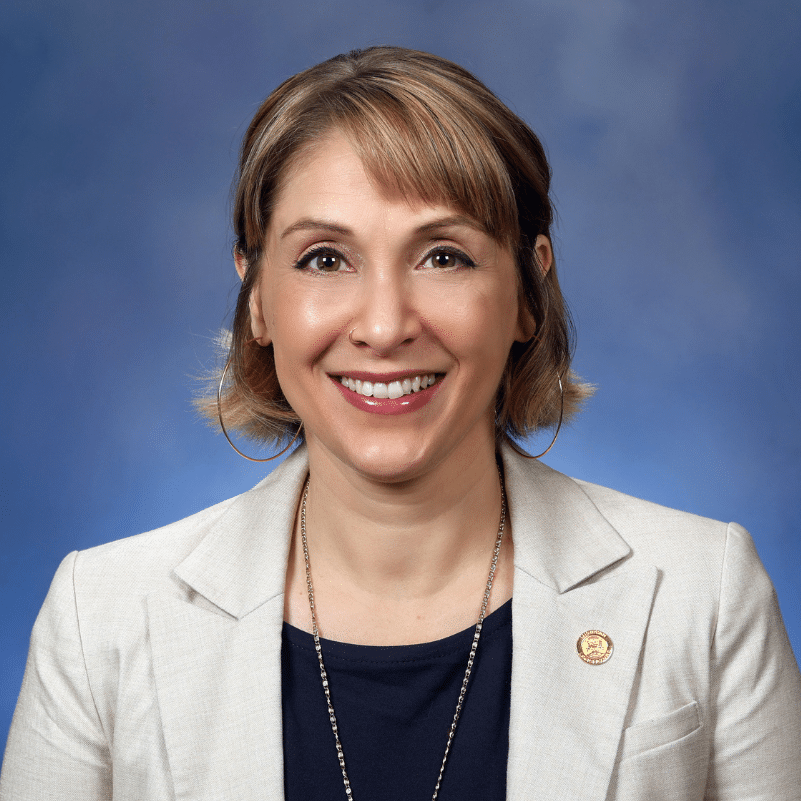
HB 4509 creates a licensure compact for audiologists and speech-language pathologists in Michigan, allowing professionals licensed in participating states to practice across state lines without obtaining separate Michigan licenses. This directly affects audiologists and speech-language pathologists seeking to work in multiple states, particularly those in states that have joined the compact. The bill amends Michigan law to establish reciprocal licensing agreements, adding new provisions (sections 16187, 16804, and 17603a) to facilitate this process. It does not change patient care standards but streamlines professional mobility for these healthcare providers. The bill passed unanimously in the Michigan House with immediate effect on October 30, 2025.
HB 5150 amends Michigan's Public Health Code to update licensing requirements for respiratory therapists. It modifies existing sections and adds new provisions (18710 and 18712) related to licensure eligibility, education standards, and scope of practice. The bill directly affects respiratory therapists seeking or maintaining their licenses in Michigan by changing specific regulatory requirements. These changes aim to modernize the licensure process within the state's healthcare framework. The bill was introduced on October 28, 2025, and referred to the Health Policy Committee.
SB 684 creates a process for healthcare licensees (like doctors, nurses, and other licensed professionals) to have certain disciplinary records removed from public view. It allows applicants to submit a formal request to the state department after meeting specific conditions: the disciplinary action must have been a single continuing education violation (not more than 30 years old), they must have completed all sanctions, and they must have maintained a clean record for at least 5 years. If approved, the department removes the record from its public website and reports the removal to the National Practitioner Databank, allowing licensees to truthfully state they have no related disciplinary history. This applies only to specific, minor continuing education violations - not other types of disciplinary actions.
HB 4896 amends Michigan's medical licensing law to ensure international medical graduates face the same requirements as U.S. or Canadian graduates when applying for a medical license. Specifically, it prohibits the Michigan Board of Medicine from imposing stricter conditions on foreign-trained doctors than those applied to domestic graduates. The bill directly affects physicians trained outside the U.S. or Canada seeking to practice medicine in Michigan. This change removes potential barriers for international medical school graduates by mandating equal licensing standards under Section 17011(3). The bill is currently in committee review after its first reading in September 2025.
This bill modifies Michigan's licensing rules for foreign-trained registered nurses. It requires the Board of Nursing to accept verification from specific organizations (like CGFNS) to confirm foreign education programs are substantially equivalent to Michigan-approved programs. The bill also simplifies licensing for nurses already licensed in another U.S. state or Canadian province with 5+ years of active, unblemished practice, eliminating the need for program verification in those cases. These changes directly affect foreign-educated nurses and out-of-state nurses seeking Michigan licensure.
HB 4905 amends Michigan's licensing requirements for marriage and family therapists to explicitly allow virtual supervision via secure technology during training. It directly affects individuals seeking licensure who must complete supervised clinical hours, permitting them to meet the 300-hour practicum and 1,000-hour post-degree experience requirements through real-time video sessions instead of requiring in-person sessions only. The bill modifies specific sections of the Public Health Code (MCL 333.16909) to clarify that supervision via secure video technology qualifies, as long as it enables direct, contemporaneous interaction. This change aligns licensing standards with modern telehealth practices while maintaining the same hour requirements and supervision ratios. The bill does not alter the total hours needed or the qualifications of supervisors.
HB 5291 creates a new limited license for certain individuals practicing applied behavior analysis (ABA) in Michigan. It amends specific sections of the Public Health Code (MCL 333.16343a, 333.18253, and 333.18257) to establish this licensing pathway. The bill directly affects ABA practitioners who qualify for this limited scope but do not meet full licensure requirements. Key provisions add this new license category to the existing regulatory framework, allowing qualified individuals to practice under defined conditions.
SB 60 removes the expiration date (sunset) from Michigan's participation in the Interstate Medical Licensure Compact. This compact allows physicians licensed in one participating state to more easily practice in other participating states without obtaining separate licenses in each. The bill directly affects physicians seeking to practice across state lines, particularly in neighboring states that are part of the compact. It does not change Michigan's physician licensing requirements within the state but extends the existing agreement to continue enabling interstate medical practice.
HB 4095 requires Michigan health insurers to process mental health and substance use disorder provider credentialing applications within 60 calendar days (or up to 75 days with justification). Insurers must send written requests for missing information within 10 business days and reimburse providers for covered services if they miss deadlines, using standard in-network rates. This directly affects mental health professionals (like psychologists, licensed social workers, and counselors) seeking to join insurer networks and the insurers themselves. The bill applies to both initial applications and recredentialing, aiming to reduce delays in provider network access.
Senate Bill 107 requires health insurance policies delivered or renewed in Michigan to provide coverage for specific services administered or ordered by pharmacists, starting January 1, 2026. This includes immunizations listed on CDC schedules, certain laboratory tests, and drugs dispensed by a pharmacist, provided these services are received at an in-network pharmacy and are within the scope of practice defined by the public health code. The bill allows insurers to apply existing utilization management, prior authorization, and cost-sharing requirements, such as deductibles or co-pays, to this coverage.