Issue · Environment

Environment

Every environment bill, vote, and legislator stance in Michigan, automatically classified by Maddy, our AI policy reader.

Total bills
236
2025-2026 Regular Session
Top supporter
Winnie Brinks
94% support rate
Top opponent
Jonathan Lindsey
6% support rate
Ranked legislators
10
5 support · 5 oppose
Key legislators

Who's moving environment in Michigan

Legislators moving environment in Michigan
Legislator Party Stance Support rate Votes
Winnie Brinks
Winnie Brinks Senate · District 29
D
Strong +
94% 29
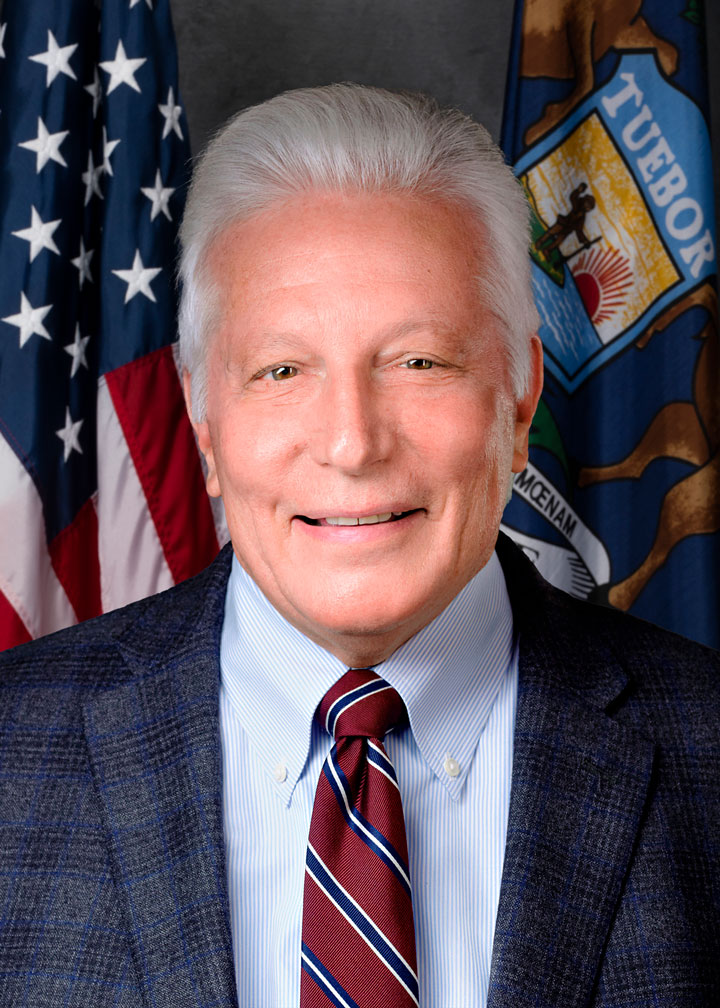
Paul Wojno
Paul Wojno Senate · District 10
D
Strong +
94% 29
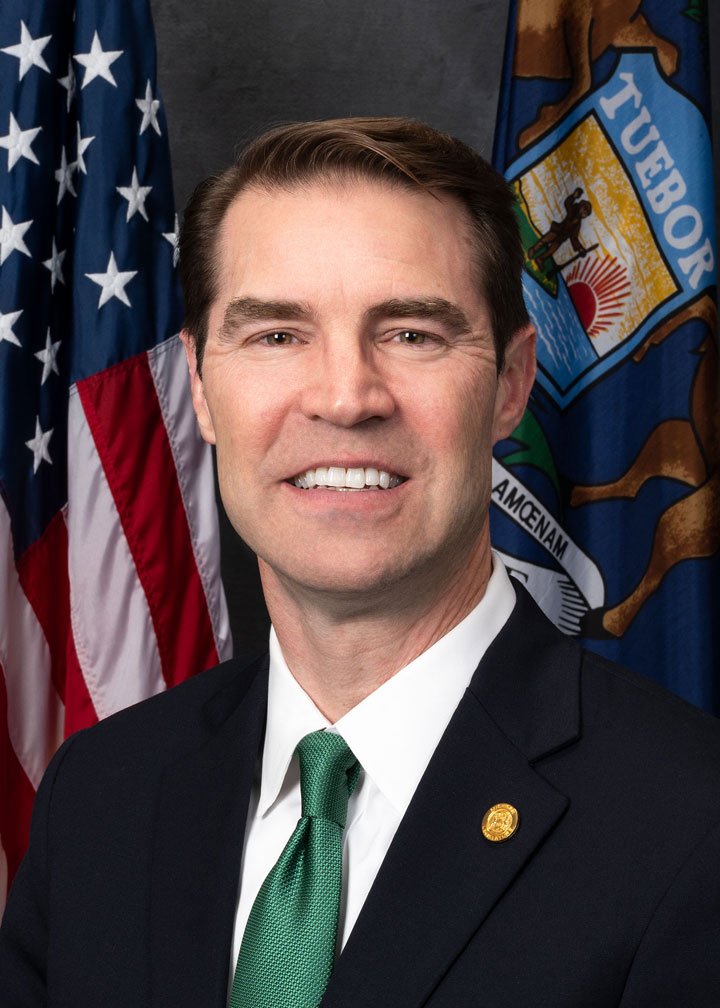
Sean McCann
Sean McCann Senate · District 19
D
Strong +
94% 29
Sylvia Santana
Sylvia Santana Senate · District 2
D
Strong +
94% 29
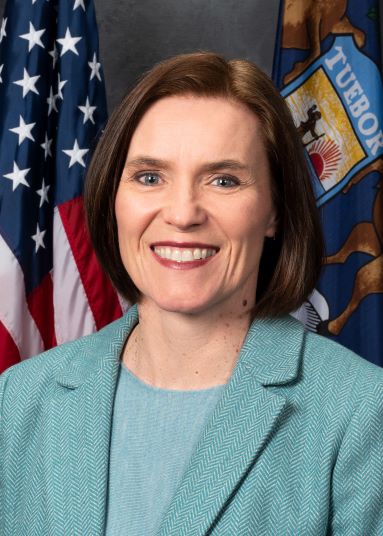
Mary Cavanagh
Mary Cavanagh Senate · District 6
D
Strong +
94% 29
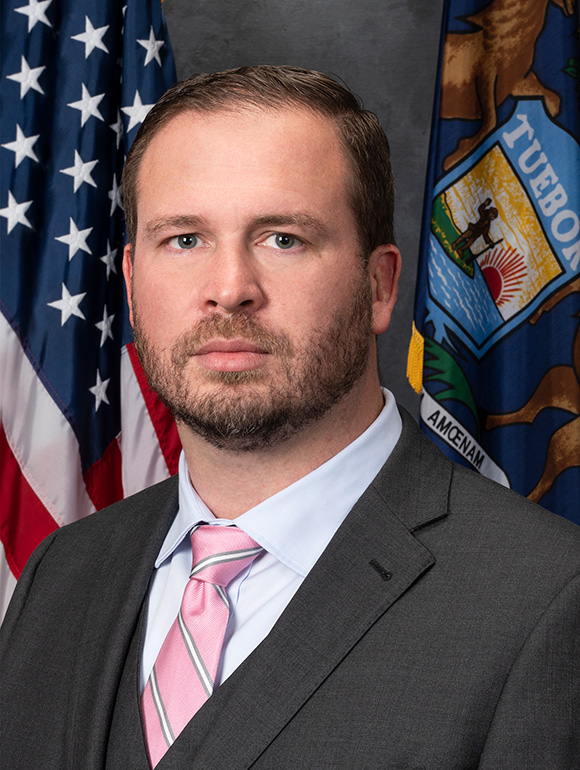
Jonathan Lindsey
Jonathan Lindsey Senate · District 17
R
Strong −
6% 28
Jim Runestad
Jim Runestad Senate · District 23
R
Strong −
17% 23
Lana Theis
Lana Theis Senate · District 22
R
Strong −
17% 29
Ed McBroom
Ed McBroom Senate · District 38
R
Strong −
20% 26
Thomas Albert
Thomas Albert Senate · District 18
R
Oppose
22% 29
Showing 31–40 of 236 bills

All environment bills

in committee · Michigan · Senate Apr 23, 2026

SB 931: Public utilities: electric utilities; new electronic transmission infrastructure; require to use existing rights-of-way. Amends sec. 7 of 1995 PA 30 (MCL 460.567).

Senate Bill 931 requires large electric utilities in Michigan to submit detailed applications to the state commission before building new major transmission lines. The bill mandates that these applications include specific information, such as proposed routes, cost estimates, and an evaluation of how the project could use existing utility corridors or share space with current infrastructure. By emphasizing the consideration of opportunities to parallel with existing rights-of-way, the legislation aims to streamline the approval process for new power lines while encouraging the use of available land. This measure directly affects electric utilities with 50,000 or more residential customers in the state.
in committee · Michigan · House Apr 15, 2026

HB 5777: Businesses: other; large-scale data center life cycle financial responsibility act; create. Creates new act.

This Michigan bill creates a new regulatory framework requiring large-scale data centers to register with the state and pay fees based on their energy consumption. It defines a large-scale data center as a facility with at least 5 megawatts of power or 25,000 square feet of space, while excluding schools, hospitals, and government buildings. Owners must post financial security to cover potential environmental or infrastructure costs and reimburse any research expenses related to public safety reviews. The legislation also establishes a specific fund to manage these revenues and grants the state department of environment, Great Lakes, and energy the authority to set rules and enforce compliance.
passed · Michigan · House Apr 22, 2026

HR 292: A resolution to urge the Governor to take all appropriate actions to support and expedite the Brandon Road Interbasin Project in coordination with the Administration of President Donald J. Trump, including by directing relevant departments to facilitate efficient advancement of the project and recommending action to the House of Representatives.

This House resolution urges the Governor of Michigan to take actions that support and speed up the Brandon Road Interbasin Project, which aims to stop invasive Asian carp from entering the Great Lakes. The bill asks state officials to work closely with the federal government to ensure timely reviews and approvals, and it requests that the House be informed of any additional steps needed to move the project forward. By expediting the construction of underwater barriers, the measure seeks to protect Michigan's economy and environment from potential ecological damage caused by the carp. The resolution does not create new laws but serves as a formal request to state and federal partners to coordinate efforts and avoid further delays.
in committee · Michigan · House Apr 28, 2026

HB 5890: Trade: consumer goods and services; use of PFAS in household products; prohibit. Creates new act.

This bill, known as the Hazardous Products Act, would ban the sale and manufacture of household items containing intentionally added PFAS chemicals starting in 2027. The legislation specifically targets a wide range of consumer goods, including clothing, carpets, cookware, cosmetics, baby products, and upholstery, while explicitly excluding military equipment and personal protective gear. To enforce these restrictions, the bill establishes penalties for violations, ranging from misdemeanor fines for first offenses to felony charges for repeat offenders, and grants individuals the right to sue for damages or seek court orders to stop non-compliant production.
Sub-Topics Drinking Water
in committee · Michigan · Senate May 21, 2026

SB 1003: Natural resources: land acquisition; preservation of land and water; provide for. Amends secs. 503, 2106 & 2165 of 1994 PA 451 (MCL 324.503 et seq.) & adds sec. 502c.

SB 1003 directs the Michigan Department of Natural Resources to coordinate efforts to conserve 30% of the state's land and water by 2030, including private, tribal, and public holdings. To achieve this goal, the bill requires the department to create six regional conservation plans by December 2026 that address biodiversity, climate resilience, and environmental justice while soliciting input from tribes, local governments, and various organizations. These plans must be based on scientific data, include assessments of current funding and programs, and be updated every ten years unless disapproved by legislative committees. Additionally, the bill establishes new definitions for terms like "ecosystem services" and "habitat connectivity" and mandates the development of an online tool to assist with land use decisions as technology and funding become available.
in committee · Michigan · House Apr 15, 2026

HB 5788: Environmental protection: landfills; public comment during landfill expansion and construction; allow. Amends secs. 1307 & 11125 of 1994 PA 451 (MCL 324.1307 & 324.11125).

This bill amends Michigan's environmental laws to require state officials to consider specific public input and community impacts when reviewing applications to build or expand landfills. It mandates that agencies evaluate public comments, local policies, and potential disproportionate environmental burdens on nearby communities, such as those near schools or hospitals, before granting permits. Additionally, the legislation introduces stricter deadlines for processing permit applications and requires the state to pay applicants a fee if the department fails to meet these timelines.
in committee · Michigan · House Jun 4, 2026

HB 5802: Natural resources: fishing; allowable catch per species and percentage quota for commercial fishing; provide for. Amends secs. 47324, 47326, 47328, 47329, & 48724 of 1994 PA 451 (MCL 324.47324 et seq.) & adds sec 47363. TIE BAR WITH: HB 5801'26

This bill amends Michigan's natural resources laws to update regulations on commercial fishing, including allowable catch limits and quota percentages for various fish species. It establishes stricter record-keeping requirements for fish dealers and mandates that commercial fishers report their catch immediately after each fishing season ends. The legislation also introduces new financial penalties for illegal fishing, requiring offenders to pay fines based on the weight of the fish taken, and sets a rule that commercial licenses will be permanently revoked if a fisher commits five specific violations within a five-year period. Additionally, the bill rescinds several outdated administrative rules related to commercial fishing operations.
in committee · Michigan · House Apr 23, 2026

HJR S: Environmental protection: pollution prevention; green initiative; provide for. Amends the state constitution by adding sec. 29 to art. I.

This bill proposes adding a new section to the Michigan state constitution to guarantee every person an inherent right to a clean environment, including clean water, air, and soil. It establishes that the state and all its agencies must act as trustees for natural resources, which are declared the common property of all people, including future generations. The amendment would require the government to protect these rights equitably for everyone regardless of race, ethnicity, socioeconomic status, or location, and it allows citizens to directly enforce these rights in court. If approved by voters, this change would legally bind the state to conserve and maintain natural resources while preventing any actions that infringe upon environmental rights.
Sub-Topics Water Quality
in committee · Michigan · House Apr 28, 2026

HB 5895: Water supply: quality and standards; access to safe drinking water; require when a water source tests positive for polyfluoroalkyl substances (PFAS). Amends 1978 PA 368 (MCL 333.1101 - 333.25211) by adding secs. 12722, 12723 & 12724.

This bill requires Michigan's Department of Environment, Great Lakes, and Energy to notify private well owners and nearby residents when tests detect unsafe levels of PFAS chemicals in their water. The legislation mandates that the department provide specific guidance on reducing exposure, along with free certified water filters, to those directly affected and to neighbors within a one-mile radius of the contaminated well. Additionally, the bill establishes a voluntary registry to send email alerts about future testing locations and dates, ensuring the public stays informed about potential water quality issues.
passed both · Michigan · House Jul 1, 2026

HB 5937: Environmental protection: permits; approval process for certain permits; modify. Amends secs. 1301, 1305, 1307, 3112 & 30307 of 1994 PA 451 (MCL 324.1301 et seq.).

This bill modifies the Michigan Natural Resources and Environmental Protection Act to establish specific time limits for state agencies to review and approve various environmental permits. It directly affects businesses and individuals applying for permits related to activities such as oil and gas drilling, mining, waste disposal, water use, and construction. The legislation defines a "processing period" with varying deadlines - ranging from 20 to 150 days depending on the permit type - and requires agencies to declare an application administratively complete within 30 days of receipt. By setting these clear timelines, the bill aims to create a more predictable and efficient approval process for environmental permits issued by the Department of Environment, Great Lakes, and Energy.
Sub-Topics Waste Management
Showing 31 to 40 of 236 bills
Previous 1 3 4 5 24 Next