Issue · Environment

Environment

Every environment bill, vote, and legislator stance in Michigan, automatically classified by Maddy, our AI policy reader.

Total bills
42
2025-2026 Regular Session
Top supporter
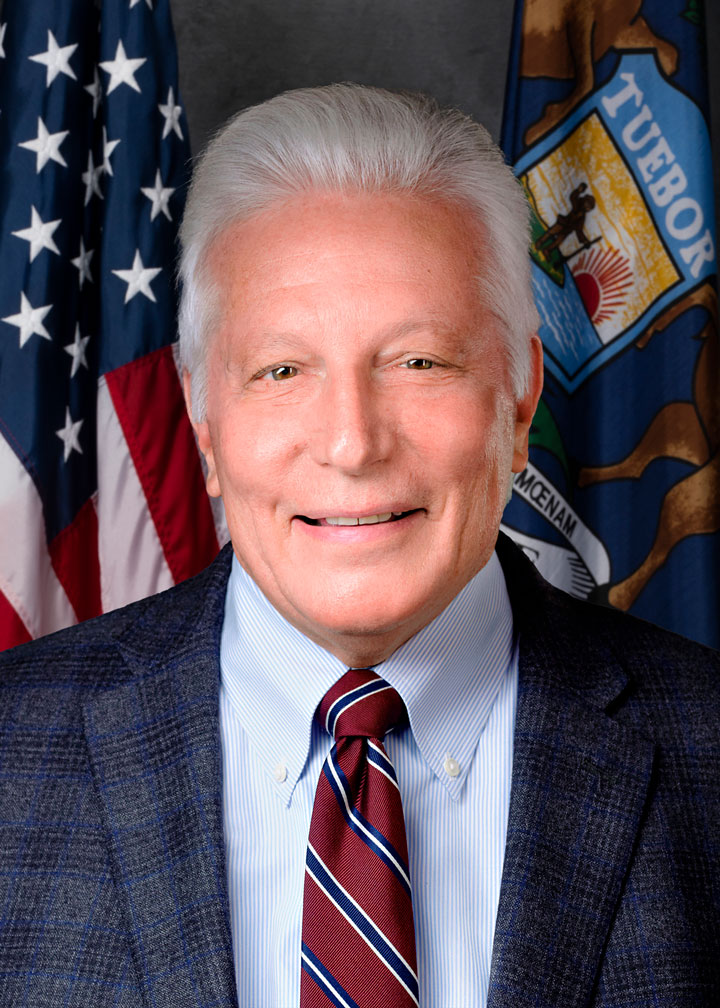
Winnie Brinks
94% support rate
Top opponent
Jonathan Lindsey
6% support rate
Ranked legislators
10
5 support · 5 oppose
Key legislators

Who's moving environment in Michigan

Legislators moving environment in Michigan
Legislator Party Stance Support rate Votes
Winnie Brinks
Winnie Brinks Senate · District 29
D
Strong +
94% 29
Paul Wojno
Paul Wojno Senate · District 10
D
Strong +
94% 29
Sean McCann
Sean McCann Senate · District 19
D
Strong +
94% 29
Sylvia Santana
Sylvia Santana Senate · District 2
D
Strong +
94% 29
Mary Cavanagh
Mary Cavanagh Senate · District 6
D
Strong +
94% 29
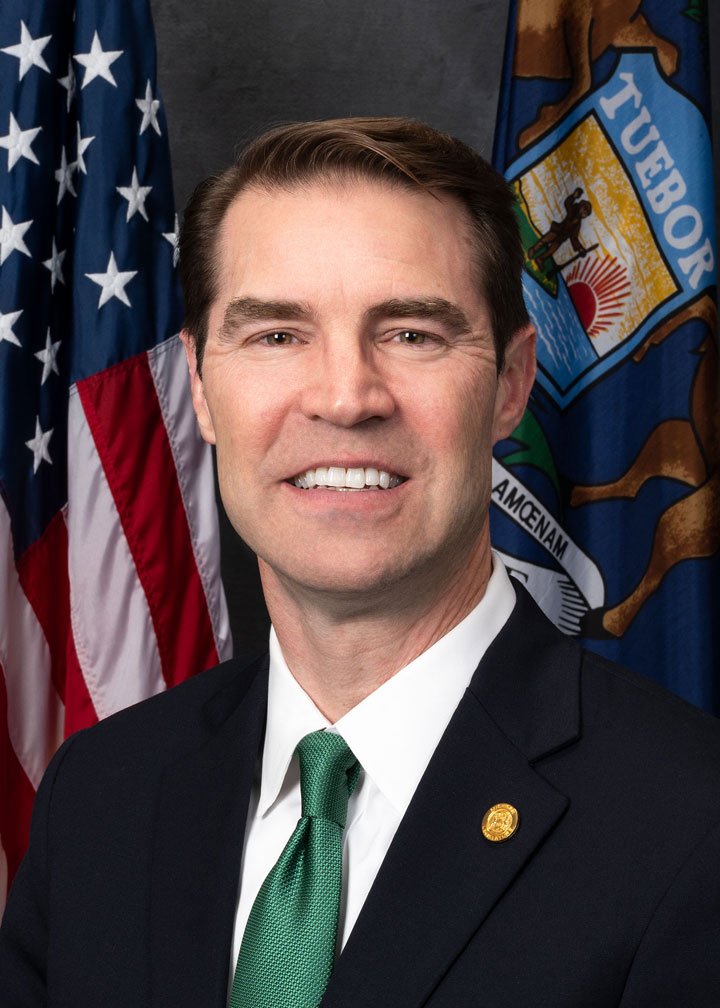
Jonathan Lindsey
Jonathan Lindsey Senate · District 17
R
Strong −
6% 28
Jim Runestad
Jim Runestad Senate · District 23
R
Strong −
17% 23
Lana Theis
Lana Theis Senate · District 22
R
Strong −
17% 29
Ed McBroom
Ed McBroom Senate · District 38
R
Strong −
20% 26
Thomas Albert
Thomas Albert Senate · District 18
R
Oppose
22% 29
Showing 1–10 of 42 bills

All environment bills

in committee · Michigan · House Aug 26, 2026

HR 348: A resolution to urge the Director of the United States Environmental Protection Agency to reexamine the current state of non-attainment in West Michigan.

This House resolution urges the EPA Director to reexamine air quality non-attainment designations in West Michigan, specifically including Allegan County. It argues that current federal standards fail to account for pollution originating from urban areas across Lake Michigan, such as Chicago and Milwaukee, which affects local communities not responsible for those emissions. The text notes that these designations restrict manufacturing expansion and economic development in the region. Copies of the resolution are directed to be sent to the EPA Administrator.
Sub-Topics Air Quality
in committee · Michigan · House Jul 1, 2026

HB 6143: Natural resources: Great Lakes; regulations regarding crib docks in the Les Cheneaux Islands; prohibit Amends 1994 PA 451 (MCL 324.101 - 324.90106) by adding secs. 32509a & 32509b & provides for a referendum.

This bill proposes changes to Michigan's natural resources laws to allow for the construction of traditional timber crib docks and boathouses in the Les Cheneaux Islands, provided they are built from natural wood and stone and approved by local zoning authorities. Under the new rules, permits would be granted only if these structures do not extend beyond the owner's shoreline or create navigational hazards, while also requiring the state to reject denials based on generalized environmental assumptions without specific evidence. The legislation includes a mandatory referendum in Clark Township, meaning the changes will only take effect if a majority of voters in that area approve them at an upcoming election.
passed · Michigan · House Jun 25, 2026

HCR 8: A concurrent resolution to approve an extension of the state of energy emergency declared on April 2, 2026.

This bill extends the state of energy emergency in Michigan by an additional 77 days, effective July 1, 2026. The measure allows the sale of E15 fuel in several counties where current regulations previously restricted it to lower vapor pressure gasoline. By suspending these fuel requirements, the extension aims to increase fuel supply options and help manage rising gas prices for consumers and businesses. The resolution requires approval from both the House and Senate before being sent to the Governor.
passed both · Michigan · Senate Jul 3, 2026

SCR 14: A concurrent resolution to approve an extension of the state of energy emergency declared on April 2, 2026.

This bill extends Michigan's state of energy emergency from July 1, 2026, to September 16, 2026, to align with a potential federal waiver allowing more flexible gasoline production. The measure directly affects consumers and businesses by aiming to prevent fuel shortages and price spikes that could occur if stricter fuel regulations were reinstated. By keeping the emergency in effect, the state can continue to relax its own fuel requirements while the federal government addresses supply constraints. The resolution takes effect immediately upon July 1, ensuring there is no gap in the emergency declaration.
Sub-Topics Natural Disasters Tags Emergency Management
in committee · Michigan · Senate Aug 26, 2026

SB 1051: Businesses: other; Michigan zoning enabling act; make subject to the data center community benefit act. Amends sec. 205 of 2006 PA 110 (MCL 125.3205). TIE BAR WITH: SB 1050'26

SB 1051 amends the Michigan Zoning Enabling Act to explicitly include the Data Center Community Benefit Act as a governing standard for local zoning ordinances, ensuring that zoning decisions for data centers must comply with community benefit requirements. The bill also clarifies that counties and townships cannot regulate the drilling or operation of oil and gas wells, while modifying rules for mining valuable natural resources by placing the initial burden of proof on those challenging a zoning decision. Additionally, it protects renewable energy projects that received special land use approval after January 1, 2021, from having their approvals revoked if substantial construction or specific financial expenditures have occurred. This legislation is tied to SB 1050, meaning it will only take effect if that companion bill is also enacted into law.
in committee · Michigan · House May 13, 2026

HB 5956: Natural resources: wildlife; requirement to register and report deer pelts; eliminate. Amends secs. 42504 & 42505 of 1994 PA 451 (MCL 324.42504 & 324.42505).

This bill removes the legal requirement for hunters and dealers in Michigan to report the number of deer pelts they possess or trade. While the law currently mandates that individuals holding licenses must submit notarized reports on all other fur-bearing animals and game birds, this legislation specifically exempts deer pelts from those reporting obligations. The change affects both hunters who keep pelts after the season and businesses that buy or sell them, allowing them to exclude deer pelts from their monthly and seasonal filings to the state department.
Sub-Topics Wildlife
in committee · Michigan · House Jun 2, 2026

HB 6008: Natural resources: hunting; gray wolf hunting and trapping season; provide for. Amends sec. 40110b of 1994 PA 451 (MCL 324.40110b).

This bill proposes to allow the Michigan Natural Resources Commission to establish the first official hunting and trapping seasons for gray wolves statewide. It authorizes the commission to create these seasons within 90 days of certain related laws becoming active, aiming to manage wolf populations and reduce conflicts with humans and livestock. The legislation directly affects hunters, trappers, and wildlife managers by setting the legal framework for future wolf harvests. However, the bill includes a condition that it will not take effect unless a separate companion bill regarding wolf management is also passed by the legislature.
Sub-Topics Wildlife
in committee · Michigan · House Apr 22, 2026

HB 5837: Local government: ordinances; implementation of certain taxes or regulations based on emissions and the climate or other energy-related metrics: prohibit. Creates new act.

This bill prohibits local governments in Michigan, such as cities and counties, from creating or enforcing taxes and regulations based on carbon emissions, energy consumption, or vehicle miles traveled. It defines these restricted measures broadly to include fees on greenhouse gases, specific fuel types, and mandatory emissions trading programs. If passed, any existing local rules violating these restrictions would become invalid, and local entities would be barred from using public funds to defend such policies in court. The legislation also allows individuals to sue to stop the implementation of these prohibited local measures and grants them the right to recover legal fees if they win the case.
Sub-Topics Climate Change Tags Local Government
in committee · Michigan · Senate Mar 10, 2026

SB 823: Environmental protection: air pollution; petroleum and carbon dioxide pipeline act; exclude carbon capture projects and sequestration projects and provide conditions for pipeline approval. Amends title & secs. 1, 3 & 11 of 1929 PA 16 (MCL 483.1 et seq.) & adds secs. 13 & 15. TIE BAR WITH: SB 0822'26, SB 0824'26, SB 0825'26, SB 0826'26, SB 0827'26

This bill expands Michigan's existing pipeline regulations to include carbon dioxide pipelines while explicitly excluding carbon dioxide capture and sequestration projects from oversight. It requires the Michigan Public Service Commission to approve all new pipelines transporting crude oil, petroleum products, or carbon dioxide substances, with applications needing detailed analysis of public safety, environmental impact, and alternative routes. The legislation grants the commission authority to regulate pipeline construction and operation but exempts private producers and specific carbon dioxide projects from these requirements.
Sub-Topics Air Quality
in committee · Michigan · House Mar 5, 2026

HB 5665: Environmental protection: air pollution; petroleum and carbon dioxide pipeline act; exclude carbon capture projects and sequestration projects and provide conditions for pipeline approval. Amends title & secs. 1, 3 & 11 of 1929 PA 16 (MCL 483.1 et. seq.) & adds secs. 13 & 15. TIE BAR WITH: HB 5664'26, HB 5666'26, HB 5667'26, HB 5668'26, HB 5669'26

This bill updates Michigan's existing pipeline regulations to include carbon dioxide transport while explicitly exempting carbon capture and sequestration projects from oversight. It requires companies building pipelines for oil, petroleum products, or carbon dioxide to obtain approval from the Michigan Public Service Commission, which will review applications for public safety, environmental stewardship, and market conditions. The legislation also clarifies that producers, refiners, and private pipeline operators without public interest involvement remain outside the commission's regulatory authority. By adding new sections to the state's pipeline act, the bill establishes a formal approval process that considers alternative routes and infrastructure options before granting permission for new pipeline construction.
Showing 1 to 10 of 42 bills
1 2 3 5 Next