Issue · Environment

Environment

Every environment bill, vote, and legislator stance in Maryland, automatically classified by Maddy, our AI policy reader.

Total bills
190
2026 Regular Session
Top supporter
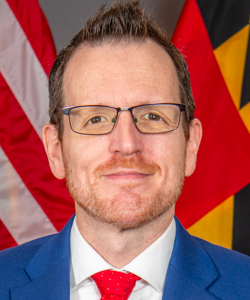
Mary Washington
91% support rate
Top opponent
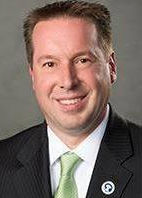
Jeff Ghrist
28% support rate
Ranked legislators
10
5 support · 5 oppose
Key legislators

Who's moving environment in Maryland

Legislators moving environment in Maryland
Legislator Party Stance Support rate Votes
Mary Washington
Mary Washington Senate · District 43
D
Strong +
91% 36
Mary-Dulany James
Mary-Dulany James Senate · District 34
D
Strong +
89% 41
Brian Crosby
Brian Crosby House · District 29B
D
Strong +
86% 36
Dalya Attar
Dalya Attar Senate · District 41
D
Strong +
85% 21
Malcolm Augustine
Malcolm Augustine Senate · District 47
D
Strong +
83% 43
Jeff Ghrist
Jeff Ghrist House · District 36
R
Oppose
28% 62
Johnny Mautz
Johnny Mautz Senate · District 37
R
Oppose
30% 47
Justin Ready
Justin Ready Senate · District 5
R
Oppose
30% 47
Paul Corderman
Paul Corderman Senate · District 2
R
Oppose
30% 47
J.B. Jennings
J.B. Jennings Senate · District 7
R
Oppose
34% 46
Showing 171–180 of 190 bills

All environment bills

in committee · Maryland · House of Delegates Feb 6, 2026

HB 728: State Procurement - Exceptions - Historic Preservation Services

HB 728 creates an exception to standard state procurement rules for specific Maryland departments (including the Department of General Services, Housing and Community Development, Planning, and Transportation) when contracting with nonprofits for historic preservation, archaeology, or conservation projects. The bill requires these contracts to include three key provisions: transparent competitive procurement of subcontracted work, annual reports on project outcomes and spending, and efforts to maximize community engagement. This exception applies only to the listed departments and services, leaving most other state procurement processes unchanged. The law takes effect October 1, 2026.
Sub-Topics Conservation
passed both · Maryland · House of Delegates Apr 10, 2026

HB 437: Transportation - Major Highway Capacity Expansion Projects and Impact Assessments (Transportation and Climate Alignment Act of 2026)

HB 437, the Transportation and Climate Alignment Act of 2026, requires Maryland’s Department of Transportation to conduct impact assessments for major highway expansion projects costing over $100 million. These assessments must evaluate greenhouse gas emissions and vehicle miles traveled, and the department must develop a multimodal transportation program (including transit, biking, and pedestrian improvements) to offset emissions from the project. The program must prioritize overburdened and underserved communities affected by the project, aiming for net-zero or negative greenhouse gas emissions when combined with the highway project. This applies to projects not already funded or reviewed before June 30, 2026, and affects highway planning decisions across the state.
signed · Maryland · House of Delegates Apr 28, 2026

HB 258: Chesapeake and Atlantic Coastal Bays Critical Area Protection Program - Standards and Procedures

HB 258 updates Maryland's rules for development near the Chesapeake and Atlantic Coastal Bays. It requires local governments to conduct 10-year reviews of their critical area programs, sets specific location rules for new development (like maintaining 300-foot buffers from tidal wetlands), and mandates climate vulnerability assessments for projects. The bill also clarifies procedures for correcting mapping errors and updating tree replanting requirements. These changes directly affect 12 coastal Maryland counties (including Calvert and Talbot) that manage local development plans under the program. The law aims to strengthen protections for bay ecosystems through clearer, updated standards for land use decisions.
signed · Maryland · House of Delegates Apr 28, 2026

HB 654: Natural Resources - Maryland Heritage Areas Authority - Funding and Grants

HB 654 modifies funding rules for Maryland's Heritage Areas Authority, directly affecting local jurisdictions and entities managing certified heritage areas. It removes previous 50% limits on grant coverage for project costs (allowing full funding for eligible activities like preservation and marketing) and adjusts how Program Open Space funds are used. Specifically, it increases the allowable percentage for operating expenses from 10% to 7% or $600,000 (whichever is greater), and raises the maximum funding transfer to the Authority's Financing Fund. These changes aim to provide greater flexibility for heritage area management while maintaining oversight of fund usage.
Sub-Topics Conservation
in committee · Maryland · House of Delegates Feb 2, 2026

HB 629: Maryland Energy Administration - Study on Land-Based Wind Energy

HB 629 requires the Maryland Energy Administration (MEA) to study the potential for land-based wind energy generation across Maryland. The study must assess the state's total wind energy potential, identify specific locations for generation, and examine successful mitigation strategies used elsewhere to resolve conflicts between wind turbines and military radar systems. The MEA may use funds from the Strategic Energy Investment Fund to conduct the study, with findings due to the Governor and relevant legislative committees by December 1, 2026. This bill does not create new regulations but mandates a factual analysis to inform future decisions about wind energy development.
Sub-Topics Wind
passed · Maryland · House of Delegates Apr 13, 2026

HB 701: Department of Natural Resources - Water Resources - Identification of Vernal Pools (Jack Cover Vernal Pool Wetlands Protection Act of 2026)

HB 701 requires Maryland's Department of the Environment to create regulations protecting "qualified vernal pools" - seasonal water bodies that support species like wood frogs but don’t meet federal wetland criteria. The bill mandates the department to identify these pools, establish protective buffers around them, and require developers to avoid, minimize, or mitigate impacts during projects. It directly affects landowners and developers planning construction or land-disturbing activities near these pools. The law aligns buffer and mitigation rules with existing protections for nontidal wetlands, ensuring consistent regulatory standards.
signed · Maryland · House of Delegates May 26, 2026

HB 320: Anne Arundel County - Property Tax Credit - Rural Legacy Program

HB 320 creates a property tax credit for Anne Arundel County landowners who sell development rights under the Rural Legacy Program. It allows the county to grant a credit against the county property tax for real property located in a designated Rural Legacy Area (as defined in Maryland’s Natural Resources Article) where the owner has sold development rights. This directly affects rural landowners participating in the Rural Legacy Program who choose to restrict future development on their land. The credit replaces an existing provision and becomes effective for tax years beginning after June 30, 2026.
in committee · Maryland · House of Delegates Jan 30, 2026

HB 572: Attorney General Actions and Climate Crimes Accountability Fund (Climate Crimes Accountability Act)

HB 572 authorizes Maryland’s Attorney General to sue large fossil fuel companies (with over $1 billion in market capitalization involved in extracting or processing coal, oil, or gas) for unlawful conduct contributing to climate change, including fraud or deception. It creates the Climate Crimes Accountability Fund, financed by settlements or judgments from these lawsuits, to pay for programs addressing specific climate harms like flooding, extreme heat, drought, and waterborne pathogens. The fund is a special, non-lapsing account managed by the state, with interest earnings automatically added to it. All money must directly support climate harm prevention, mitigation, or repair efforts as defined in the bill.
in committee · Maryland · Senate Jan 28, 2026

SB 368: Calvert and St. Mary's Counties - Living Shorelines and Nonstructural Shoreline Stabilization Measures

SB 368 requires property owners in Calvert and St. Mary’s Counties to use "living shorelines" or other nonstructural erosion control methods (like marsh creation, native plants, or oyster reefs) instead of hard structures for shoreline stabilization. It exempts these counties from standard requirements for nonstructural measures and creates a waiver process for property owners who can prove such methods are unfeasible due to factors like severe erosion or narrow shorelines. The bill defines "living shorelines" as projects using natural materials to absorb storm energy, restore habitat, and minimize erosion, while avoiding hard structures where possible. This policy change directly affects landowners near water in these two counties, prioritizing ecological solutions for coastal protection.
in committee · Maryland · Senate Feb 9, 2026

SB 429: Maryland Energy Administration - Study on Land-Based Wind Energy

SB 429 requires the Maryland Energy Administration to study the potential for land-based wind energy generation in Maryland. The study must assess total wind energy potential, identify suitable locations, examine successful mitigation solutions for conflicts with military radar systems (like ADAMS), and evaluate their applicability in Maryland. The Administration may use funds from the Strategic Energy Investment Fund to conduct the study and must submit findings and recommendations to the Governor and relevant legislative committees by December 1, 2026. This bill directly affects the Maryland Energy Administration and sets a framework for future policy decisions on wind energy development.
Sub-Topics Wind
Showing 171 to 180 of 190 bills