Issue · Education

Education

Every education bill, vote, and legislator stance in Maryland, automatically classified by Maddy, our AI policy reader.

Total bills
252
2026 Regular Session
Top supporter
Nick Charles
100% support rate
Top opponent
Robin Grammer
6% support rate
Ranked legislators
10
5 support · 5 oppose
Key legislators

Who's moving education in Maryland

Legislators moving education in Maryland
Legislator Party Stance Support rate Votes
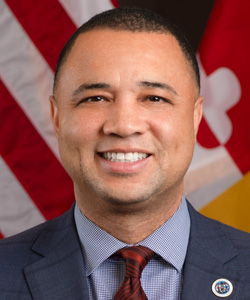
Nick Charles
Nick Charles Senate · District 25
D
Strong +
100% 48
Denise Roberts
Denise Roberts House · District 25
D
Strong +
96% 92
Adrian Boafo
Adrian Boafo House · District 23
D
Strong +
96% 48
Antonio Hayes
Antonio Hayes Senate · District 40
D
Strong +
95% 50
Shaneka Henson
Shaneka Henson Senate · District 30
D
Strong +
95% 51
Robin Grammer
Robin Grammer House · District 6
R
Strong −
6% 85
Matt Morgan
Matt Morgan House · District 29A
R
Strong −
9% 98
Mark Fisher
Mark Fisher House · District 27C
R
Strong −
9% 98
Nic Kipke
Nic Kipke House · District 31
R
Strong −
9% 100
Lauren Arikan
Lauren Arikan House · District 7B
R
Strong −
9% 98
Showing 31–40 of 252 bills

All education bills

passed · Maryland · House of Delegates Mar 20, 2026

HB 1274: Education - Posthumous Diploma Awards - Established (Eric's Law)

HB 1274 authorizes Maryland public school systems to award three types of diplomas to deceased students: standard diplomas (for students near graduation in 12th grade), posthumous honorary diplomas (for students in 11th/12th grade close to graduation), and in memoriam diplomas (for students in grades K-10 or county residents). To qualify, students must have been enrolled in a Maryland public school, met credit requirements, and been in good standing at the time of death. Schools may only issue these diplomas upon written request from a parent, guardian, or next of kin, and all awarded diplomas are ceremonial with no academic credit or impact on graduation rates. The bill amends Maryland’s education code to establish these specific eligibility criteria and procedures.
in committee · Maryland · House of Delegates Mar 11, 2026

HB 1313: Higher Education - Tuition Exemption - Incarcerated Individuals

HB 1313 would exempt incarcerated individuals in Maryland from paying tuition at public colleges and universities, directly affecting those enrolled in higher education programs within correctional facilities. The bill requires incarcerated individuals to apply for non-loan financial aid (like grants), which must first cover their tuition costs; the exemption then applies to any remaining tuition after aid is applied. It does not cover student loans and applies regardless of other scholarships or grants received. The exemption takes effect July 1, 2026, for all public higher education institutions in Maryland.
signed · Maryland · Senate May 26, 2026

SB 668: Children's Cabinet Fund - Renaming and Funding for Grants to Local Management Boards

SB 668 renames Maryland's "Children's Cabinet Fund" to the "Children's Cabinet Interagency Fund" and requires the Governor to annually appropriate specific funds for grants to local management boards. It mandates $3 million more for fiscal year 2028 than 2027 and $2 million more for fiscal year 2030 than 2029. Local management boards receiving funds must develop community partnership agreements coordinating with state and local child and family service plans, and use the money for evidence-based programs addressing youth development, prevention services, and out-of-home care needs. This bill directly affects local boards, children, and families by structuring state funding to support coordinated, community-driven services.
Tags Children
in committee · Maryland · House of Delegates Feb 16, 2026

HB 1115: Education - Career Ladder - National Board Certification Associated Salary Increases

HB 1115 clarifies that Maryland public school teachers holding a National Board Certification (NBC) with a 10-year award period (awarded by December 31, 2021) are eligible for specific salary increases tied to the career ladder. The bill establishes a $10,000 salary increase for becoming an NBC teacher and an additional $7,000 for teaching at a low-performing school, applying retroactively to eligible teachers. It also sets a minimum teacher salary of $60,000 starting July 1, 2026, and specifies that teachers meeting multiple criteria receive all applicable increases. This bill directly affects certified public school teachers in Maryland who hold qualifying NBC credentials.
in committee · Maryland · House of Delegates Feb 16, 2026

HB 1077: Education - Career and Technical Education - Workgroup to Study Tiered Stackable Credentials Framework

HB 1077 requires Maryland's State Department of Education and Career and Technical Education Committee to form a workgroup by July 2026 to study how high school students can earn portable, industry-recognized credentials that build toward college degrees. The workgroup will review models from South Carolina and Arkansas, examine student planning tools starting in 8th grade, and explore flexible credit systems allowing course substitutions for graduation requirements. It will also analyze credential portability across schools and propose a standardized "list of valuable credentials" for high-demand fields, with a final report due December 2026. This bill does not enact changes but studies potential reforms to align with Maryland's existing education framework.
signed · Maryland · Senate May 26, 2026

SB 507: Public Schools - Individuals With Disabilities - Accessibility and Emergency Planning

SB 507 requires Maryland public school systems to identify accessibility barriers for students with disabilities during routine safety evaluations and emergency planning. It specifically mandates annual reports detailing any instances where school facilities became inaccessible for disabled students in ways that could hinder evacuation or emergency response during incidents. These reports must remain confidential, exempt from public disclosure under Maryland's public information law, with limited exceptions for legislative requests. The bill directly affects all local school systems in Maryland, aiming to improve emergency preparedness for students with disabilities through concrete reporting requirements.
Sub-Topics School Safety Special Education Tags People with Disabilities
signed · Maryland · Senate May 26, 2026

SB 769: University System of Maryland - Academic Facilities Bonding Authority

This bill authorizes the University System of Maryland to issue $50 million in bonds ($26 million for specific projects and $24 million for systemwide facility renewals) to fund academic facility improvements. It directly affects three University System of Maryland campuses (Towson University, University of Maryland College Park, and the System Office) by financing projects like electrical upgrades, a new health complex, and deferred maintenance repairs. The bonds are explicitly non-state debt, meaning they do not count as Maryland's obligation or require state funding. The bill approves specific construction and renewal projects to modernize academic infrastructure without creating new state liabilities. It takes effect June 1, 2026.
Sub-Topics Higher Education
in committee · Maryland · House of Delegates Feb 12, 2026

HB 1343: Internet Gaming - Authorization and Implementation

HB 1343 would authorize Maryland to offer licensed online gambling by allowing the State Lottery and Gaming Control Commission to issue licenses to qualified operators. It requires licensees to verify users' age and location before permitting play and establishes a fund to support displaced video lottery employees. Crucially, the bill changes how internet gaming revenue funds public schools: starting in fiscal year 2028, counties must directly allocate gaming proceeds to school budgets instead of counting them toward existing education funding calculations. This affects online gambling companies, state regulators, county governments, and public school systems across Maryland.
in committee · Maryland · Senate Feb 10, 2026

SB 592: State Board of Education - Financial Literacy - Graduation Requirement

SB 592 requires Maryland public high schools to add a standalone personal financial literacy course as a graduation requirement, effective for students graduating in 2030 or later. The bill mandates that students complete at least one semester of this course in grades 11 or 12, with county boards of education determining curriculum and materials while aligning with state standards. Successful completion earns students at least 0.5 credits toward their diploma, and counties may allow this credit to satisfy remaining requirements through existing courses like business or social studies. The State Board of Education must establish the graduation requirement, and the law takes effect July 1, 2026.
Sub-Topics Curriculum
signed · Maryland · House of Delegates May 26, 2026

HB 1582: Education - Program of Educational Accountability - Alterations (Comprehensive Outcomes and Measures of Progress for Supporting Schools (COMPASS Act))

HB 1582 (COMPASS Act) changes Maryland's public school accountability system by requiring schools to use multiple quality indicators beyond standardized tests for evaluation. It mandates at least three indicators - including school climate surveys, class size, chronic absenteeism, and access to advanced courses - and prohibits national tests from being the sole measure. The bill sets strict rules for the composite score, limiting academic indicators to 70% of the total, requiring transparency in score breakdowns, and banning letter grades. It takes effect July 1, 2026, directly affecting all public schools and the State Board of Education.
Showing 31 to 40 of 252 bills
Previous 1 3 4 5 26 Next