Issue · Education

Education

Every education bill, vote, and legislator stance in Maryland, automatically classified by Maddy, our AI policy reader.

Total bills
247
2026 Regular Session
Top supporter
Nick Charles
100% support rate
Top opponent
Robin Grammer
6% support rate
Ranked legislators
10
5 support · 5 oppose
Key legislators

Who's moving education in Maryland

Legislators moving education in Maryland
Legislator Party Stance Support rate Votes
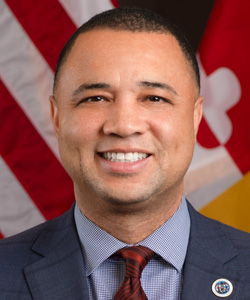
Nick Charles
Nick Charles Senate · District 25
D
Strong +
100% 48
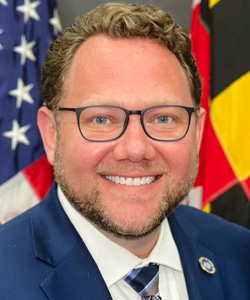
Denise Roberts
Denise Roberts House · District 25
D
Strong +
96% 92
Adrian Boafo
Adrian Boafo House · District 23
D
Strong +
96% 48
Antonio Hayes
Antonio Hayes Senate · District 40
D
Strong +
95% 50
Shaneka Henson
Shaneka Henson Senate · District 30
D
Strong +
95% 51
Robin Grammer
Robin Grammer House · District 6
R
Strong −
6% 85
Matt Morgan
Matt Morgan House · District 29A
R
Strong −
9% 98
Mark Fisher
Mark Fisher House · District 27C
R
Strong −
9% 98
Nic Kipke
Nic Kipke House · District 31
R
Strong −
9% 100
Lauren Arikan
Lauren Arikan House · District 7B
R
Strong −
9% 98
Showing 151–160 of 247 bills

All education bills

passed · Maryland · House of Delegates Apr 13, 2026

HB 479: Southern Maryland Early College Teacher Pathway Program Workgroup - Establishment

HB 479 establishes the Southern Maryland Early College Teacher Pathway Program to create a structured, tuition-free pathway for high school students in Southern Maryland - especially those from underrepresented groups and rural areas - to begin teacher preparation while earning college credits. The State Department of Education, in collaboration with the Maryland Higher Education Commission, will administer the program, ensuring participants are treated as dually enrolled students with no tuition or fees required. The University System of Maryland must develop the program and teacher preparation pathway, with a workgroup (including appointed members from the Governor, Senate, and House) overseeing its design. This program aims to address local teacher shortages and build a diverse educator pipeline, aligning with statewide education goals.
signed · Maryland · House of Delegates May 26, 2026

HB 525: County Boards of Education - Student Electronic Communication Device Use Policy - Establishment (Joanne C. Benson Maryland Phone-Free Schools Act)

HB 525 requires Maryland county school boards to create and implement policies limiting student use of phones and other electronic communication devices (like tablets or smartwatches) during the academic school day, effective by the 2027-2028 school year. The policy must prohibit personal device use except for specific, documented needs (such as IEP accommodations, health monitoring, emergencies, or educational purposes when school devices aren't available), and require students to store devices securely. School boards must engage parents and staff in developing the policy, publish it in multiple languages, and report annually on its implementation, including enforcement data and impacts on student focus and well-being. The bill directly affects all public school students and county school boards across Maryland.
Sub-Topics Special Education
in committee · Maryland · Senate Feb 10, 2026

SB 430: Institutions of Higher Education - Mandatory Disclosures for New and Prospective Students (Informed Enrollment Act)

SB 430, the Informed Enrollment Act, requires Maryland institutions of higher education admitting first-time undergraduates to prominently display a link to the U.S. Department of Education’s College Scorecard on their public websites by July 1, 2027. Each institution must also provide a clear explanation of the Scorecard’s data on costs, graduation rates, salary outcomes, and debt. Schools must share this information during student orientation, recruitment materials, and regularly with prospective students, new students, advisors, and career counselors via websites, social media, and career center pages. The bill is contingent on the federal College Scorecard remaining active; if discontinued, the law automatically ends without further legislative action. The law takes effect July 1, 2026, with compliance beginning July 1, 2027.
Sub-Topics Higher Education
signed · Maryland · Senate Apr 14, 2026

SB 7: Higher Education - Douglas J. J. Peters Veterans of the Afghanistan and Iraq Conflicts Scholarship - Repeal of Termination Date

SB 7 repeals the expiration date for the Douglas J. J. Peters Veterans of the Afghanistan and Iraq Conflicts Scholarship, removing the June 30, 2030 cutoff that previously prevented new awards after that date. This change allows the scholarship to be awarded indefinitely to eligible veterans, active service members, or their dependents who meet Maryland residency and educational requirements. The bill also removes restrictions on renewing scholarships for recipients who received their initial award before 2030. The scholarship covers up to 50% of tuition, fees, and room/board at Maryland public universities, requiring a 2.5 GPA and 5 years of full-time study. It takes effect July 1, 2026.
in committee · Maryland · House of Delegates Feb 2, 2026

HB 109: Institutions of Higher Education and Elementary and Secondary Schools - Title VI Coordinators

HB 109 requires all Maryland public colleges, universities, and local school systems to appoint a designated Title VI Coordinator by July 1, 2026. These coordinators must ensure compliance with federal civil rights law (Title VI of the 1964 Civil Rights Act), which prohibits discrimination based on race, color, or national origin in federally funded programs. The bill establishes a direct complaint process, allowing students, parents, or others to file discrimination complaints with a school or college's Title VI Coordinator instead of (or in addition to) the State Superintendent. Coordinators must investigate complaints, maintain records, provide training, and promote equal access to programs. This law directly affects all Maryland public K-12 schools and higher education institutions.
signed · Maryland · Senate May 26, 2026

SB 198: Prince George's Community College - Aerospace and Aviation Systems Technology Programs - Feasibility Study

SB 198 requires Prince George’s Community College to establish an Aerospace Technology Studies Program by December 2026, in collaboration with Maryland’s Higher Education Commission, Department of Commerce, and local economic development groups. The program must include training in aerospace systems, avionics, advanced manufacturing, and AI applications, with industry internships and a clear high school-to-college career pathway. It mandates formal partnerships with local aerospace employers and requires annual reports on progress and student outcomes to state and county officials. The bill directly affects students seeking aerospace careers and local employers needing skilled workers, focusing on workforce development without specifying funding or cost.
signed · Maryland · Senate May 26, 2026

SB 311: Education - The Blueprint for Maryland's Future - Revisions

SB 311 revises Maryland's Blueprint for Maryland's Future education plan by making several targeted adjustments to existing provisions. It repeals the annual requirement for county school boards to submit technology spending reports, extends the timeframe for calculating compensatory education enrollment (through 2027), and removes a termination date for Concentration of Poverty Grant funds. The bill also updates teacher certification qualifications, extends deadlines for National Board Certification for principals, and revises definitions for wraparound services in community schools and Career and Technical Education (CTE) programs. These changes primarily affect school districts, teachers, and state education agencies administering the Blueprint's funding and program requirements.
died · Maryland · Senate Feb 11, 2026

SB 393: Community College Facilities Renewal Grant Program - Alterations

SB 393 removes a $1 million cost limit for community college facility projects (like repairs or upgrades) that qualify for state grants. It requires the Governor to appropriate 5% of funds allocated to the Community College Construction Grant Program annually for the Facilities Renewal Program, and to make up any shortfall if that program receives less than $80 million. The bill increases the annual grant limit from eight to sixteen and mandates equal funding distribution among eligible colleges if the total appropriation falls below $4 million. These changes directly affect Maryland community colleges seeking state funding for facility maintenance and improvements.
in committee · Maryland · House of Delegates Jan 28, 2026

HB 473: Education - Collective Bargaining - Certificated Employees - Class Size

HB 473 repeals the current ban preventing public school employers in Maryland from negotiating class size limits with teacher unions. It removes the prohibition in Section 6-406(c)(3) that previously barred discussions about "the maximum number of students assigned to a class" during collective bargaining. This change directly affects certificated school employees (like teachers) and their unions, as well as public school employers (county school systems). The bill enables these parties to negotiate class size as part of their collective bargaining agreements, alongside other terms like salaries and working conditions.
signed · Maryland · Senate May 26, 2026

SB 263: Education - Dependent Children of Active Service Members - Advance Enrollment Procedures

SB 263 allows dependent children of active-duty military members to enroll in Maryland public schools remotely before relocating, using official military orders as proof of eligibility. It requires counties to create a free, no-physical-attendance remote registration process and to note if a child has an Individualized Education Program (IEP) or 504 plan from their previous school. The bill ensures children with disabilities receive appropriate education without delay and permits continued enrollment through the school year even if residency changes. Military families can use temporary housing addresses (like base housing) as proof of residence. The Secretary of Veterans and Military Families must publish clear enrollment information on these procedures.
Sub-Topics Special Education
Showing 151 to 160 of 247 bills
Previous 1 15 16 17 25 Next