Issue · Budget & Taxes

Budget & Taxes

Every budget & taxes bill, vote, and legislator stance in Maryland, automatically classified by Maddy, our AI policy reader.

Total bills
413
2026 Regular Session
Top supporter
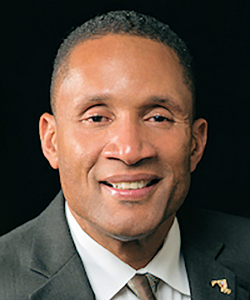
Carl Jackson
92% support rate
Top opponent
Jason Gallion
27% support rate
Ranked legislators
10
5 support · 5 oppose
Key legislators

Who's moving budget & taxes in Maryland

Legislators moving budget & taxes in Maryland
Legislator Party Stance Support rate Votes
Carl Jackson
Carl Jackson Senate · District 8
D
Strong +
92% 95
Cory McCray
Cory McCray Senate · District 45
D
Strong +
89% 97
Arthur Ellis
Arthur Ellis Senate · District 28
D
Strong +
88% 60
Anthony Muse
Anthony Muse Senate · District 26
D
Strong +
88% 65
Alonzo Washington
Alonzo Washington Senate · District 22
D
Strong +
87% 90
Jason Gallion
Jason Gallion Senate · District 35
R
Oppose
27% 103
Steve Hershey
Steve Hershey Senate · District 36
R
Oppose
30% 96
Kathy Szeliga
Kathy Szeliga House · District 7A
R
Oppose
30% 220
Matt Morgan
Matt Morgan House · District 29A
R
Oppose
30% 218
Lauren Arikan
Lauren Arikan House · District 7B
R
Oppose
30% 214
Showing 61–70 of 413 bills

All budget & taxes bills

in committee · Maryland · House of Delegates Feb 5, 2026

HB 791: Baltimore County - Residential Real Property - Moratorium on Assessment Increases and Review of Assessment Practices and Methodology

HB 791 imposes a two-year moratorium (2026-2028) on increases to the assessed value of residential properties in Baltimore County, directly affecting homeowners whose property taxes are based on these assessments. The bill allows increases only under specific exceptions, such as major renovations adding $100,000+ in value, zoning changes, or corrections of calculation errors. It also requires Maryland’s State Department of Assessments and Taxation to hire an independent third party by December 1, 2027, to review and recommend improvements to residential property assessment practices. The department must then report its findings and planned actions to the Governor and legislature.
Sub-Topics Property Tax
signed · Maryland · Senate Apr 28, 2026

SB 599: On-Farm Organics Diversion and Recycling Grant Program - Established

SB 599 establishes two grant programs to reduce wasted food and promote organics recycling. The On-Farm Organics Diversion Grant Program (starting July 2028) provides funding for farmers, urban agricultural producers, nonprofits, and businesses to develop composting, food rescue, and wasted food prevention projects on farms. The Wasted Food Reduction Grant Program (under the Environment Department) funds infrastructure, education, and community projects statewide to redirect edible food, recover waste for animal feed, and create compost. Eligible projects must reduce food waste, support community needs, prioritize underserved areas, and create jobs with fair wages. The bill specifically prioritizes projects that minimize contamination in compost and meet U.S. composting standards.
Sub-Topics Recycling
in committee · Maryland · House of Delegates Feb 16, 2026

HB 1115: Education - Career Ladder - National Board Certification Associated Salary Increases

HB 1115 clarifies that Maryland public school teachers holding a National Board Certification (NBC) with a 10-year award period (awarded by December 31, 2021) are eligible for specific salary increases tied to the career ladder. The bill establishes a $10,000 salary increase for becoming an NBC teacher and an additional $7,000 for teaching at a low-performing school, applying retroactively to eligible teachers. It also sets a minimum teacher salary of $60,000 starting July 1, 2026, and specifies that teachers meeting multiple criteria receive all applicable increases. This bill directly affects certified public school teachers in Maryland who hold qualifying NBC credentials.
in committee · Maryland · House of Delegates Feb 12, 2026

HB 1238: Taxation - Ultra-High-Net-Worth Individual Surtax and Wealth Tax

HB 1238 would impose a surtax on the taxable income of Maryland residents with ultra-high net worth and a one-time wealth tax on their net worth exceeding a set threshold. It directly affects Maryland residents whose net worth surpasses the specified amount, requiring them to pay additional taxes based on their income and total assets. The revenue would fund the Maryland Strategic Investment and Stabilization Fund, which must be used to reduce the state’s budget deficit or support education, behavioral health services, affordable housing, and infrastructure - specifically as outlined in the bill’s provisions. The surtax applies to taxable income, while the wealth tax is a single payment calculated using fair market value of assets minus liabilities.
Sub-Topics State Budget
in committee · Maryland · House of Delegates Feb 12, 2026

HB 1128: Income Tax – Angel Investor Tax Credit for Investments in Emergent Technology

HB 1128 creates a state income tax credit for individuals or entities investing in Maryland-based companies developing emergent technologies like artificial intelligence, quantum computing, or cybersecurity. To qualify, investors must contribute at least $25,000 before July 1, 2029, in exchange for equity (not debt), and the company must meet specific criteria for "emergent technology" development. The credit is funded through a dedicated Angel Investor Tax Credit Reserve Fund, which earns interest and is managed by the Department of Commerce. This policy directly affects early-stage tech investors and qualifying Maryland companies seeking capital to grow.
signed · Maryland · House of Delegates Apr 28, 2026

HB 1139: State Retirement and Pension System - Administration and Clarification

HB 1139 clarifies that local governments (such as counties, cities, and special agencies) must have all their employees join specific state pension systems - Employees’, Law Enforcement Officers’, or Correctional Officers’ - rather than allowing partial participation. It requires governments seeking to join these systems to submit properly completed election forms showing employee consent and ensures local retirement plans match state contribution rates or eliminate employer-paid contributions. The bill affects over 25 types of Maryland governmental units currently operating pension systems, including fire departments, transit authorities, and community action agencies. These changes aim to standardize participation requirements across the State Retirement and Pension System.
in committee · Maryland · Senate Feb 10, 2026

SB 622: Maryland Strategic Energy Investment Fund - Required Uses - Building Electrification and Transportation Electrification

SB 622 requires the Maryland Strategic Energy Investment Fund to provide loans and grants specifically for building electrification (replacing gas appliances with electric ones) and transportation electrification (such as electric vehicle infrastructure). This policy change directly affects Maryland residents, businesses, and local governments seeking funding to switch to electric systems. The bill amends existing law to mandate these uses of the fund, redirecting resources from previous allocations. It becomes effective October 1, 2026, without creating new programs but altering how existing funds are distributed.
signed · Maryland · Senate Apr 28, 2026

SB 466: Income Tax - Credit for Physician Preceptors in Areas With Health Care Workforce Shortages - Alterations

SB 466 modifies Maryland's income tax credit for physicians mentoring medical students in underserved areas. It removes a requirement that students must be enrolled in Maryland medical schools and reduces the minimum hours per clinical rotation from 100 to 90. The bill directly affects licensed physicians serving as preceptors in areas designated as having health care workforce shortages by the state. This change aims to expand eligibility for the $1,000-per-student rotation tax credit (capped at $10,000 annually per physician), potentially increasing mentor availability in shortage regions. The credit remains limited to $100,000 total annually for all physicians.
Sub-Topics Income Tax Tax Credits
in committee · Maryland · House of Delegates Feb 16, 2026

HB 1521: Income Tax - Credit for Contributions, Volunteerism, and Employment Initiatives for At-Risk Youth

HB 1521 creates a Maryland state income tax credit for individuals and businesses that support at-risk youth through donations, volunteering, or hiring. It allows a 50% credit on contributions to certified organizations (max $5,000 for individuals, $100,000 for businesses), $25 per volunteer day at schools/recreation centers (max $500 annually), and $1,000 per hired at-risk youth (max $5,000 annually). The credit applies only to youth aged 12-25 facing challenges like homelessness, foster care aging out, or living in designated high-poverty areas. Taxpayers must apply for certification through the Department of Commerce, with a $10 million annual cap on total credits.
signed · Maryland · Senate May 26, 2026

SB 890: Insurance - Captive Insurers - Premium Receipts Tax Study

SB 890 exempts premiums for captive insurance purchased by nonprofit hospitals and healthcare systems in Maryland from the state's insurance premium receipts tax. Specifically, it removes the tax obligation for premiums paid by these entities, including their parent companies, subsidiaries, or affiliated providers. The bill also prohibits the Maryland Insurance Administration from charging past-due taxes, penalties, or interest related to this tax for qualifying entities before the law's effective date. This directly affects nonprofit healthcare organizations seeking cost savings on self-insurance arrangements. The policy change modifies existing tax code sections to create this specific exemption.
Showing 61 to 70 of 413 bills
Previous 1 6 7 8 42 Next