

Maddy summaryThis bill exempts certain less-than-lethal projectile devices from federal sales taxes and National Firearms Act restrictions. It directly affects manufacturers, importers, and producers of these devices, which are defined as non-lethal tools (like rubber bullets or beanbag rounds) designed not to cause serious injury and unable to be easily converted to use standard firearm ammunition. Key mechanisms include a 90-day classification process for manufacturers seeking exemption, an annual public list of approved devices, and annual congressional reports on devices excluded from the exemption. The policy change applies to devices meeting specific safety criteria, such as projectile velocity limits and design features preventing misuse as conventional weapons.
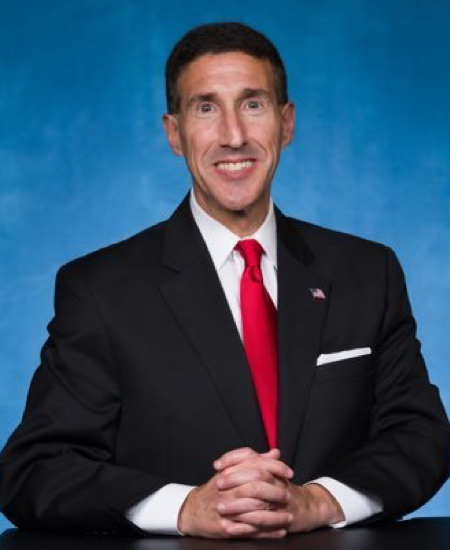
Rep. David Kustoff
Sponsored bills
Safeguard American Voter Eligibility Act or the SAVE America Act This bill requires individuals to provide documentary proof of U.S. citizenship when registering to vote, and requires photo identification to vote, in federal elections. Specifically, the bill prohibits states from accepting and processing an application to register to vote in a federal election unless the applicant presents documentary proof of U.S. citizenship. The bill specifies what documents are considered acceptable proof of U.S. citizenship, such as identification that complies with the REAL ID Act of 2005 that indicates U.S. citizenship. Further, the bill (1) prohibits states from registering an individual to vote in a federal election unless, at the time the individual applies to register to vote, the individual provides documentary proof of U.S. citizenship; and (2) requires states to establish an alternative process to demonstrate U.S. citizenship. Each state must take affirmative steps on an ongoing basis to ensure that only U.S. citizens are registered to vote, which shall include establishing a program to identify individuals who are not U.S. citizens using information supplied by certain sources. Additionally, states must remove noncitizens from their official lists of eligible voters. The bill (1) provides for a private right of action for certain violations, and (2) establishes criminal penalties for certain offenses. Individuals voting in federal elections must present an eligible photo identification document. An individual who votes by absentee ballot must submit a copy of their identification document with both the request for, and the submission of, the absentee ballot.
Maddy summaryThis bill creates a tax credit for businesses selling products made with U.S.-grown cotton. The credit equals 24% of the cotton's market value if processed only in the U.S. or in countries with U.S. trade deals, or 18% for other processing locations. To qualify, cotton must be digitally traced from U.S. farms to finished products and certified by the USDA as meeting origin requirements. It directly affects clothing and textile manufacturers selling qualifying products in the U.S. market.
Maddy summaryHR 909, the Crime Victims Fund Stabilization Act of 2025, modifies how funds from the False Claims Act are deposited into the Crime Victims Fund. It specifies that from 2025 through 2029, certain False Claims Act proceeds (specifically those for qui tam plaintiff payments and government damage reimbursements) cannot be deposited into the fund. This change directly affects the composition of the Crime Victims Fund by excluding these specific revenue streams during the specified period. The bill does not create new benefits or alter victim services; it only adjusts fund allocation rules for existing False Claims Act revenues.
Maddy summaryHRES 984 is a symbolic resolution designating January 9, 2026, as "National Law Enforcement Appreciation Day." It directly honors all federal, state, local, and tribal law enforcement officers across the United States for their service and sacrifices. The resolution expresses the House's support and gratitude, encourages public observance through ceremonies, and recognizes officers who have made the ultimate sacrifice. As a non-binding resolution, it does not create new laws or policies but serves as a formal expression of appreciation.
Aviation Funding Solvency Act This bill provides continuing appropriations to the Federal Aviation Administration (FAA) if (1) an appropriations bill for the FAA has not been enacted before a fiscal year begins, or (2) a law making continuing appropriations for the FAA is not in effect. Specifically, the bill provides appropriations from the Aviation Insurance Revolving Fund at the rate of operations that was provided for the prior fiscal year to continue programs, projects, and activities that were funded in the preceding fiscal year. The FAA may use the balance of the fund, minus $1 billion. If the FAA determines that the amounts from the fund are insufficient to continue all programs, projects, or activities, then the FAA must prioritize compensation payments for employees of the Air Traffic Organization (e.g., air traffic controllers). The bill provides the appropriations until the date on which either (1) specified appropriations legislation for the fiscal year becomes law, or (2) a bill making continuing appropriations becomes law. Finally, the bill permanently extends the FAA Non-premium War Risk Insurance Program. This program provides aviation insurance without a premium to eligible air carriers at the request of the Department of Defense or another federal agency, provided that the agency agrees to indemnify the FAA from all losses covered under the insurance. Eligible air carriers include those whose operations are under a federal contract and are necessary for national security or to carry out U.S. foreign policy.
Maddy summaryHR 3492, the Protect Children’s Innocence Act, makes it a federal crime to perform genital or bodily mutilation or chemical castration on minors under 18, except for specific medical reasons. The bill broadly defines prohibited procedures to include gender transition-related surgeries (like hysterectomies or mastectomies) and medical treatments such as puberty blockers or cross-sex hormones administered to minors. It criminalizes these acts when they occur across state lines, involve payments, or use interstate commerce, while explicitly banning religious tradition as a defense. Exceptions include medically necessary procedures for health emergencies, childbirth, or conditions certified by a physician.
Maddy summaryHR 6824 creates a 10% federal tax credit for businesses installing qualifying combined heat and power (CHP) systems. The credit applies to systems meeting strict efficiency standards (over 60% energy efficiency), producing at least 20% thermal energy and 20% electrical/mechanical power, with construction starting after December 2024. Systems over 50 megawatts electrical or 67,000 horsepower mechanical capacity are excluded, and bonuses of 10% more credit apply for domestic content or projects in designated energy communities. This credit directly affects businesses investing in new CHP infrastructure, reducing their tax liability based on the system's cost.
Maddy summaryThis bill would strip tax-exempt status from organizations that provided material support to designated terrorist groups in the past three years. The IRS must first notify the organization and give it 90 days to prove it didn’t provide support or commit to stopping future support. Organizations failing to "cure" the issue would permanently lose tax-exempt status, though humanitarian aid approved by the government is excluded from the definition of "material support." The law includes procedures for correcting errors and resolving disputes through IRS Appeals or federal courts.
Maddy summaryThe Restoring American Mineral Security Act of 2025 aims to reduce U.S. dependence on China for critical minerals by creating a "Critical Minerals Security Alliance" with other countries. The bill would encourage countries to impose higher tariffs on minerals from China and other "foreign countries of concern," while offering those countries duty-free access to the U.S. market for their critical minerals and derivative products like batteries and magnets. It establishes a trust fund using duties collected on minerals from China to support U.S. mining and processing projects through the Department of Energy, Department of Defense, and U.S. International Development Finance Corporation. This legislation directly affects U.S. mineral industry stakeholders, foreign trade partners, and companies producing critical minerals and related products, focusing on trade policy rather than direct regulation of mineral production.