Maddy summaryThis bill amends the tax code to exempt certain income from mutual ditch irrigation companies and similar water organizations from taxable income. It specifically excludes revenue from selling, leasing, or exchanging water rights, water delivery contracts, or company stock from taxation. The change aims to support water conservation by allowing these organizations to retain income from water transactions without tax liability, provided the funds are used for eligible expenses like new water conveyance systems. The provision applies to taxable years beginning after the bill's enactment.
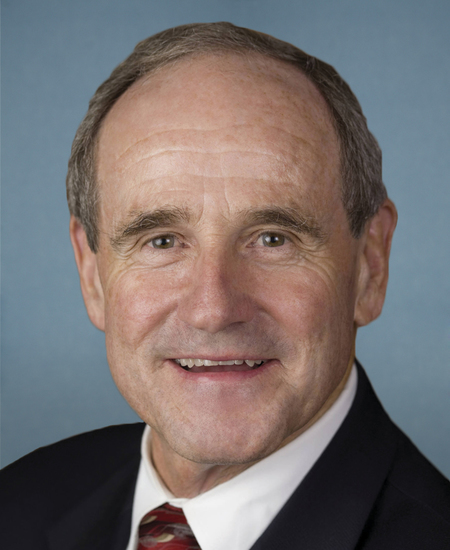
Sen. James E. Risch
Sponsored bills
Maddy summaryThis bill requires the President to specify exactly which laws they will use during a national emergency and mandates that Congress approve each emergency declaration within 30 days. If Congress does not approve within that timeframe, the emergency terminates immediately, and the President cannot declare a new emergency for the same situation during their term. The bill also adds reporting requirements, including a written report detailing the emergency's circumstances, duration, and planned actions, with updates every six months. It applies to all new emergencies declared after the bill's enactment, though existing emergencies get special transition rules.
Maddy summaryThis bill expands the use of assets seized from individuals or entities subject to U.S. sanctions related to Russia’s aggression in Ukraine. It broadens the definition of eligible assets to include property owned by sanctioned parties, involved in violations of export restrictions (e.g., illegal exports to Russia/Belarus), or tied to schemes supporting Russian aggression in Ukraine (including Crimea and the Donbas regions). The bill requires the Attorney General, Treasury, and State Department to submit semiannual reports on asset transfers and their impact on remedying harms to Ukraine, plus a 30-day implementation plan. It directly affects U.S. federal agencies managing asset forfeitures and aims to redirect existing seized assets to support Ukraine.
Maddy summaryS 1878, the Judicial Efficiency Improvement Act, reorganizes federal judicial circuits by splitting the current Ninth Circuit into two new circuits: the "new Ninth Circuit" (covering California, Guam, Hawaii, and the Northern Mariana Islands) and the "Twelfth Circuit" (covering Alaska, Arizona, Idaho, Montana, Nevada, Oregon, and Washington). It adds 2 new circuit judges for the new Ninth Circuit, establishes 13 permanent circuit judges for the Twelfth Circuit, and authorizes numerous additional district judgeships across multiple states (e.g., 37 for Central California, 23 for Southern Texas). The bill also transfers existing cases and assigns judges based on geographic location as of the effective date, with temporary judge assignments allowed between the circuits to manage caseloads. These changes take effect one year after enactment, with the old Ninth Circuit ceasing administrative operations two years post-enactment.
Maddy summaryThe Federal Courts of Appeals Modernization Act (S 1879) establishes a Commission to study the structure of federal appellate courts, focusing on caseload efficiency and fairness - particularly the Ninth Circuit. The Commission, appointed by the Chief Justice and composed of five members, must complete a 300-day study and submit recommendations to Congress within 60 days of finishing. It does not enact changes itself but will propose potential adjustments to court boundaries or structure. The bill authorizes up to $1 million for the Commission’s operations and requires its termination 90 days after submitting the report.
Maddy summaryThis bill requires U.S. agencies distributing foreign aid to publish detailed, award-by-award information online. It mandates that public data include specific searchable details like the country receiving aid, funding agency, sector, total amount, fiscal year, and implementing partners (including subawards). The changes apply directly to U.S. government agencies managing foreign assistance programs. The goal is to make foreign aid spending more transparent and accessible to the public.
Maddy summaryThe Headwaters Protection Act of 2023 reauthorizes and improves the Water Source Protection Program under the Healthy Forests Restoration Act. It expands eligibility for projects to include acequia associations, stormwater/wastewater managers, land-grant mercedes, and private water delivery entities, while requiring express support from adjacent landowners for projects on their property. Key provisions mandate that projects prioritize protecting water supply/quality against drought/flood risks, use nature-based solutions (like wetland restoration), and give priority to disadvantaged communities. The bill increases annual funding to $30 million (2024-2033) and requires non-Federal partners to contribute to project costs and planning. It directly affects National Forest projects, local water infrastructure managers, and adjacent landowners within watersheds.
Maddy summaryThis bill redefines "equity" within the Department of Defense as the opportunity for qualified individuals to participate in programs, prohibits mandatory adoption of beliefs about racial or ethnic superiority, and bans race-based distinctions in military personnel decisions. It directly affects active-duty service members, military dependents, and DoD civilian employees by requiring all promotions, assignments, and training to be based solely on individual merit and performance. Key provisions ban DoD directives compelling adherence to certain beliefs, prohibit training suggesting racial superiority, and mandate that demographic data collection for reporting remains the only exception to race-based distinctions. The bill focuses on ensuring military decisions prioritize merit over identity, aligning with the bill's stated findings about military readiness and equal opportunity.
Maddy summaryS 1768, the Taliban Sanctions Act of 2023, imposes U.S. sanctions on individuals and entities (including Taliban members) who support terrorism, commit serious human rights abuses, or facilitate narcotics trafficking in Afghanistan. It requires the President to block assets and deny visas to those meeting these criteria, effective 90 days after enactment. The bill also directs U.S. diplomacy to maintain UN sanctions against the Taliban and mandates regular congressional briefings on sanctions implementation and humanitarian impacts. It includes limited waivers for national security interests and specific exceptions for intelligence activities or humanitarian access.
Maddy summaryThis joint resolution (SJRES 18) disapproves a Department of Homeland Security rule that would have expanded the "public charge" standard for immigration. The rule, published in the Federal Register on September 9, 2022, aimed to deny visas or green cards to immigrants who might rely on public benefits like housing or food assistance. By passing this resolution, Congress blocks the rule from taking effect, meaning immigrants applying for visas or permanent residency would not face this specific eligibility barrier. The resolution directly affects non-citizens seeking to enter or remain in the U.S. under immigration processes.