Maddy summaryThis joint resolution seeks congressional disapproval of a specific Environmental Protection Agency (EPA) rule setting greenhouse gas emissions standards for heavy-duty vehicles (Phase 3). If passed, it would nullify the EPA rule (published April 22, 2024) under the Congressional Review Act, preventing it from taking effect. The rule directly affects manufacturers of trucks and buses by establishing new requirements for reducing emissions. The resolution does not create new standards but aims to block the existing EPA rule through a formal disapproval process.
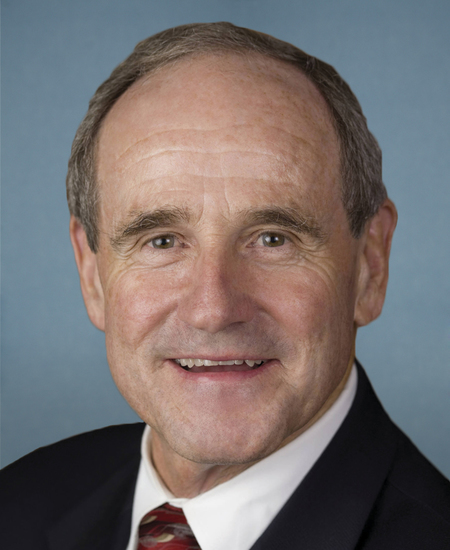
Sen. James E. Risch
Sponsored bills
Maddy summaryThis joint resolution seeks to block an Environmental Protection Agency (EPA) rule that would set new emissions standards for light- and medium-duty vehicles sold in model years 2027 and later. It directly affects automakers, as the rule would require them to meet stricter pollution limits for these vehicles. The resolution uses a congressional disapproval process under federal law to prevent the EPA rule from taking effect. If passed, the rule would be invalidated, meaning automakers would not need to comply with the 2027+ emissions standards outlined in the EPA's April 2024 proposal.
Maddy summarySRES 664 is a symbolic Senate resolution designating April as "Community College Month" to honor the role of over 1,000 U.S. community colleges. It recognizes these institutions for supporting access to higher education and workforce training, particularly for local communities. The resolution highlights their economic contributions, including serving millions of students and contributing to national prosperity, but does not create new programs or alter funding. This is purely a commemorative resolution with no binding policy effects.
Maddy summarySRES 661 designates the week of April 15-21, 2024, as "National Osteopathic Medicine Week" to recognize osteopathic physicians and medical students across the United States. The resolution highlights their contributions to healthcare, including training in rural communities, a 30% growth in physician numbers over five years, and their whole-person care approach. It does not create new laws or alter existing policies, serving solely as a symbolic acknowledgment of their role in public health.
Maddy summaryThe Embassy in a Box Act of 2024 streamlines the U.S. Department of State’s process for establishing new diplomatic missions, particularly in small island nations across the Pacific, Indian Oceans, and Caribbean. It requires pre-approved resources (like vehicles and support staff) and waives routine bureaucratic steps before embassies open, so diplomats can focus immediately on advancing U.S. interests rather than administrative tasks. The bill mandates a 60-day report to Congress detailing how the State Department will implement these changes, including specific equipment lists and cost adjustments for hardship postings. The law expires 10 years after enactment.
Maddy summarySRES 658 is a symbolic Senate resolution designating April 2024 as "Financial Literacy Month." It does not create new laws or funding but calls on federal, state, local, schools, nonprofits, and businesses to observe the month with awareness activities. The resolution cites statistics on financial challenges (like 5.9 million unbanked households and rising student debt) to emphasize the importance of financial education. It aims to raise public awareness about personal financial education's role in making sound money decisions and building wealth, without mandating any specific actions.
Maddy summaryThis is a ceremonial Senate resolution (SRES 657) that formally recognizes April 26, 2024, as National Arbor Day and celebrates its 152th anniversary. It does not create new laws or affect specific groups - it simply acknowledges the historical significance of Arbor Day, which began in 1872 as a day to promote tree planting and environmental stewardship. The resolution encourages all Americans to participate in Arbor Day activities, such as community tree-planting events, to support urban forestry and sustainable forest management. As a procedural resolution, it has no legal effect beyond expressing the Senate's support for this annual observance.
Maddy summarySRES 655 is a Senate resolution passed on April 18, 2024, to honor the late Joseph I. Lieberman, a former U.S. Senator from Connecticut (1988-2013), following his death. The resolution recognizes his career, including his role in creating the Department of Homeland Security, establishing the 9/11 Commission, and advocating for civil rights and environmental protections. It directs the Senate to adjourn in his memory and transmit a copy to his family, expressing the Senate's sorrow and respect. This procedural resolution does not create new laws or affect policy, as it solely commemorates his legacy.
Maddy summarySJRES 73 is a joint resolution introduced by Senators Rubio, Cotton, and others seeking to disapprove a federal rule issued by multiple agencies, including Education, Homeland Security, and Health and Human Services, regarding partnerships with faith-based and neighborhood organizations. The rule, published in the Federal Register on March 4, 2024, would have established guidelines for these partnerships. If passed, this resolution would block the rule from taking effect by invoking a standard congressional disapproval process under federal law. The resolution is currently under review by the Senate Committee on Homeland Security and Governmental Affairs.
Maddy summaryS 4163, the Ammunition Supply Chain Act, requires the Secretary of the Army to submit a report within 180 days of enactment on U.S. supply chain vulnerabilities for nitrocellulose and related components used in ammunition manufacturing. The report must address improving sourcing of smokeless gunpowder materials, reducing single-point failure risks in facilities, mitigating disruptions from global demand, and leveraging private sector capacity. This bill directly affects the Department of Defense and ammunition manufacturers by mandating an assessment of supply chain risks. It does not enact new policy but requires a detailed evaluation to strengthen ammunition production reliability.