

Maddy summaryThe MAHSA Act (S 2626) requires the U.S. President to impose sanctions on Iranian officials and entities linked to human rights abuses or terrorism, specifically targeting the Supreme Leader, President, and their offices, as well as affiliated entities. Within 90 days of enactment (and annually thereafter), the President must determine which individuals or entities meet sanction criteria under existing U.S. programs, then impose or pursue sanctions and submit detailed reports to Congress. These reports must list targeted persons, the sanctions applied or planned, and justifications for any waivers, with Congress having 60 days to request reviews of specific cases. The bill aims to hold Iranian leadership accountable for human rights violations and terrorism support through enforceable U.S. sanctions.
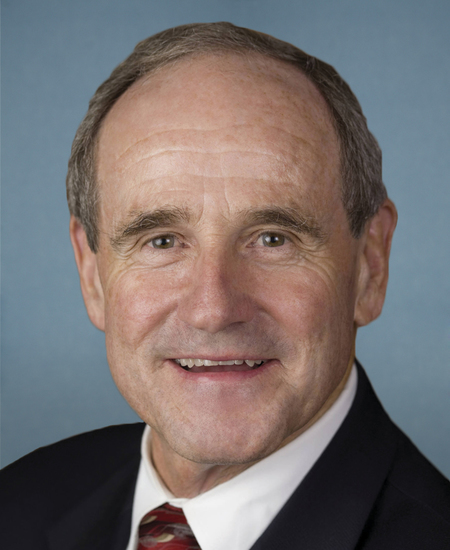
Sen. James E. Risch
Sponsored bills
Maddy summaryThis bill imposes sanctions on foreign entities that knowingly facilitate Iranian petroleum trade. It targets foreign port owners, vessel operators, refineries, and related individuals (including family members or entities owned by them) involved in transactions with Iranian oil, such as docking vessels carrying Iranian crude or conducting sea-to-sea transfers of petroleum products. Sanctions include banning sanctioned vessels from U.S. ports for up to two years, blocking U.S. assets of targeted entities, and denying visas to involved individuals. The bill also requires a detailed report on Iranian petroleum exports within 120 days, analyzing export volumes, revenue, and key participants.
Maddy summarySRES 673 is a commemorative Senate resolution honoring the late David Hampton Pryor, who served as a U.S. Senator for Arkansas from 1978 to 1997. The resolution expresses the Senate’s "profound sorrow" at his death and directs the Secretary of the Senate to share the resolution with the House and deliver a copy to his family. It does not create new laws or policies - it is purely ceremonial, recognizing Pryor’s career as a legislator, governor, and public servant. The resolution concludes with the Senate adjourning as a mark of respect for his legacy.
Maddy summaryThis resolution (SRES 668) is a ceremonial Senate measure honoring the late Senator Daniel Robert "Bob" Graham of Florida, who died on November 9, 2023. It formally expresses the Senate's "profound sorrow" over his death and directs the Secretary of the Senate to share the resolution with the House of Representatives and deliver a copy to his family. The resolution commemorates Graham's career as a Florida senator (1987-2005), governor (1979-1987), and his work on the 9/11 intelligence inquiry, but does not create any new laws or affect constituents. As a commemorative resolution, it serves solely to memorialize his service.
Maddy summaryThis is a commemorative Senate resolution (SRES 669), not a law. It designates October 10, 2024, as "American Girls in Sports Day" to recognize the impact of women in sports and support for Title IX protections. The resolution calls on sports organizations to protect biological women and girls in competition, referencing claims about biological differences and displacement in championships. As a symbolic resolution, it has no legal effect and does not change existing policies or laws.
Maddy summarySRES 670 is a Senate resolution condemning the rise of antisemitism on U.S. college campuses, citing a 700% increase in incidents since October 7, 2023, as tracked by Hillel International. It specifically criticizes campus administrators who enabled antisemitic activities, including protests expressing support for Hamas and targeting Jewish students. The resolution urges the Department of Education to ensure colleges comply with Title VI of the Civil Rights Act, which prohibits discrimination based on national origin - including antisemitism. It directly affects Jewish students, Israeli students, and campus administrators, while calling for enforcement of existing civil rights protections. The resolution does not create new laws but serves as a formal statement of condemnation and a call for accountability.
Maddy summarySRES 671 is a ceremonial Senate resolution supporting the designation of April 28-May 4, 2024, as "National Small Business Week." It honors small businesses and entrepreneurs across the U.S. for their economic contributions, noting they support over 62 million jobs through 33 million businesses. The resolution expresses the Senate's recognition of small businesses' resilience and role in strengthening local economies. As a symbolic gesture with no new policies or funding, it does not impose requirements or directly affect specific entities.
Maddy summaryThis bill prohibits federal student loan forgiveness for individuals convicted of crimes related to protests at colleges or universities. Specifically, it blocks loan forgiveness under the Higher Education Act or other Department of Education programs for people convicted of offenses under federal or state law tied to protest conduct at higher education institutions. It applies to federal student loans (including those under the Higher Education Act and Health Education Assistance Loans) but does not affect repayment requirements. The policy directly targets loan forgiveness eligibility, not loan repayment, for those convicted of protest-related offenses.
Maddy summaryThis bill creates a new federal criminal offense for assaults on law enforcement officers that cause serious injury or involve specific circumstances like crossing state lines, using interstate commerce, or employing firearms. It increases penalties to up to 10 years in prison for assaults causing serious injury, with life imprisonment if death occurs or kidnapping/killing is involved. The bill requires the Attorney General to certify federal prosecution is necessary before proceeding, unless states lack jurisdiction or have requested federal involvement. It directly affects law enforcement officers (including federal, state, and local) by establishing new federal penalties for certain assaults against them.
Maddy summaryThe ELITE Vehicles Act would repeal federal tax credits for purchasing electric vehicles and related infrastructure. Specifically, it eliminates the existing credit for new electric vehicles (previously under Section 30D), the credit for previously-owned clean vehicles (Section 25E), and the credit for commercial clean vehicles (Section 45W). It also removes electric vehicle recharging stations from the alternative fuel refueling credit. These changes would take effect 30 days after enactment, directly affecting individuals and businesses that currently claim these tax benefits when buying or installing qualifying electric vehicle equipment.