Maddy summaryThis bill prohibits federal funding for implementing, administering, or enforcing specific Environmental Protection Agency (EPA) vehicle emissions rules. It directly affects the EPA's ability to enforce the proposed and final "Multi-Pollutant Emissions Standards for Model Years 2027 and Later Light-Duty and Medium-Duty Vehicles" rules. The key mechanism blocks all fiscal year 2024 funds from being used for these particular rules or any substantially similar future rules. The bill does not alter the rules themselves but prevents their enforcement through funding restrictions.
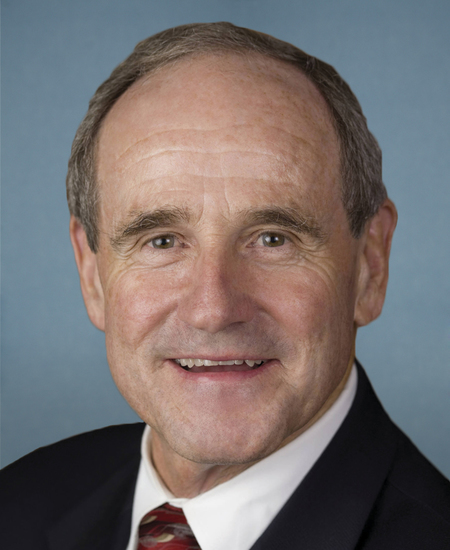
Sen. James E. Risch
Sponsored bills
Maddy summaryThis bill (SJRES 72) seeks congressional disapproval of a Securities and Exchange Commission (SEC) rule requiring companies to standardize climate-related financial disclosures for investors. If passed, it would block the SEC’s rule (published March 28, 2024) from taking effect, directly affecting public companies subject to SEC reporting requirements. The resolution uses a specific legal process under Title 5, U.S. Code, to invalidate the rule without altering its content. It does not create new regulations but halts the implementation of the SEC’s existing climate disclosure proposal.
Maddy summaryThis bill authorizes the U.S. Treasury to mint and sell commemorative coins honoring the 2026 FIFA World Cup, which will be hosted by the U.S., Mexico, and Canada. It specifies three coin types: $5 gold coins (max 100,000), $1 silver coins (max 500,000), and half-dollar coins (max 750,000), all with designs reflecting soccer and the World Cup. A surcharge is added to each coin sale ($35 for $5 coins, $10 for $1 coins, $5 for half-dollars), with all surcharge revenue going directly to FWC2026 US, Inc. to fund U.S. soccer programs, particularly youth initiatives and underserved communities. The coins may only be sold during 2026 and must cover all costs to avoid government expense.
Maddy summaryThe Mass Timber Federal Buildings Act of 2024 requires federal agencies to prioritize using U.S.-made mass timber (an innovative wood product) in public building construction, including military installations. It mandates that such wood must come from domestic facilities and responsibly sourced U.S. forests, with additional preference for products from forest restoration projects, wildfire protection efforts, or underserved forest owners like Tribal and small family forests. Within 180 days of enactment, the General Services Administration must complete a lifecycle assessment of mass timber buildings and submit a report to Congress. This law directly affects federal construction contracts and the domestic wood products industry by establishing new procurement preferences.
Maddy summaryThe DISPOSE Act authorizes the U.S. State Department, in coordination with Defense and Justice, to fund the destruction of seized drug precursor chemicals in Colombia, Mexico, and Peru. It requires an implementation plan with specific timelines, budget projections, and measurable benchmarks to clear chemical backlogs, prevent re-entry into drug production, and ensure environmentally safe disposal. The plan must include annual progress reports to Congress detailing destroyed chemicals and program outcomes. Funding comes from existing International Narcotics Control programs, with no new appropriations needed.
Maddy summaryThe VA Abortion Transparency Act of 2024 (S 4128) requires the Department of Veterans Affairs (VA) to submit quarterly reports to Congress detailing abortions facilitated by the VA. These reports must include the total number of abortions, broken down by type (surgical or medication), recipient (veteran or dependent), gestational age, legal justification, and Veterans Integrated Service Network, along with all related costs for procedures, staff training, infrastructure, and funding sources. The VA must exclude all individually identifiable patient information from these reports. This bill directly affects VA operations and congressional oversight, mandating specific data collection and transparency about abortion services provided to veterans and their dependents.
Maddy summarySJRES 61 is a joint resolution seeking congressional disapproval of a Federal Highway Administration rule that established performance measures for the National Highway System, including a requirement to track greenhouse gas emissions from highway activities. The rule, published in December 2023, would have mandated that states and federal agencies assess highway performance using this emissions metric. If enacted, the resolution would block the rule from taking effect, preventing the implementation of the emissions tracking measure. This action is pursued under the Congressional Review Act, which allows Congress to reject federal regulations with a simple majority vote.
Maddy summaryThis resolution (SRES 638) calls on the Taliban to immediately release Ryan Corbett, a U.S. citizen wrongfully detained since August 2022 while visiting Afghanistan for business. It condemns the Taliban's detention of Corbett - held in a small cell under poor conditions without charges - and urges U.S. officials to prioritize his release. The resolution also demands the Taliban stop detaining Americans for political gain and calls for the release of other U.S. citizens wrongfully held in Afghanistan. As a symbolic congressional action, it does not create new law but expresses formal support for Corbett and his family.
Maddy summaryThis bill extends the African Growth and Opportunity Act (AGOA) through 2041, maintaining duty-free access to U.S. markets for eligible sub-Saharan African countries. It introduces biennial reviews of beneficiary countries' compliance with eligibility requirements related to governance, human rights, and trade practices. The bill creates a new category for countries that have ratified the African Continental Free Trade Agreement (AfCFTA) and establishes a process for "graduating" countries that become high-income economies for five consecutive years. Additionally, it requires beneficiary countries to develop biennial strategies to better utilize AGOA benefits and mandates reports on forced labor enforcement and potential trade agreements with sub-Saharan African nations.
Maddy summaryThis bill amends federal law to clarify how states collect boating-related fees. It requires states to collect specific fees for search and rescue operations, boating safety programs, and efforts to address aquatic invasive species. These fees can be collected alongside existing state boating registration or licensing fees. The bill directly affects states that issue boating licenses or registrations, as it changes the permitted fee structure for those programs. It does not create new fees but specifies which existing fee categories must be included.