

Maddy summaryThis bill codifies biological definitions of sex in federal law, defining "male" and "female" based on reproductive anatomy (sperm-producing vs. egg-producing systems) as determined at birth. It requires federal agencies and laws to interpret terms like "sex," "male," and "female" according to these biological definitions, explicitly stating that gender identity does not equate to sex. The bill directly affects how federal agencies and programs interpret these terms in existing laws, regulations, and policies, including those related to facilities, sports, and equal treatment. It does not create new programs but mandates that federal interpretations align with these biological definitions, excluding gender identity from the definition of sex or gender.
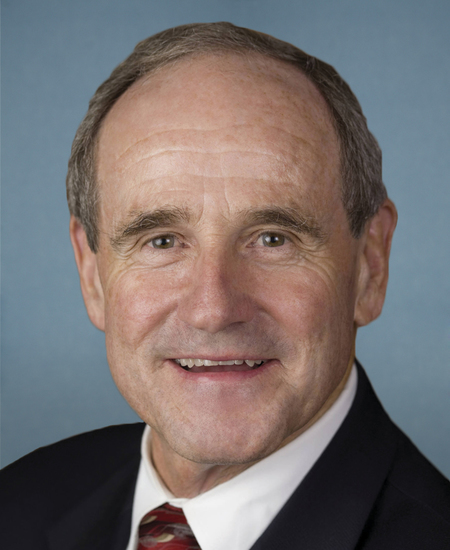
Sen. James E. Risch
Sponsored bills
Maddy summaryThis bill establishes uniform rules for interstate knife transportation across all states. It allows lawful knife owners to move knives between locations where they may legally possess them, requiring knives to be stored in locked containers in vehicles or air travel (except for emergency knives in vehicles). The law explicitly prohibits state law enforcement from detaining individuals complying with these rules and shifts the burden of proof to states in criminal cases. It directly affects knife owners traveling between states and overrides conflicting state laws regarding knife transportation.
Maddy summarySRES 897 is a Senate resolution designating November 2024 as National Native American Heritage Month and recognizing the Friday after Thanksgiving as Native American Heritage Day, as established by the 2009 Native American Heritage Day Act. It formally acknowledges the contributions of Native Americans to U.S. history, culture, and society, including their roles in agriculture, environmental stewardship, military service, and the influence of Indigenous governance concepts on the U.S. Constitution. The resolution encourages the public to observe these designations through educational programs and activities. As a ceremonial resolution, it does not create new laws or directly affect any individuals or communities.
Maddy summaryThe Countering Wrongful Detention Act of 2024 creates a new designation system for foreign countries that unlawfully detain U.S. citizens, allowing the Secretary of State to label them as "State Sponsors of Unlawful or Wrongful Detention" based on specific criteria like detaining Americans or failing to release them after notification. The bill requires the Department of State to report designations and terminations to Congress, mandate travelers to high-risk countries to certify they've reviewed travel advisories, and establish an advisory council with input from formerly detained citizens and experts. It also creates a "declaration of invalidity" for released detainees to help with background checks and sets timelines for determining if U.S. citizens are wrongfully detained. This legislation primarily affects U.S. citizens traveling or living abroad, the Department of State, and foreign governments that detain U.S. nationals.
Maddy summaryThe Sudan Accountability Act requires the U.S. Secretary of State to submit regular reports on human rights violations in Sudan, including detailed assessments of atrocities like sexual violence and attacks on civilians, and U.S. responses to these violations. It mandates biannual determinations on whether actions by Sudanese armed groups constitute genocide, war crimes, or crimes against humanity, with public reports and congressional briefings. The bill also directs the development of a strategy to protect civilians through diplomatic efforts, targeted sanctions, and enhanced humanitarian access, while authorizing U.S. assistance for victim support and accountability mechanisms. These provisions primarily affect U.S. government agencies and aim to strengthen accountability for violence against Sudanese civilians, particularly women and children.
Maddy summaryThis bill extends the Secure Rural Schools program, which provides payments to counties and states with federal land, through 2026. It also adjusts related deadlines for special projects on federal land and county fund expenditures, pushing them to 2028 and 2029 respectively. Additionally, the bill adds a pilot program allowing regional foresters to appoint resource advisory committee members, set to end on October 1, 2028. These changes maintain funding stability and administrative flexibility for rural communities dependent on federal land management.
Maddy summaryS 5303, the Stand with Israel Act, prohibits U.S. federal funds from being used to support the United Nations or its entities if those entities restrict Israel's full participation as a member state. Specifically, it blocks funding for UN contributions when the UN expels, downgrades, or suspends Israel's membership or limits its ability to engage equally with other member states. This bill directly affects how U.S. taxpayer money is allocated to the UN, requiring the Department of State and other agencies to withhold funds under these circumstances. The law amends the United Nations Participation Act of 1945 to enforce this restriction.
Maddy summarySRES 888 is a ceremonial Senate resolution honoring the late James Ralph Sasser, a former U.S. Senator from Tennessee (served 1976-1993). It formally expresses the Senate’s "profound sorrow" over his death and requests the Secretary of the Senate transmit the resolution to his family. The resolution has no policy impact or direct effect on any individuals or entities - it is solely a commemorative gesture. As a procedural resolution, it does not create new laws or alter existing policies.
Maddy summaryThis bill awards a Congressional Gold Medal to the United States Army Dustoff crews who served during the Vietnam War, recognizing their life-saving medical evacuations. The medal, to be designed by the Secretary of the Treasury in consultation with the Secretary of Defense, will be displayed at the U.S. Army Medical Department Museum. The bill honors the approximately 900,000 wounded personnel these crews transported over the course of the Vietnam War, including U.S., South Vietnamese, and allied forces, who relied on their rapid medical evacuation services.
Maddy summarySRES 860 designates the week of October 6-12, 2024, as "Religious Education Week" to recognize the role of religious education in the United States. The resolution calls on all 50 states, territories, and the District of Columbia to accommodate students who wish to attend religious classes during school hours through released time programs. It highlights religious education's contribution to moral, civic, and personal development, citing historical and legal references like the Pierce v. Society of Sisters and Zorach v. Clauson Supreme Court cases. The resolution is non-binding and symbolic, focusing on awareness rather than new policy requirements.