Maddy summarySRES 909 is a non-binding Senate resolution designating November 21, 2024, as "National Rural Health Day." It formally recognizes the contributions of rural health care providers and the unique challenges faced by rural communities, including hospital closures and access barriers. The resolution celebrates rural health care workers and the millions they serve, while expressing the Senate's commitment to improving rural health care accessibility and affordability. This is a ceremonial designation with no new policy or funding changes.
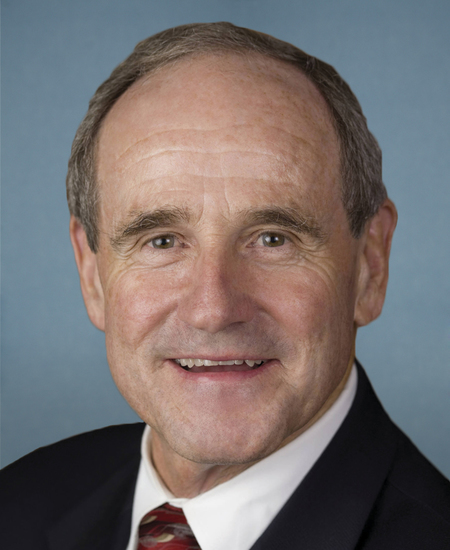
Sen. James E. Risch
Sponsored bills
Maddy summaryThis resolution designates December 2, 2024, as "World Nuclear Energy Day" to commemorate the historical milestones of nuclear energy development, including the first controlled nuclear chain reaction (1942) and the first commercial nuclear power plant (1957). It recognizes nuclear energy's role in providing nearly 20% of U.S. electricity, supporting over 70,000 direct jobs, and contributing to carbon-free power and national security. The resolution encourages public acknowledgment of nuclear energy's contributions to clean power, innovation, and global energy leadership, without creating new laws or affecting specific groups.
Maddy summarySRES 914 is a symbolic Senate resolution expressing support for National Adoption Day (November 23, 2024) and National Adoption Month (November 2024). It promotes public awareness of children awaiting adoption in foster care, celebrates adoption families, and encourages Americans to support child safety and permanency. The resolution does not create new policies or alter existing laws; it is a non-binding statement of support. It directly affects public awareness and national recognition of adoption efforts, not specific individuals or programs.
Maddy summarySRES 915 designates September 2024 as "National Prostate Cancer Awareness Month" to highlight prostate cancer prevention and early detection. The resolution encourages the public, healthcare providers, and organizations to promote awareness, support research for better screening and treatments, and improve access to care for men affected by prostate cancer. It does not create new laws or allocate funds but serves as a symbolic call to action, acknowledging that prostate cancer affects 1 in 8 U.S. men and is the second-leading cause of cancer death among men. This resolution directly affects all Americans, particularly men at risk for prostate cancer, by promoting education and community efforts during the designated month.
Maddy summaryThis is a ceremonial Senate resolution (SRES 902) honoring the late Senator Timothy Peter Johnson of South Dakota, who died after a long career in public service. The resolution expresses the Senate's "profound sorrow" over his death, directs the Secretary of the Senate to share the resolution with the House and send a copy to his family, and calls for the Senate to adjourn in his memory. It does not create new laws or affect any policies, as it is purely a formal expression of respect for a former senator. The resolution commemorates his decades of service, including his time as Chairman of the Banking Committee and his return to work after a serious health setback.
Maddy summaryThis bill prohibits federal agencies from using the "social cost of carbon" and related metrics (estimating climate damage costs from methane or nitrous oxide) when developing environmental regulations, guidance, or cost-benefit analyses. It directly affects agencies like the EPA that create rules on emissions, power plants, and air quality. The law requires agencies to stop relying on these specific climate cost estimates in all regulatory decisions starting upon enactment. Agencies must also report to Congress on past uses of these metrics within 120 days of the bill becoming law.
Maddy summaryThis bill clarifies that water managers and landowners using existing rights-of-way, easements, permits, or authorizations for aquifer recharge do not need additional approval from the Secretary of the Interior. It specifically amends the Aquifer Recharge Flexibility Act to state that such recharge activities "shall not be considered an expansion or modification" of current operations. The change directly affects entities managing water infrastructure for recharge purposes, allowing them to utilize existing authorizations without seeking new permits. The key mechanism removes ambiguity about whether recharge activities using current infrastructure require separate authorization. This is a technical clarification focused on streamlining existing water management processes.
Maddy summaryS 4936 requires a study of potential impacts before approving the Lava Ridge Wind Project in Idaho. The bill blocks the Secretary of the Interior from authorizing the project until the Comptroller General completes a report assessing effects on the Minidoka National Historic Site, wildlife, cultural resources, transportation, hunting, wetlands, and water resources. This study serves as a mandatory condition for project approval, directly affecting the wind project developers and federal permitting decisions. The bill does not alter the project itself but delays its approval pending the study's completion.
Maddy summaryS 914, the ETAP Act of 2024 (officially the Energy Threat Analysis Center Establishment Act), creates a new Energy Threat Analysis Center within the Department of Energy. The Center directly affects energy sector infrastructure owners, operators, and government agencies by enhancing threat awareness and response for the U.S. energy system. Key provisions require the Center to foster collaborative threat analysis between government and industry, share actionable security information securely, and coordinate with agencies like DHS, DoD, and the National Security Agency. It mandates regular consultation with energy sector stakeholders and includes a 10-year sunset provision. The bill establishes concrete operational mechanisms without creating new legal rights for entities.