Maddy summaryThe Homebuyers Privacy Protection Act (S 3502) limits how consumer credit reports can be shared during mortgage applications. It prevents credit reporting agencies from sending these reports to third parties solely based on a mortgage-related request, unless the third party has the homebuyer's explicit authorization or is directly involved in the loan (like the mortgage lender, loan servicer, or their bank holding the homebuyer's account). This directly affects homebuyers applying for residential mortgages by restricting unauthorized sharing of their credit data. The bill amends the Fair Credit Reporting Act to add these privacy protections without creating new government programs or altering existing mortgage processes.
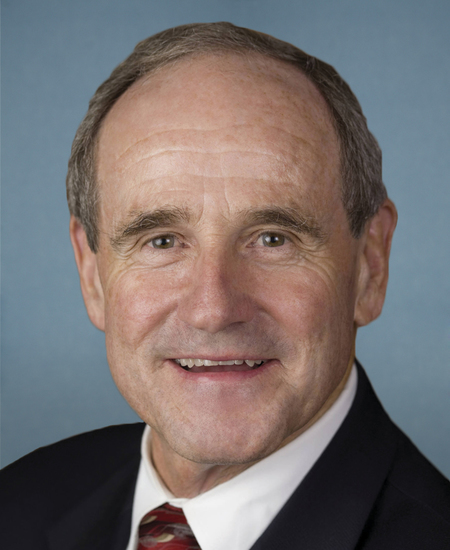
Sen. James E. Risch
Sponsored bills
Maddy summaryThis bill (SJRES 122) seeks to block an Environmental Protection Agency (EPA) rule that established procedures for calculating emissions charges on petroleum and natural gas operations, including how companies can net emissions or claim exemptions. It directly affects oil and gas companies that would have been subject to the EPA's new compliance framework. If passed, the resolution would nullify the EPA rule under a specific legal process (chapter 8 of title 5, U.S. Code), preventing it from taking effect. The rule, published November 18, 2024, aimed to streamline how the industry reports and manages emissions-related charges. The resolution does not change the underlying emissions requirements but stops this specific procedural rule from being implemented.
Maddy summaryThis bill establishes federal testbeds for developing and evaluating "trustworthy" artificial intelligence systems. It requires the National Institute of Standards and Technology (NIST) Director to coordinate with the Energy Secretary and other federal agencies to create physical and virtual environments for testing AI safety, guardrails, misuse risks, and system vulnerabilities. The bill mandates a memorandum of understanding between Commerce and Energy to provide NIST and other agencies access to Department of Energy resources, facilities, and cross-agency R&D programs. These testbeds aim to improve AI reliability and trustworthiness for federal agency use and oversight of commercial AI systems, particularly for national security applications like preventing weapons proliferation.
Maddy summaryThe Good Samaritan Remediation of Abandoned Hardrock Mines Act of 2024 establishes a pilot program allowing qualified individuals or organizations (defined as "Good Samaritans") to remediate historic mine residue at abandoned hardrock mine sites without facing liability for their actions. The Environmental Protection Agency would grant up to 15 permits for projects that address pollution from abandoned mines, with applicants required to demonstrate they meet specific eligibility criteria (not being responsible owners/operators, having no role in creating the residue, and possessing adequate resources). The program includes liability protection for permitted activities, requires detailed remediation plans with baseline condition assessments, public notice, and environmental reviews, and establishes a fund for long-term operations and maintenance. This 7-year pilot program would directly affect communities near abandoned mine sites and qualified remediation groups seeking to address environmental contamination.
Maddy summaryS 1478 designates the segment of U.S. Route 20 running through Oregon, Idaho, Montana, Wyoming, Nebraska, Iowa, Illinois, Indiana, Ohio, Pennsylvania, New York, and Massachusetts as the "National Medal of Honor Highway" to honor Medal of Honor recipients. The bill updates all federal references in laws, maps, and documents to use this new name for the designated highway segment. It does not create new benefits or obligations but serves as a commemorative designation recognizing military valor.
Maddy summaryThis bill reauthorizes U.S. anti-trafficking efforts through 2027, requiring U.S. representatives at international development banks to integrate counter-trafficking measures into projects in high-risk countries. It expands USAID's prevention efforts by mandating anti-trafficking components in development programs across health, education, economic development, and humanitarian assistance. The bill also clarifies which foreign assistance can be withheld from countries not meeting anti-trafficking standards, expands protections for domestic workers of diplomatic visa holders, and modifies the Program to End Modern Slavery. These changes affect U.S. agencies (State Department, USAID), foreign governments receiving aid, and vulnerable populations affected by trafficking.
Maddy summaryThis bill allows individuals to legally transport knives across state lines for lawful purposes, directly affecting travelers who possess knives legally in their origin and destination states. It requires knives transported by vehicle to be stored securely (not accessible in the passenger area or in a locked container), and permits emergency escape tools (like seatbelt cutters) without needing secure storage. The law prevents state arrests for compliant knife transport and mandates record expungement if used successfully as a defense in court. It does not override federal knife possession bans or apply to aircraft cabin transport, which remains subject to TSA rules.
Maddy summaryThe Forgotten Heroes of the Holocaust Congressional Gold Medal Act (S. 91) authorizes the award of a single Congressional Gold Medal to 60 diplomats who risked their careers and safety to save Jewish lives during the Holocaust. These diplomats, representing countries including Sweden, Switzerland, Spain, Portugal, and others, issued visas and provided safe passage to Jews fleeing Nazi persecution despite strict orders from their home governments. The medal will be presented collectively to the next of kin of each diplomat, along with representatives from their home countries, and then permanently displayed at the United States Holocaust Memorial Museum. The act recognizes these individuals' bravery without implying they represent all who performed similar humanitarian acts during the Holocaust. The medal serves as a permanent tribute to their sacrifice and will be available for public display and research.
Maddy summarySRES 925 is a Senate resolution honoring the late Senator Fred R. Harris of Oklahoma, who died on November 23, 2024, at age 94. The resolution expresses the Senate’s sorrow at his passing, requests that his family be notified, and directs the Senate to adjourn in his memory. It does not create new laws or affect any policies - it is a formal expression of respect for a former senator’s legacy.
Maddy summaryThe ARC Act of 2024 establishes a New Nuclear Investment Accelerator Program to support advanced nuclear energy projects by providing financial guarantees for cost overruns. It allocates $3.6 billion in existing funds (from the Infrastructure Investment and Jobs Act and other sources) to cover costs exceeding 120% of a project's base estimate, with a maximum payment of $1.2 billion per project. To qualify, projects must cost at least $2.5 billion and submit detailed plans including cost estimates, schedule risk analyses, and resource-loaded project schedules. The program requires quarterly oversight meetings between the Department of Energy and project stakeholders, with meeting minutes submitted to Congress. This legislation modifies tax credit provisions to exclude qualifying nuclear projects from certain limitations.