Maddy summaryThe Build the Wall Act of 2025 redirects unused Coronavirus relief funds to create a dedicated account for constructing physical barriers along the southern U.S. border. It mandates that the Department of Homeland Security use these redirected funds - specifically unobligated amounts from the Social Security Act's pandemic recovery programs - to build and maintain border walls. The bill directly affects the Department of Homeland Security (as the agency responsible for implementation) and U.S. taxpayers (as the source of redirected funds). This is a funding mechanism, not a new policy, repurposing existing pandemic relief money for border infrastructure.
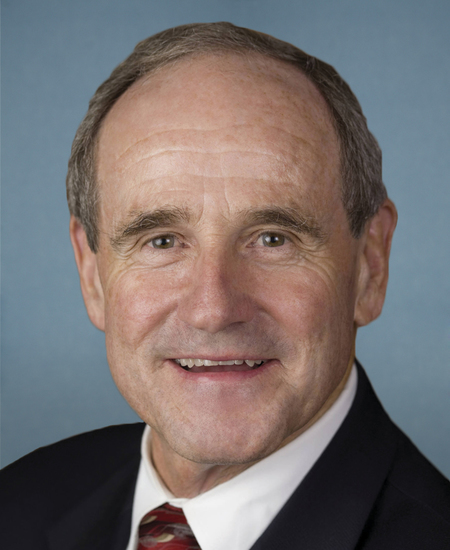
Sen. James E. Risch
Sponsored bills
Maddy summaryThe VALOR Act of 2025 establishes criteria for determining when a democratically elected government is in power in Venezuela, requiring free and fair elections with international observer oversight, respect for human rights, and the release of political prisoners. The bill authorizes U.S. sanctions against the Maduro regime, including blocking transactions involving Venezuelan debt instruments, cryptocurrency, and government property, while prohibiting support for nondemocratic governments. It also creates mechanisms for U.S. assistance to Venezuelans under a democratically elected government, including humanitarian aid and support for democratic institutions, with specific reporting requirements for sanctions and assistance programs. The sanctions remain in place until the President certifies a democratically elected government is in power, at which point the U.S. would work to terminate sanctions and coordinate international support for Venezuela's transition.
Maddy summaryThis bill adds new federal district court judgeships to address growing case backlogs. It authorizes 66 permanent judgeships to be appointed starting in 2025 (with an additional 34 in 2029) across specific districts in Arizona, California, Texas, Florida, Georgia, New York, and others, based on current caseload data. It also creates temporary judgeships for Oklahoma districts (Eastern and Northern) that expire after five years if vacancies occur. The bill aims to reduce the average of 491 cases per judgeship by increasing staffing in overburdened courts, as identified by the Judicial Conference.
Maddy summaryThis bill, S 1553, primarily helps ranchers with federal grazing permits or leases during natural disasters. It allows temporary access to unused grazing areas when their own land becomes unusable due to events like droughts or wildfires, for up to three grazing seasons without changing their original permit terms. The bill also creates a new $15 million annual fund (from investing Land and Water Conservation Fund money) to support rangeland improvements like fence construction, invasive plant control, and public access agreements for recreation. Additionally, it extends grazing permit renewal terms from 10 to 20 years and streamlines environmental reviews for permit renewals and emergency adjustments.
Maddy summaryThe CLEAR Path Act extends post-employment restrictions for senior U.S. government officials (those requiring Senate confirmation) who represent foreign governments. It prohibits them from influencing U.S. officials for 2 years after leaving office for most foreign entities, but indefinitely for "countries of concern" (defined by law). The bill requires agencies to notify officials of these restrictions at appointment and departure, and creates a process where Congress must approve any changes to the list of "countries of concern" via a specific joint resolution. These restrictions expire 5 years after the bill’s enactment.
Maddy summaryThis bill (S 4634) is a commemorative naming resolution. It renames the U.S. Postal Service facility at 154 First Avenue East in Jerome, Idaho, as the "Representative Maxine Bell Post Office." The bill updates all official federal references (like laws, maps, and documents) to use this new name. It directly affects the postal facility and government records referencing it, with no policy changes or financial impact.
Maddy summaryS 2160, the Urban Canal Modernization Act, requires the U.S. Secretary of the Interior to fund 35% of extraordinary maintenance costs for high-risk urban canals. It directly affects canals classified as "urban canals of concern," defined as those where failure could endanger over 100 people or cause more than $5 million in property damage, or are officially designated as urban by the Bureau of Reclamation. The bill mandates federal funding for necessary maintenance work on these canals, with the remaining costs to be repaid by the canal operators. This policy change establishes a formal funding mechanism for critical infrastructure safety without altering existing cost-sharing rules for federal grants.
Maddy summaryThis bill amends federal law to clarify how the National Guard Bureau handles reimbursement funds received from states, territories, or the District of Columbia. It requires that funds paid back for using military property must be credited to the specific account that covered the original expenses or a similar account for the same purpose. These funds may only be used by the Department of Defense for repairing, maintaining, or similar upkeep of assets directly used by National Guard units operating under state active duty status. The bill affects the National Guard Bureau and state/territorial governments that reimburse the federal government for shared property costs.
Maddy summaryThe "Bring Our Heroes Home Act" creates a system to identify, collect, and make publicly available records about missing military personnel and civilian personnel who went missing between December 7, 1941, and the bill's enactment date. It requires federal agencies to identify and transmit these records to the National Archives within 180 days (with full completion within one year), and establishes a Review Board to oversee the process and make decisions about disclosure. The bill creates a presumption that such records should be declassified and made public, with only narrow exceptions for national security or privacy concerns, and mandates periodic reviews of any records that remain withheld. This primarily affects federal agencies that hold records related to missing military personnel and civilian personnel, aiming to provide families and the public with greater access to information about missing individuals.
Maddy summaryThe RTP Full Funding Act of 2024 aims to fully fund the Recreational Trails Program (RTP), which supports trail development and maintenance nationwide. Currently, the program receives about $84 million annually from a fuel tax paid by nonhighway recreation users, though the actual tax collected totals roughly $281 million yearly. The bill requires the Federal Highway Administration to provide Congress with an annual estimate of these collected taxes at least one year before highway program funding expires, ensuring tax revenues are fully returned to states for trail projects. This change directly affects states and local communities that rely on RTP funds to maintain trails used for activities like hiking, biking, and snowmobiling.