Saving Hazardous And Declining Environments Act or the SHADE Act This bill requires the Department of Housing and Urban Development to award grants for government entities and nonprofit organizations to plant trees in low-income communities and in communities meeting designated minority or limited English-proficiency thresholds.
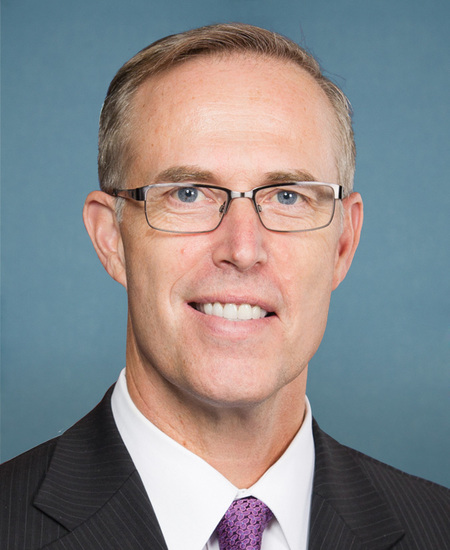
Rep. Jared Huffman
Sponsored bills
Protecting Older Workers Against Discrimination Act of 2021 This bill revises the evidentiary standard for age discrimination by establishing an unlawful employment practice when the complaining party demonstrates that age or participation in an investigation, proceeding, or litigation related to an age discrimination claim was a motivating factor for an adverse practice, even though other factors also motivated the practice (thereby allowing what are commonly known as mixed motive claims). The bill (1) permits the complaining party to rely on any type or form of admissible evidence, which need only be sufficient for a reasonable trier of fact to find that an unlawful practice occurred; and (2) declares that the complaining party shall not be required to demonstrate that age or retaliation was the sole cause of the employment practice (thereby rejecting the Supreme Court's decision in Gross v. FBL Financial Services, Inc. , which requires the complainant to prove that age was the but-for cause for the employer's decision). The bill applies this evidentiary standard to other employment discrimination and retaliation claims, including claims under the Civil Rights Act of 1964, the Americans With Disabilities Act of 1990, and the Rehabilitation Act of 1973. In a claim in which age discrimination is shown, but where the employer demonstrates that it would have taken the same action absent the motivating factor of age, the bill authorizes courts to grant declaratory and injunctive relief, but prohibits the court from awarding damages or issuing an order requiring any admission, reinstatement, hiring, promotion, or payment. This limitation also applies to claims of discrimination based on disability. The bill also includes reporting requirements for the Equal Employment Opportunity Commission and the Department of Labor.
Vanessa Guillén Military Justice Improvement and Increasing Prevention Act This bill modifies the process and policy related to the disposition of charges and convening of courts-martial for certain sexual assault cases and other specified offenses under the Uniform Code of Military Justice (UCMJ). Among other elements, the bill provides that the determinations on the preferral, disposition, and referral of charges for specified offenses under the UCMJ must be made by a commissioned officer of the Armed Forces who is designated as a court-martial convening authority (in grade O-6 or higher) and who is available for detail as trial counsel, has significant trial experience, and is outside the chain of command of the member subject to the charges.
Efficient Grid Interconnection Act of 2021 This bill establishes requirements concerning (1) the equitable allocation of costs for electric grid upgrades; and (2) the deployment of grid enhancing technology or equipment that increases the capacity, efficiency, or reliability of a transmission facility or transmission system. Specifically, it directs the Federal Energy Regulatory Commission (FERC) to issue regulations that require public electric utilities to allocate the cost of upgrades to the electric grid, such as upgrades to interconnect renewable generation projects, among all customers that benefit from the upgrades. In determining which parties benefit, FERC must consider all material benefits of the network upgrade, including environmental benefits and those that cannot be directly quantified. In addition, FERC must issue regulations that apply to regional transmission organizations, independent system operators, or transmission planning coordinators when they are processing requests to interconnect generation projects or energy storage projects to the electric grid. The regulations must require such organizations, operators, and coordinators to study deploying technology or equipment that increases the capacity, efficiency, or reliability of a transmission facility or transmission system.
National Adoption and Foster Care Home Study Act This bill requires The Department of Health and Human Services to establish a methodology for researched-based home study and to award grants for demonstration projects for states to adopt such methodology in the evaluation of prospective foster and adoptive parents. Such methodology must incorporate specified data-collection tools including, among others, (1) uniform, closed-ended questions; (2) a rating system to report findings; (3) a guidance document for practitioners; and (4) ongoing training for home-study personnel.
Blue Carbon Protection Act This bill establishes programs, grants, and requirements to protect and restore marine and blue carbon ecosystems, which are vegetated coastal habitats and include mangroves, tidal marshes, and other tidal or salt-water wetlands that have the capacity to sequester and store carbon.
Regional Ocean Partnership Act of 2021 This bill allows the National Oceanic and Atmospheric Administration (NOAA) to designate and support Regional Ocean Partnerships between coastal states that share a common ocean or coastal area. Specifically, NOAA may designate a partnership as a Regional Ocean Partnership if it (1) is established to coordinate the interstate management of coastal resources; (2) focuses on the environmental issues affecting the ocean and coastal areas of the coastal states participating in the partnership; (3) complements existing state coastal and ocean management efforts on an interstate scale, focusing on shared regional priorities; (4) does not have a regulatory function; and (5) is not duplicative of an existing Regional Ocean Partnership. The bill designates the following entities as Regional Ocean Partnerships: the Gulf of Mexico Alliance, the Northeast Regional Ocean Council, the Mid-Atlantic Regional Council on the Ocean, and the West Coast Ocean Alliance. Each partnership must maintain mechanisms for consultation and engagement with the federal government, tribal governments, and nongovernmental entities, such as academic organizations. A partnership may use provided federal funds to award grants and enter into contracts for certain purposes, including to monitor the water quality and living resources of multistate ocean and coastal ecosystems.
Bolstering Long-term Understanding and Exploration of the Great Lakes, Oceans, Bays, and Estuaries Act or the BLUE GLOBE Act This bill addresses data collection and monitoring of the Great Lakes, oceans, bays, estuaries, and coasts. The bill increases domestic and international coordination to enhance data management and monitoring of the Great Lakes, oceans, bays, estuaries, and coasts. It adds programs for the application and development of innovative technology to the list of technology programs used to combat illegal, unreported, and unregulated fishing. It also modifies requirements related to the scientific workforce in areas of oceanic and atmospheric research and development to include investigating whether there is a workforce shortage, workforce diversity, actions the federal government can take to increase diversity in the scientific workforce, and actions it can take to shorten the hiring backlog for such workforce. The National Oceanic Atmospheric Administration (NOAA) must (1) ensure that a goal of its cooperative institutes is to advance or apply emerging technologies, (2) create an ocean innovation prize to catalyze the rapid development and deployment of data collection and monitoring technology, and (3) seek to enter into an agreement with the National Academy of Sciences to assess the potential for an Advanced Research Projects Agency-Oceans. The bill also reauthorizes through FY2024 various NOAA hydrographic programs, including nautical mapping and charting. Additionally, relevant federal agencies must measure the value and impact of industries related to the Great Lakes, oceans, bays, estuaries, and coasts on the U.S. economy.
Keep America's Waterfronts Working Act This bill addresses the preservation and accessibility of waterfronts in coastal states. The bill directs the National Oceanic and Atmospheric Administration (NOAA) to establish a Working Waterfront Task Force that will be designed to identify and address critical working waterfront needs with respect to cultural and economic importance, environmental threats, and market conditions for water-dependent businesses. NOAA must also establish a Working Waterfront Grant Program. Under the program, NOAA may award grants to coastal states with approved working waterfront plans in place to preserve and expand access to coastal waters for people engaged in fishing, aquaculture, boat building, and other water-dependent businesses. In addition, NOAA is authorized to award grants to coastal states for the purpose of developing or revising working waterfront plans. States are allowed to allocate any grant money received to eligible Indian tribes, local governments, and other entities. Each state that is awarded a grant must contribute at least 25% of matching funds towards the total cost of the project carried out with the grant, subject to certain exceptions. The bill establishes the Working Waterfronts Preservation Loan Fund to provide loans to coastal states for the purpose of implementing working waterfront plans.
Blue Carbon for Our Planet Act This bill addresses the protection and restoration of coastal blue carbon ecosystems, which are vegetated coastal habitats and include mangroves, tidal marshes, and other tidal or salt water wetland that have the ability to sequester and store carbon. Specifically, the bill establishes the Interagency Working Group on Coastal Blue Carbon to (1) develop and maintain a map of these ecosystems, (2) assess the impediments to the protection and restoration of these ecosystems, and (3) establish national protection and restoration priorities regarding these ecosystems. The National Oceanic and Atmospheric Administration (NOAA) must chair the group and establish a national goal for conserving ocean and coastal blue carbon ecosystems within the territory of the United States and set targets to restore degraded coastal blue carbon ecosystems as appropriate. NOAA must also (1) establish integrated pilot programs to restore degraded coastal blue carbon ecosystems, and (2) enter into an agreement with the National Academy of Sciences to assess the long-term effects of geologic stores of carbon dioxide in a deep seafloor environment. Finally, the bill establishes requirements concerning the stewardship and standardization of blue carbon data in the Coastal Carbon Data Clearinghouse.