

Student Food Security Act of 2021 This bill expands the Supplemental Nutrition Assistance Program (SNAP) and establishes programs to address food insecurity among college students. Specifically, the bill permanently modifies the eligibility requirements to allow additional college students to receive SNAP benefits, and it establishes a demonstration program to allow college students to use SNAP benefits on college campuses instead of meal plans. The bill also advances implementation of certain data-sharing agreements and notifications to help students who apply for federal financial aid to also apply for and receive other federal means-tested benefits (e.g., Section 8 tenant-based housing assistance, Medicaid, and Supplemental Security Income). In addition, the bill (1) requires questions about food and housing insecurity to be incorporated into the National Postsecondary Student Aid Study, and (2) establishes a grant program to support research and address incidences of food and housing insecurity among college students.
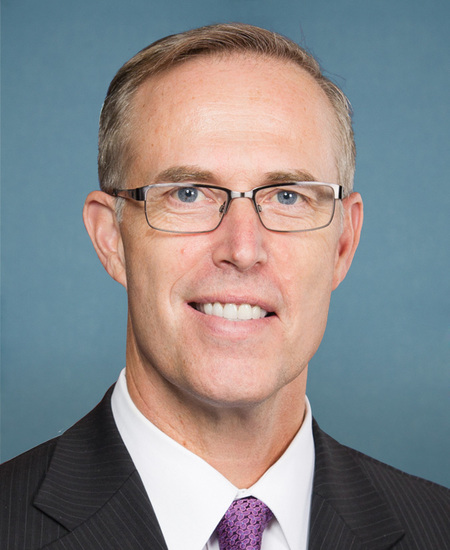
Rep. Jared Huffman
Sponsored bills
Federal Retirement Fairness Act This bill modifies the federal civilian service that is creditable service under the Federal Employees Retirement System (FERS). Specifically, it expands the nondeduction service that may be creditable under FERS. Nondeduction service is federal service where an employee's pay is not subject to retirement deductions (e.g., service under a temporary appointment). Currently, nondeduction service performed before January 1, 1989, is creditable under FERS so long as a deposit is made into the retirement fund to cover the period of nondeduction service. This bill allows nondeduction service performed on or after January 1, 1989, to be creditable under FERS so long as a deposit is made into the retirement fund.
Investing in Commonsense Ballistic Missiles Act of 2021 or the ICBM Act This bill addresses the transfer and use of funds intended for defense programs. Specifically, the bill prohibits defense funds in FY2022-FY2031 from being obligated or expended for the ground-based strategic deterrent program or the W87-1 warhead modification program. The Department of Defense (DOD) must transfer the unobligated balances intended for its ground-based strategic deterrent program to the Department of the Air Force. DOD must carry out a life extension program of Minuteman III intercontinental ballistic missiles to extend the life of such missiles to 2040. DOD must ensure the program incorporates new and necessary technologies that could also be incorporated in the future ground-based strategic deterrent program. Additionally, the program must use nondestructive testing methods and technologies similar to those used by the Navy for Trident II D5 submarine launched ballistic missiles to reduce destructive testing.
Audit the Pentagon Act of 2021 This bill requires defense spending reductions during any fiscal year after FY2022 where the Comptroller of the Department of Defense (DOD) fails to certify that a department, agency, or other element of DOD has achieved an unqualified opinion on its full financial statements. The amount of any reductions must be deposited in the General Fund of the Department of the Treasury and must be available for deficit reduction. The bill excludes from any reductions accounts related to military personnel, reserve personnel, National Guard personnel, and the Defense Health Program. The President may waive a reduction if the President certifies that a reduction would negatively affect (1) national security or members of the Armed Forces who are deployed in combat zones, or (2) the Defense Health Program account.
Large-Scale Water Recycling Project Investment Act This bill requires the Department of the Interior to award grants to water or power delivery authorities for the planning, design, and construction of large-scale water recycling and reuse projects in drought-stricken regions of certain western states. Additionally, the Government Accountability Office must report on the selection process for each project.
Disaster Reforestation Act This bill sets forth a special rule for the tax deduction for casualty losses of uncut timber (including pre-merchantable timber). It provides that in losses of any uncut timber from fire, storm, insects, invasive species, drought, or other casualty, or from theft, the basis for determining the amount of the deduction for such loss shall not be less than the excess of the value of such timber determined immediately before such loss was sustained, over the salvage value of such timber. To be eligible for the casualty loss deduction, the uncut timber subject to the loss must be reforested not later than the close of the five-year period beginning on the date of the loss.
Better Care Better Jobs Act This bill establishes programs and provides funds for state Medicaid programs to improve home- and community-based services (HCBS), such as home health care, personal care, case management, and rehabilitative services. Specifically, the bill provides funds for the Centers for Medicare & Medicaid Services to award planning grants, develop quality measures, and provide technical assistance to states regarding specified HCBS improvements, particularly with respect to access, utilization, and the associated workforce. The bill also increases the Federal Medical Assistance Percentage (i.e., federal matching rate) for HCBS in states that develop plans and meet specified benchmarks for improvements. The bill also makes permanent (1) the Money Follows the Person Rebalancing Demonstration Program (a grant program to help states increase the use of HCBS for long-term care and decrease the use of institutional care), and (2) certain provisions regarding Medicaid eligibility that protect against spousal impoverishment for recipients of HCBS.
Advancing FASD Research, Services, and Prevention Act or the FASD Respect Act This bill expands and establishes programs for fetal alcohol spectrum disorders (FASD). Specifically, it directs the Department of Health and Human Services, the National Institutes of Health, the National Center on Birth Defects and Developmental Disabilities, and the Health Resources and Services Administration to carry out and coordinate research, surveillance, and related activities to diagnose, prevent, and treat FASD. Furthermore, the bill establishes various grant programs to support FASD coalitions and develop systems of care; provide services for individuals affected by FASD and other conditions related to prenatal substance exposure; identify and implement best practices for educating children with FASD; and establish centers for excellence to build relevant capacity for preventing, treating, and responding to the needs of individuals with FASD. The bill also directs the Department of Education and the Department of Justice to develop and disseminate trainings and best practices related to FASD in schools and correctional facilities, respectively.
Therapeutic Fraud Prevention Act of 20 21 This bill prohibits commercial conversion therapy, which is a practice or treatment designed to change a person's sexual orientation or gender identity or otherwise change behaviors, thoughts, or expressions related to gender or sexual attraction. This prohibition does not apply to treatment that assists an individual undergoing a gender transition or facilitates identity exploration and development.
Comprehensive Credit Reporting Enhancement, Disclosure, Innovation, and Transparency Act of 2021 or the Comprehensive CREDIT Act of 2021 This bill provides for additional consumer credit protections, sets forth requirements for credit reporting agencies, and prohibits the inclusion of specified information on credit reports. The bill revises the dispute process for consumers challenging information contained on their credit report, including by establishing an appeals process for disputed credit information. The bill also establishes the right for courts to award injunctive relief to require compliance with consumer credit laws. Credit reporting agencies must provide (1) free credit scores to consumers along with their free annual credit reports, and (2) additional information regarding the calculation of their credit score. Furthermore, specified lenders must give consumers free copies of consumer reports or credit scores used for making underwriting decisions before consumers sign the respective loan agreements. Additionally, the bill generally revises the information included on a credit report, including by limiting the inclusion of certain medical debt. The bill also expands consumer credit protections applicable to servicemembers and victims of fraud.