

Maddy summaryThis bill requires the Commerce and State Departments to develop strategies preventing U.S. and allied technology exports to Iran for drone production. It specifically targets microchips, GPS modules, and other critical components (like microcontrollers and voltage regulators) used in Iranian drones that have been linked to attacks in Ukraine and against Israel via groups like Hamas. The strategy must identify U.S. and foreign manufacturers, track third-party distributors circumventing controls, and coordinate with allies to block these exports. It directly affects U.S. technology companies, global distributors, and foreign partners whose exports could enable Iran's drone program. The bill aims to disrupt technology flows supporting Iranian drones used in conflicts without making speculative claims about outcomes.
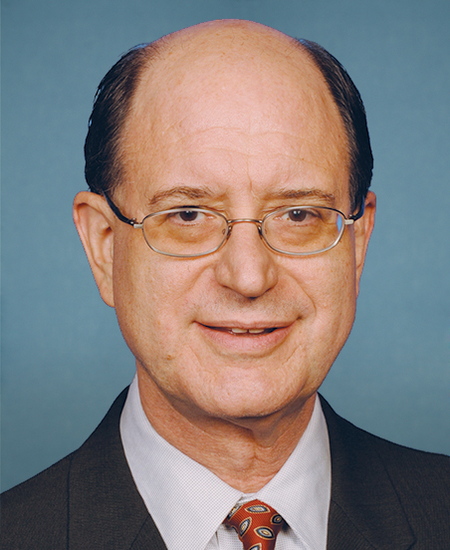
Rep. Brad Sherman
Sponsored bills
United States Commission on International Religious Freedom Reauthorization Act of 2026 This bill reauthorizes the U.S. Commission on International Religious Freedom through 2028. The commission is an independent federal commission tasked with monitoring international religious freedom conditions, reviewing U.S. government policy, and making policy recommendations. (Under current law, the commission is authorized through FY2026.)
Maddy summaryThis resolution expresses support for designating June 5, 2026, as National Gun Violence Awareness Day and June 2026 as National Gun Violence Awareness Month. The bill calls on the public to wear orange on the designated day to honor victims and promote awareness of gun safety. It highlights statistics on gun-related deaths and injuries to underscore the need for community discussions on making neighborhoods safer.
Maddy summaryThe Promoting Authenticity with Influencer Disclaimers Act requires political committees to clearly label online content they pay for, ensuring viewers know the material was sponsored by a political group. This rule applies to posts on websites, apps, and social media, mandating that the disclaimer be easy to read or hear, while excluding content on a committee's own site or posts by staff whose main job is managing their personal social media. The law takes effect on January 1, 2027, and directs the Federal Election Commission to create specific regulations to enforce these requirements by that date.
Maddy summaryThis bill creates a new federal commission to set maximum prices for all approved prescription drugs, including insulin and vaccines, starting in 2027. The commission would determine these "fair prices" by considering manufacturing costs, therapeutic benefits, and prices in other countries, while the Health and Human Services Secretary would publish the final prices that drug makers must charge. Manufacturers that sell drugs above these set prices would face significant fines, and the bill grants the government the authority to bypass patent protections to increase drug production if domestic supply is insufficient.
Maddy summaryThis resolution condemns specific racist rhetoric directed at Indian and Chinese Americans and calls on all elected officials, including the President, to stop using language that promotes racial or ethnic division. It specifically addresses recent statements made by the President that characterized immigrants from India and China in derogatory terms and linked them to negative stereotypes. The bill affirms that immigrants from all backgrounds are vital to the United States and declares that attacks based on national origin are un-American. While it does not change laws or policies, it serves as a formal statement of disapproval from the House of Representatives regarding the targeted hate speech.
Maddy summaryThis bill authorizes the U.S. Mint to produce commemorative $5 gold and $1 silver coins marking the 25th anniversary of the September 11, 2001, terrorist attacks. The coins must feature designs honoring victims and first responders (including the inscription "Never Forget") and will be sold only during 2027-2028. All surcharges ($35 per gold coin, $10 per silver coin) collected from sales will fund the National September 11 Memorial and Museum at the World Trade Center, with no net cost to the federal government. The coins are legal tender but primarily intended for collectors, not circulation.
Maddy summaryThe No Taxpayer-Funded Settlement Slush Funds Act of 2026 prohibits the use of federal money to pay specific settlements involving high-ranking government officials and their close associates. It bars payments to the President, Vice President, their immediate families, cabinet members, senior executive staff, political appointees, and individuals connected to these roles, as well as any entity owned by the President or Vice President. Additionally, the bill restricts settlements related to claims about the January 6 Capitol attack, foreign election interference, or previously dismissed lawsuits, while requiring Treasury reports for large settlements and allowing the government to seek repayment if rules are broken.
Dental Care for Veterans Act This bill expands eligibility for veterans for dental care provided by the Department of Veterans Affairs (VA). Specifically, the bill makes all veterans who are enrolled in the VA health care system eligible for VA-provided dental services. Currently, only veterans who have a service-connected dental issue or meet other narrow criteria are eligible for certain dental services. The bill phases in eligibility over four years based upon existing eligibility, degree of service-connected disability or other disability, prisoner of war status, award of a Purple Heart, financial need, or VA health care eligibility.
Maddy summaryThe Protecting Our Democracy Act is a comprehensive legislative bill designed to prevent abuses of presidential power, restore checks and balances, and defend elections against foreign interference. Key provisions include prohibiting the President from granting self-pardons, requiring congressional oversight for pardons involving the President or their family, and banning the President from accepting payments from individuals who have received clemency. The bill also strengthens enforcement of the Hatch Act and ethics rules for political appointees, mandates greater transparency in presidential tax returns and campaign finances, and restricts the use of federal property for political conventions. Additionally, it expands reporting requirements for foreign contacts in federal campaigns and imposes stricter penalties for violations of election laws.