Maddy summaryThe Maverick Act authorizes the Secretary of the Navy to transfer three F-14D Tomcat aircraft to the U.S. Space and Rocket Center Commission in Huntsville, Alabama, without charge to the Commission. The Commission would be responsible for all costs associated with the aircraft, including conveyance, operation, and maintenance. The bill requires the aircraft to be demilitarized and used exclusively for public display, airshows, or commemorative events to preserve naval aviation heritage. The Commission must also comply with all Federal Aviation Administration regulations, and if these conditions are violated, ownership of the aircraft would revert to the United States.
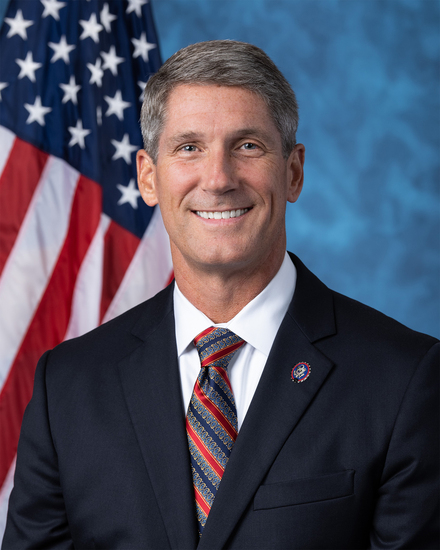
Rep. Scott Franklin
Sponsored bills
Maddy summaryHR 7734, the Land Grant Research Prioritization Act of 2026, directs existing federal research grant programs to prioritize four specific agricultural research areas. It adds new funding priorities for mechanized harvesting technologies (especially for specialty crops), artificial intelligence applications in farming (focusing on specialty crop production), invasive species management, and sustainable aquaculture methods. These grants will be awarded to land-grant colleges and universities, as defined by federal law, to develop and test these specific technologies and approaches. The bill does not create new funding but shifts emphasis within current programs toward these targeted research goals.
Maddy summaryHR 7464, the TEMP Act, requires the Federal Crop Insurance Corporation to research and develop index-based insurance for specific crops (like tomatoes, citrus, and strawberries) against frost or cold weather damage. This research must evaluate risk management tools and aim to create policies covering either production or revenue loss from such events. The Corporation must report its findings and recommendations to Congress within one year of the bill's enactment. The bill directly affects farmers growing these frost-vulnerable crops by initiating a process to potentially expand their insurance options.
Enhanced Iran Sanctions Act of 2025 This bill imposes sanctions on certain foreign persons (individuals and entities) that are involved in Iran's petroleum sector as well as certain associated persons. The bill also requires or authorizes actions to facilitate the enforcement of sanctions on Iran. Specifically, the bill requires the President to impose visa- and property-blocking sanctions on any foreign person that, after the bill's enactment, knowingly engages in any transaction related to the processing, export, or sale of oil, condensates, gas, liquefied natural gas, or other petrochemical products in whole or in part from Iran. The President must also impose sanctions on certain foreign persons associated with a sanctioned individual or entity. For example, the President must sanction the subsidiaries and corporate officers of a sanctioned business. The bill provides certain exceptions to these sanctions, including specifying that sanctions do not apply to the importation of goods or to conducting or facilitating transactions for humanitarian assistance. The Department of State must establish an interagency working group that shall seek to establish a multilateral contact group to coordinate international efforts to enforce sanctions on Iran. The bill expands the State Department rewards program to authorize a reward payment to any individual who furnishes information leading to the identification of a person (1) subject to sanctions under this bill, or (2) that has attempted or is attempting to evade sanctions under this bill.
Maddy summaryThis bill, known as the Improving Dental Administration Act of 2026, would allow certain state laws about dental benefits to override federal rules under the Employee Retirement Income Security Act. It directly affects states that have their own regulations governing dental insurance and benefit plans for employees. The key provision creates an exemption that takes effect 18 months after the bill is enacted, permitting state laws related to dental benefit administration to apply even if they differ from federal requirements. The exemption only applies to state laws that do not conflict with existing federal laws in the Employee Retirement Income Security Act.
Maddy summaryThis bill establishes a new research program within NOAA to improve global ocean monitoring and observing systems. It directs the agency to develop sustained data collection capabilities, including the One-Argo system, while supporting research on ocean health, climate, and extreme weather forecasting. The legislation also mandates the integration of artificial intelligence and cloud technologies to optimize data use, requires annual reviews of program activities, and allows for competitive grants to academic and private institutions for ocean research projects.
Maddy summaryHR 7678, the Gun Owner Registration Information Protection Act, prohibits federal funding for state or local databases that track lawfully owned firearms or their owners. The bill allows federal funding for databases recording lost or stolen firearms but bans it for databases listing legal gun ownership. This means states cannot use federal money to create or maintain systems that compile information about legally owned guns. The bill directly affects state and local governments that rely on federal funds for firearm ownership databases.
Respect State Housing Laws Act This bill eliminates a provision that requires a 30-day notice period before a landlord may begin eviction proceedings against a tenant in federally assisted or federally backed housing.
Maddy summaryHRES 1073 is a non-binding resolution designating February 21-28, 2026, as "National FFA Week" to recognize the National Future Farmers of America (FFA) Organization’s role in developing agricultural education leaders and to celebrate the 50th anniversary of Alaska’s State FFA Association. It does not create new laws or affect any specific groups or policies; instead, it formally expresses the House’s support for this commemorative week. The resolution highlights FFA’s mission to prepare students for leadership and careers in agriculture, food, and natural resources. As a symbolic gesture, it has no direct legislative or financial impact on constituents.
Maddy summaryThis bill directs U.S. agencies to support Iranian people's access to uncensored information and hold Iranian officials accountable for human rights abuses. It requires the State Department and FCC to report on technologies (like satellite networks and mesh systems) that could bypass internet restrictions in Iran, and authorizes $2 million annually to develop such tools. The bill also establishes a new "Iran Kleptocracy Initiative" at FinCEN to track corruption, freeze assets of Iranian regime officials and state-owned businesses, and coordinate with international partners. These measures apply to U.S. policy toward Iran but do not alter Iran's domestic laws; they focus on U.S. sanctions, technology development, and anti-corruption efforts targeting the Iranian regime.