Maddy summaryThis bill (S 3688, RURAL Rate Act) increases Medicare reimbursement rates for healthcare providers in certain rural areas. It requires the Medicare program to set a minimum floor of 1.67 for practice expense and work geographic payment indices after January 1, 2026, if the standard calculation would produce a lower rate. This directly affects doctors and clinics in designated rural locations that currently receive lower Medicare payments due to geographic pricing. The change ensures these providers receive at least 1.67 times the standard rate for services, aiming to address historical underpayment. The policy applies to Medicare Part B payments for services furnished in qualifying rural areas starting in 2026.
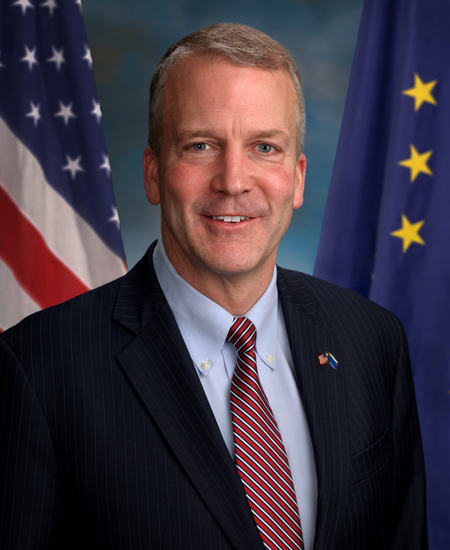
Sen. Dan Sullivan
Sponsored bills
Save Our Seas 2.0 Amendments Act This bill reauthorizes and modifies administration of Marine Debris Program (MDP) activities and the Marine Debris Foundation. (The program and the foundation support efforts to assess, prevent, and otherwise address marine debris and its adverse impacts on the U.S. economy, the marine environment, and navigation safety.) First, the bill reauthorizes the National Oceanic and Atmospheric Administration's (NOAA's) Marine Debris Program through FY2029. The bill authorizes NOAA to provide contributions for MDP project costs on an in-kind basis in an amount that NOAA determines represents the value it derives from the project. The bill also authorizes NOAA to enter into agreements other than cooperative agreements, contracts, and grant agreements for projects. Next, the bill modifies requirements for the Marine Debris Foundation and reauthorizes it for FY2025. Among other changes, the bill designates the current Chief Operating Officer (i.e., the first officer or employee appointed by the board) as the Chief Executive Officer (CEO) and specifies that the board has the authority to appoint, review the performance of, and remove the CEO. The bill authorizes the CEO to appoint, supervise, and remove foundation employees and officers. Further, the bill directs the foundation to develop and implement best practices for conducting outreach to Indian tribes and tribal governments. The foundation must locate its principal office in the National Capital Region or a coastal shoreline community. Finally, the bill authorizes the foundation to match contributions from regional organizations, Indian tribes, tribal organizations, and foreign governments.
Maddy summaryThis bill establishes the Bycatch Reduction and Research Task Force to study Alaska salmon migration and bycatch, requiring research on salmon tagging, genetic sampling, and ecosystem impacts in the Bering Sea, Aleutian Islands, and Gulf of Alaska. It creates a new Bycatch Mitigation and Habitat Protection Assistance Fund to help commercial fishermen purchase or modify gear designed to reduce bycatch and habitat damage. The bill also mandates improved electronic monitoring systems, streamlined permit processes for innovative gear, and annual reports on research findings and data integration strategies. These provisions directly affect Alaskan commercial fisheries, salmon management, and coastal communities relying on sustainable fishing practices. The legislation requires final reports within three years detailing research outcomes and recommendations for reducing salmon bycatch.
Secure Rural Schools Reauthorization Act of 2025 This act extends and modifies the Secure Rural Schools (SRS) program, under which states and counties containing certain federal land may receive payments from the Forest Service or the Bureau of Land Management (BLM) for schools, roads, and certain other municipal services. The act modifies the SRS program, including by extending payments made to states and counties containing federal land through FY2026, providing lapsed payments for FY2024 and FY2025, extending the authority of counties to initiate projects using such funds through FY2028, and extending the authority to initiate projects proposed by resource advisory committees through FY2028.
Maddy summaryThe Comprehensive Outbound Investment National Security Act of 2025 restricts U.S. investments in certain technologies in countries of concern, primarily China, by prohibiting investments in "covered national security transactions" involving specific technologies. It targets technologies including advanced semiconductors, artificial intelligence systems, quantum information technologies, high-performance computing, and hypersonic systems that could enhance military or surveillance capabilities. The bill requires U.S. persons to notify the government about certain transactions involving "notifiable technologies" and establishes civil penalties for violations, including potential divestment requirements. The law would expire seven years after enactment and mandates annual reports to Congress about implementation and enforcement.
Maddy summaryThis bill requires that public comments on federal land management rules (administered by the Bureau of Land Management) must come only from U.S. citizens, replacing the previous standard. It mandates that agencies implement CAPTCHA systems to prevent artificial intelligence from submitting comments, explicitly stating this is to deter AI-driven public involvement. The changes apply to rulemaking under the Federal Land Policy and Management Act, affecting how the public can participate in decisions about national public lands. The bill does not alter land management policies but modifies the process for gathering public input.
Maddy summaryThis bill authorizes the U.S. Department of the Interior to provide funding, contracts, and technical assistance to Indian Tribes and Tribal organizations for buffalo restoration and management on tribal lands. It requires the Department to consult with tribes on buffalo-related initiatives and allows tribes to receive surplus buffalo from federal land without cost. The law supports tribes in using buffalo for cultural preservation, subsistence, and economic development through programs like meat processing and habitat management. It explicitly protects tribal treaty rights and mandates that all actions align with tribal laws and management plans.
Maddy summaryThis bill amends the 2004 Tribal Forest Protection Act to expand protections for tribal lands and clarify restoration goals. It broadens the definition of "Indian forest land or rangeland" to include areas with historical forest cover capable of restoration and explicitly adds "restore" to the Act’s purpose (previously only "protect"). The changes directly affect federally recognized tribes, Alaska Native Corporations under the Alaska Native Claims Settlement Act, and federal agencies managing land. It also authorizes $15 million annually for fiscal years 2026-2031 to implement these provisions.
Maddy summaryThis bill establishes a federal grant program to help states, local governments, and tribal nations hire and retain prosecutors. It provides up to 75% federal funding (with potential waivers for financial hardship) for prosecutor offices to hire, train, or retain staff, with priority given to rural, tribal, or remote areas and rehiring staff laid off due to budget cuts. Funds must supplement, not replace, existing state/local funding, and grantees must track outcomes and submit performance reports. The program is authorized for $10 million annually from 2026 through 2030.
Maddy summaryS 414, the ADS for Mental Health Services Act, requires major social media platforms and search engines (with over 100 million monthly users) to annually report to the Federal Trade Commission (FTC) on public service advertisements promoting mental, behavioral, or physical health resources. The reports must detail the number and value of such ads, including those highlighting free local services or addressing issues like suicide prevention, addiction, or social isolation. The FTC must then summarize this data for Congress annually, without altering existing privacy or data security laws. This bill directly affects large digital platforms by mandating transparency about health-focused public service advertising.