Maddy summaryThis bill amends the Community Development Banking and Financial Institutions Act of 1994 to require the Treasury Secretary to testify annually before Congress about the Fund's operations. It also strengthens the CDFI Bond Guarantee Program by adjusting guarantee limits and extending the program's authorization period. Additionally, the bill expands capital assistance options for community development financial institutions and creates a new lending program specifically for Native community development financial institutions to support homeownership in Tribal and Native communities.
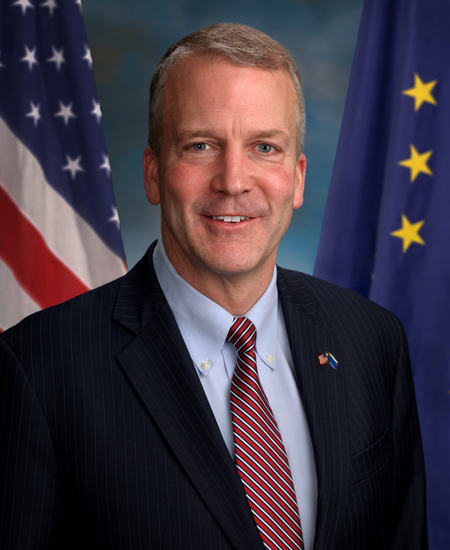
Sen. Dan Sullivan
Sponsored bills
Maddy summarySRES 613 is a Senate resolution (not a law) recognizing the Army-Navy football game as "America’s Game." It expresses the Senate’s view that the annual game between the U.S. Military Academy and U.S. Naval Academy - held since 1890 - should remain the only major college football game played on the second Saturday of December. The resolution urges broadcasters, athletic conferences, and universities to avoid scheduling competing games during this time slot to preserve the event’s national prominence and its role in honoring military service. It does not create new laws or funding but calls for federal agencies to review policies supporting the game’s civic significance. (Note: This is a symbolic resolution, not a bill with binding effects.)
Maddy summaryThe Tsunami Warning, Research, and Education Act of 2026 reauthorizes and enhances the National Tsunami Warning System to improve forecasting, warning capabilities, and coordination. It requires better integration of warning systems with Indian Tribes, Tribal organizations, and Native Hawaiian organizations, and mandates a study to evaluate and improve tsunami alert terminology and effectiveness. The bill authorizes $35 million annually from 2027-2031 for tsunami warning, research, and hazard mitigation programs, with specific funding allocations for these initiatives. It also requires new reporting requirements for the National Oceanic and Atmospheric Administration on system improvements, coordination efforts, and implementation of recommendations from a government-wide study on tsunami coordination.
Maddy summaryThe FUTURES Act (S 3855) establishes a formal U.S.-Israel Defense Technology Cooperation Initiative to accelerate joint development and integration of defense technologies. It directs the U.S. Secretary of Defense to identify Israeli-origin technologies for rapid adoption into American military systems, focusing on areas like counter-drone systems, missile defense, AI, cyber security, and directed energy. The bill authorizes $150 million annually (2027-2029) for this initiative, requiring regular reports to Congress on progress, technology transitions, and industry partnerships. This policy directly affects U.S. defense contractors, Israeli defense firms, and military acquisition programs by creating new pathways to incorporate Israeli innovations into U.S. systems.
Maddy summarySRES 606 is a U.S. Senate resolution condemning the Iranian government for violently suppressing peaceful protests and the right to assemble, which has resulted in at least 6,126 reported deaths and 41,800 arrests since December 2025. It highlights Iran's use of internet blackouts, extrajudicial killings, arbitrary detentions, and censorship to crush nationwide demonstrations sparked by economic hardship. The resolution calls on Iran to hold free elections, allow citizens to determine their future, and hold human rights violators accountable, while commending protesters' courage. As a symbolic resolution (not a law), it expresses the Senate's stance without imposing new legal requirements.
Maddy summaryThe GUARD Act allows state, local, and tribal law enforcement agencies to use existing federal grant funds to investigate elder financial fraud (targeting elderly or disabled individuals), "pig butchering" scams (where victims are tricked into investing in fake crypto schemes), and general financial fraud. It requires agencies to hire specialized staff, use technology tools for tracking scams, and report annually on how funds were used and their impact on fraud statistics. The bill also mandates two key federal reports: one to Congress on scam trends and enforcement actions, and another detailing annual consumer losses and government spending on fraud prevention. These provisions aim to improve coordination between law enforcement, financial institutions, and federal agencies to combat evolving fraud schemes.
Maddy summaryThis resolution designates January 2026 as "National Mentoring Month" to raise public awareness about mentoring programs. It recognizes the benefits of mentoring for youth - including improved academic performance, mental health, career development, and reduced risk of delinquency - and highlights that 40% of U.S. youth lack a mentor. The Senate encourages community, school, and workplace efforts to expand existing mentoring programs and recruit volunteers to support young people. It does not create new laws or funding but aims to promote existing mentoring initiatives across the country.
Safeguard American Voter Eligibility Act or the SAVE America Act This bill requires individuals to provide documentary proof of U.S. citizenship when registering to vote, and requires photo identification to vote, in federal elections. Specifically, the bill prohibits states from accepting and processing an application to register to vote in a federal election unless the applicant presents documentary proof of U.S. citizenship. The bill specifies what documents are considered acceptable proof of U.S. citizenship, such as identification that complies with the REAL ID Act of 2005 that indicates U.S. citizenship. Further, the bill (1) prohibits states from registering an individual to vote in a federal election unless, at the time the individual applies to register to vote, the individual provides documentary proof of U.S. citizenship; and (2) requires states to establish an alternative process to demonstrate U.S. citizenship. Each state must take affirmative steps on an ongoing basis to ensure that only U.S. citizens are registered to vote, which shall include establishing a program to identify individuals who are not U.S. citizens using information supplied by certain sources. Additionally, states must remove noncitizens from their official lists of eligible voters. The bill (1) provides for a private right of action for certain violations, and (2) establishes criminal penalties for certain offenses. Individuals voting in federal elections must present an eligible photo identification document. An individual who votes by absentee ballot must submit a copy of their identification document with both the request for, and the submission of, the absentee ballot.
Maddy summarySRES 585 is a commemorative resolution honoring Ben Nighthorse Campbell, a former U.S. Senator from Colorado and the first Native American to chair the Senate Committee on Indian Affairs. It recognizes his military service, Olympic judo career, legislative work (including authoring the National Museum of the American Indian Act), and advocacy for tribal communities. The resolution has no policy impact - it formally expresses the Senate’s respect for his legacy, requests transmission to his family, and directs a moment of silence. It directly affects Campbell’s legacy and family, not any current policy or population. (Note: This is a procedural resolution, not a bill with legislative provisions.)
Maddy summaryThis bill requires the U.S. Secretary of State to annually determine whether Hong Kong Economic and Trade Offices (HKETOs) in the U.S. merit diplomatic privileges and immunities. If denied, HKETOs must shut down within 180 days. It also prohibits U.S. government entities from partnering with HKETOs for tourism or business promotion unless the Secretary certifies they merit privileges and Congress does not disapprove within 90 days. The bill explicitly bars partnerships that promote efforts to dismantle Hong Kong's autonomy or justify actions against its freedoms, as defined by U.S. policy. This directly affects HKETOs operating in the U.S. and changes how U.S. agencies interact with them.