Maddy summaryThis House resolution reaffirms the United States' commitment to protecting refugees and displaced persons by calling for the restoration of the Refugee Admissions Program and asylum protections. It urges federal officials to lift current bans on refugee entry, resume vetting for approved applicants, and increase humanitarian aid to host countries. The measure highlights the economic contributions of refugees and emphasizes the need for fair, humane policies that align with international obligations and domestic law.
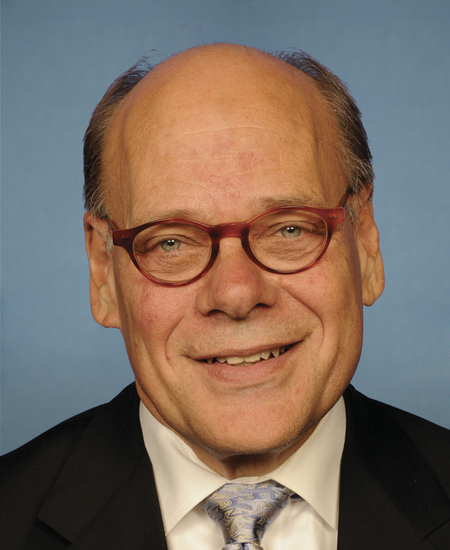
Rep. Steve Cohen
Sponsored bills
Maddy summaryThe Air Carrier Access Amendments Act of 2026 updates the Air Carrier Access Act to strengthen protections for individuals with disabilities who travel by air. It directly affects passengers with disabilities, service animal handlers, and air carriers by establishing new rules for handling specific violations. The bill allows aggrieved passengers to file civil lawsuits in federal court without first exhausting administrative remedies and permits courts to award compensatory and punitive damages. Additionally, it mandates that the Department of Transportation refer cases involving patterns of discrimination to the Attorney General for further legal action.
Maddy summaryThe FAST Repairs for Wheelchairs Act prohibits Medicare Advantage plans from requiring prior authorization, prescriptions, or medical documentation for repairs to complex rehabilitation wheelchairs and their accessories. This change directly affects individuals who use these devices, allowing them to get necessary maintenance without waiting for plan approval. However, the law still permits plans to review the initial medical necessity of the equipment or approve replacements when the device is lost, damaged, or has been used for five years. By removing these specific barriers for repairs, the bill aims to ensure faster access to essential maintenance services for wheelchair users.
Maddy summaryThis bill proposes changes to the Social Security system that would affect workers, retirees, and survivors. Starting in 2028, it requires individuals to pay Social Security taxes on a decreasing percentage of their earnings above the annual cap, eventually eliminating the tax on excess income by 2032. The legislation also adjusts how benefits are calculated by increasing the portion of high earnings that count toward future payments and creating a new index to track inflation specifically for elderly consumers. Additionally, it modifies benefits for widows and widowers in two-income households and ensures that Supplemental Security Income recipients are not penalized by changes to their Social Security benefits.
Maddy summaryThe Keep Public Funds in Public Schools Act of 2026 eliminates a federal tax credit that allowed parents to deduct contributions to scholarship granting organizations from their income. By removing these specific tax breaks, the bill prevents the use of public tax dollars to support private school vouchers and scholarship programs. This change directly affects families who currently rely on these tax incentives to fund education outside the public school system. The provisions take effect for taxable years beginning after December 31, 2026.
Maddy summaryThis bill requires states and tribal organizations that run school lunch programs to also participate in the Summer EBT program, which provides food assistance to children during summer breaks. For the summers of 2024 through 2026, participation in the summer program remains voluntary for these entities. Starting in summer 2027, joining the summer program becomes mandatory for any state or tribal organization that already participates in the school lunch program. The legislation also updates administrative rules to ensure states submit management plans for these programs by specific deadlines each year.
Maddy summaryThe Protect Working Musicians Act of 2026 allows independent musicians and small music businesses to collectively negotiate licensing terms with large online music platforms without facing antitrust lawsuits. This protection applies specifically to creators who earn less than $1 million in licensing revenue or qualify as small businesses, enabling them to form groups to discuss fair rates and refuse unfair deals. The law defines "dominant platforms" as those generating over $100 million in music distribution revenue and extends these negotiation rights to include discussions with companies developing generative artificial intelligence. By shielding these groups from legal liability, the bill aims to correct an imbalance where smaller creators currently lack the power to bargain effectively against major digital services.
Maddy summaryThis bill, known as the Double the Wage for Overtime Act of 2026, aims to change how overtime pay is calculated for employees covered by the Fair Labor Standards Act. It directly affects workers who currently earn less than $23,660 annually, as it would require employers to pay them two times their regular hourly rate instead of one and a half times for hours worked beyond 40 in a week. The law takes effect 180 days after it is signed, ensuring a transition period before the new pay requirements begin. By raising the overtime multiplier, the legislation seeks to increase earnings for hourly workers who work extra hours.
Maddy summaryThis bill requires U.S. agencies to report on Russian and Chinese intelligence activities in Georgia within 180 days, including how their influence might intersect. It also mandates a 5-year U.S. strategy for Georgia relations, assessing funding priorities, Georgia’s commitment to Western trade ties, and whether the U.S. should maintain Georgia as a top aid recipient. The reports will inform U.S. policy decisions about support for Georgia, a key partner in the Caucasus region. Georgia is the direct focus as the recipient of U.S. aid and subject of the intelligence review.
Maddy summaryThis bill clarifies how drugs are defined and scheduled under the Controlled Substances Act to better balance public safety with medical access. It updates legal definitions for terms like "accepted medical use," "dependence," and "abuse" to include scientific research and evidence-based evaluations from state medical regulators. Additionally, it requires the Attorney General to defer to the Secretary of Health and Human Services on scientific assessments and to consider a drug's potential benefits to society when deciding on its schedule. These changes directly affect how the federal government classifies substances and aims to ensure that scheduling decisions are based on rigorous science rather than solely on the potential for abuse.