Maddy summaryThis bill establishes fairer pay and retirement benefits for federal firefighters. It requires that overtime hours worked during a firefighter's regular schedule be included in retirement calculations, improving retirement payouts. The bill also sets a maximum 60-hour regular workweek for federal firefighters, to be defined by the Office of Personnel Management within one year. These changes directly affect federal firefighters by addressing pay disparities with municipal firefighters and enhancing recruitment and retention.
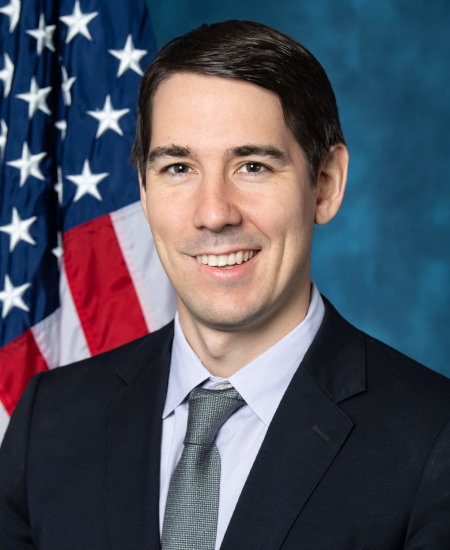
Rep. Josh Harder
Sponsored bills
This bill designates the facility of the United States Postal Service located at 28201 Franklin Parkway in Santa Clarita, California, as the "Deputy Ryan Clinkunbroomer Post Office Building".
Maddy summaryThe Increasing Access to Mental Health in Schools Act creates a federal grant program to increase the number of mental health professionals (counselors, social workers, and psychologists) in low-income public schools. It provides funding for partnerships between schools serving high percentages of low-income students and graduate institutions that train mental health professionals, aiming to reach recommended staff-to-student ratios (such as 1 counselor per 250 students). The bill also establishes a student loan repayment program for mental health professionals working in these schools, offering up to $200,000 in total repayment over five years. This legislation directly affects low-income school districts and mental health professionals working in those schools, with the goal of improving mental health support for students facing challenges like poverty, homelessness, or trauma.
Maddy summaryThe Global Respect Act (HR 6151) requires the U.S. President to publicly list foreign officials responsible for severe human rights violations against LGBTQI individuals, including torture, prolonged detention, or violence based on sexual orientation or gender identity. It mandates denying visas and entry to listed individuals and requires annual reports on the list's updates and impacts. The bill also directs the State Department to track global violence against LGBTQI people and update annual human rights reports to include discrimination based on sexual orientation or gender identity. These provisions directly affect foreign government officials and entities implicated in such abuses, aiming to increase accountability through U.S. visa restrictions.
Maddy summaryThe Water Infrastructure Modernization Act of 2025 amends federal water law to define and support "intelligent water infrastructure technology," including real-time monitoring systems, AI-driven wastewater optimization tools, leak detection sensors, and advanced metering for conservation. It directly affects municipal water systems and utilities by expanding eligible uses for federal grants - allowing funds for implementing these technologies (like predictive aquifer recharge systems) while prohibiting grants for planning or maintenance. The bill increases annual grant funding from $25 million to $50 million (starting in 2028) and requires annual reports to Congress on funded projects and their resiliency improvements. This creates a clear pathway for communities, especially disadvantaged ones, to access federal support for modernizing aging water infrastructure through data-driven solutions.
Maddy summaryHR 4405, the Epstein Files Transparency Act, requires the U.S. Attorney General to publicly release all unclassified Department of Justice documents related to Jeffrey Epstein within 30 days of the law’s enactment. This includes investigations, flight logs, immunity deals, internal communications, and records about Epstein’s detention or death, while prohibiting redactions for "embarrassment" or political sensitivity. The law allows limited redactions only for victim privacy, child sexual abuse materials, active investigations, or national security (with justification), and mandates an unclassified summary for withheld classified information. The Attorney General must submit a detailed report to Congress within 15 days of release, listing all redactions and naming any government officials referenced in the materials.
Maddy summaryThis bill amends federal water storage grant programs under the Infrastructure Investment and Jobs Act to expand eligibility for projects. It sets specific capacity limits: surface water projects must store 200-30,000 acre-feet, while groundwater projects must average 200-150,000 acre-feet annually. Eligible projects must increase storage, convey water to/from storage, or stabilize groundwater levels. The bill also increases the number of annual grants from 5 to 10 and explicitly states it does not override state water laws, federal water rights, or water rights protections.
Maddy summaryHR 5992, the "Stuck On Hold Act," requires the Department of Veterans Affairs (VA) to improve wait times for veterans calling its standard customer service phone lines. Within one year of enactment, the VA must implement an automated system that tells callers their expected wait time and offers a callback if the wait exceeds 10 minutes. The bill also directs the VA Secretary to issue guidance aimed at reducing the average call wait time to 10 minutes or less. This directly affects veterans calling VA service lines (excluding the 38 U.S.C. §1720F(h) hotline and emergency department lines).
Maddy summaryThe Bring Down Housing Costs Act establishes a federal task force under the Department of Housing and Urban Development to address rising home prices in specific states. The task force, composed of 21 members including congressional representatives, federal agency officials, community advocates, and housing industry experts, will identify states with year-over-year increases in median home prices (using HUD data), develop and recommend best practices for reducing costs, and monitor their implementation. It must submit annual reports to state governors, federal agencies, and relevant congressional committees for five years. This bill creates a process for collaborative problem-solving but does not mandate specific policy changes or funding for states.
Maddy summaryThis bill creates a new process for farmers to request variances from standard floodproofing or elevation requirements for agricultural structures located in flood zones. Local officials can approve these variances if they determine floodproofing or elevation isn't feasible, the structure isn't in high-risk areas like floodways or near levees, and there have been limited past flood claims ($1,000 or less in 10 years). Crucially, it requires insurance premiums for these structures to match the rate for properly floodproofed buildings in the same zone. The bill directly affects farmers with agricultural properties in flood-prone areas, aiming to reduce insurance costs while maintaining safety standards.