

Maddy summaryHR 5688, the Non-Domiciled CDL Integrity Act, changes rules for issuing commercial driver's licenses (CDLs) to people who don't live in the state where the license is issued. It allows states to issue CDLs to foreign nationals with lawful U.S. immigration status and work-related visas (valid for up to one year or until their stay ends), requiring states to verify status before issuing and keep records for two years. For residents of U.S. territories like Puerto Rico, it requires proof of U.S. citizenship or permanent residency before issuing CDLs, with similar verification and record-keeping rules. The bill directly affects commercial drivers from foreign countries and U.S. territories seeking CDLs in states where they are not residents.
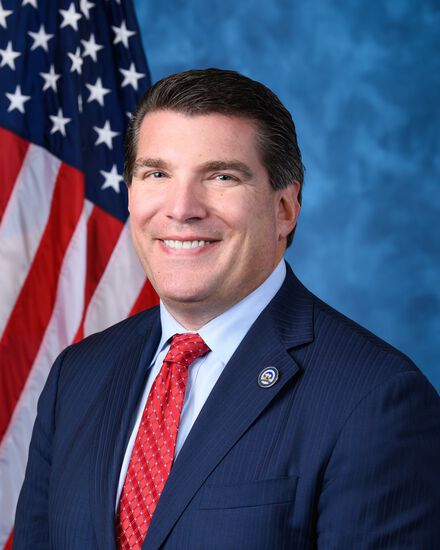
Rep. Jay Obernolte
Sponsored bills
Maddy summaryThis bill requires federal agencies to clarify how they recognize special districts (like water, fire, or school districts operating separately from cities or counties) as eligible for federal grants. It mandates the OMB Director to issue guidance within 180 days, directing agencies to adopt this standard within one year for all federal financial assistance programs. The bill ensures special districts - defined as state-created entities with budgetary autonomy for specific services - can consistently access existing federal funding they currently face barriers to. A report on agency implementation must be submitted to Congress two years after enactment.
Maddy summaryThis bill directs the Department of Commerce to conduct a study on the challenges faced by small U.S. artificial intelligence businesses. The study will examine issues such as access to funding, tax credits, talent recruitment, and the impact of federal policies on these companies. It defines small AI businesses as independently owned U.S. companies with 250 or fewer employees that primarily create or develop AI products or services. The bill requires the Commerce Secretary to consult with relevant agencies and may involve outside experts to gather data and provide recommendations for addressing identified challenges.
Maddy summaryThis bill directs the Federal Communications Commission to update rules for the Lifeline program, which provides discounted phone and internet services to low-income Americans. It requires the FCC to use a national eligibility verification system and accountability database without allowing opt-outs, and mandates re-examination of current recipients who were approved without using these systems. The legislation also restricts eligibility to U.S. citizens and qualified aliens, and requires applicants to provide Social Security numbers or Tribal identifiers during the application process.
Enhanced Iran Sanctions Act of 2025 This bill imposes sanctions on certain foreign persons (individuals and entities) that are involved in Iran's petroleum sector as well as certain associated persons. The bill also requires or authorizes actions to facilitate the enforcement of sanctions on Iran. Specifically, the bill requires the President to impose visa- and property-blocking sanctions on any foreign person that, after the bill's enactment, knowingly engages in any transaction related to the processing, export, or sale of oil, condensates, gas, liquefied natural gas, or other petrochemical products in whole or in part from Iran. The President must also impose sanctions on certain foreign persons associated with a sanctioned individual or entity. For example, the President must sanction the subsidiaries and corporate officers of a sanctioned business. The bill provides certain exceptions to these sanctions, including specifying that sanctions do not apply to the importation of goods or to conducting or facilitating transactions for humanitarian assistance. The Department of State must establish an interagency working group that shall seek to establish a multilateral contact group to coordinate international efforts to enforce sanctions on Iran. The bill expands the State Department rewards program to authorize a reward payment to any individual who furnishes information leading to the identification of a person (1) subject to sanctions under this bill, or (2) that has attempted or is attempting to evade sanctions under this bill.
Maddy summaryThis bill directs the National Institute of Standards and Technology to create definitions, standards, and frameworks to ensure biological datasets from federally funded research are compatible with artificial intelligence models. It requires the NIST Director to establish clear criteria for what makes data "AI-ready," including requirements for data formatting and generation methods, while consulting with federal agencies and the private sector. The legislation includes provisions for public feedback, an advisory group to guide implementation, and regular testing to ensure the new standards do not create undue burdens on researchers.
Maddy summaryThis bill, known as the Warrior Infertility Act, would add infertility to the list of conditions the Department of Veterans Affairs presumes are caused by toxic exposure during military service. It directly affects veterans who may have experienced infertility due to exposure to hazardous substances while serving in the armed forces. The key provision amends Title 38 of the U.S. Code to formally recognize infertility as a service-connected condition, streamlining the process for veterans to receive disability compensation without needing to prove a direct causal link between their service and their condition. This change would apply to all branches of the military, including the Army, Navy, Air Force, and Space Force.
Maddy summaryThis bill would restrict the issuance of commercial driver's licenses to only U.S. citizens, lawful permanent residents, and holders of specific work visas. It requires states to verify the citizenship or visa status of current CDL holders within 180 days of enactment and revoke licenses from those who do not meet these requirements. States that fail to comply with these verification and revocation deadlines would face federal funding penalties. Additionally, the bill mandates that all CDL testing and licensing processes be conducted in English.
Maddy summaryThis bill, known as the AI-Ready Networks Act, requires the Assistant Secretary of Commerce for Communications and Information to produce a comprehensive report on how artificial intelligence is being integrated into the United States commercial telecommunications infrastructure. The report must be completed within 18 months of the bill's enactment and will include assessments of international standards, industry use cases, workforce needs, security measures, and recommendations for updating existing telecommunications laws. Before finalizing the report, the Assistant Secretary will publish a draft for public comment and consult with federal agencies, state and local governments, telecommunications companies, and academic organizations to ensure diverse input. The legislation aims to create a clearer understanding of AI's role in telecommunications networks and provide guidance for safe and effective implementation across the industry.
Maddy summaryThis bill directs the National Science Foundation to create a network of cloud laboratories that use automated robotics and advanced instrumentation to conduct biological experiments and generate data for artificial intelligence research. The legislation establishes a three-phase program where Phase I involves planning and assessment, Phase II funds at least two new laboratories, and Phase III funds at least three additional laboratories over a 12-year period. Key provisions include creating an advisory board to guide development, setting up data sharing protocols for authorized researchers, and requiring cybersecurity and biosecurity safeguards. The program aims to connect public and private research facilities while providing access to experimental capabilities for scientists across academia, industry, and government.