Maddy summaryThis bill creates a student loan forgiveness program for educators who work in designated high-need schools or early childhood education programs. After completing 5 years of qualifying service (which can be non-consecutive), educators will have 100% of their outstanding student loan debt forgiven, including interest and fees. The program also provides monthly loan forgiveness during service, with payments counted toward future forgiveness. It applies to teachers, school leaders, early childhood educators, and program directors working in these settings, including those in Bureau of Indian Education schools and Tribal programs. Service completed before the bill's enactment can count toward the 5-year requirement.
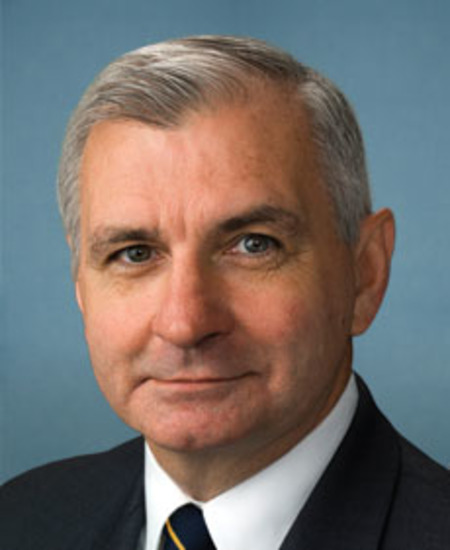
Sen. Jack Reed
Sponsored bills
Maddy summaryS.895, "Ellie’s Law," authorizes $10 million annually from fiscal years 2024 through 2028 for the National Institute of Neurological Disorders and Stroke to fund comprehensive research on unruptured brain aneurysms. The research must study a broader, more diverse patient population across age, sex, and race. This funding is supplemental to existing brain aneurysm research budgets, not replacing them. The bill directly supports federal research efforts to address a condition affecting an estimated 6.6 million people in the U.S., with the goal of improving understanding and management of unruptured aneurysms.
Maddy summaryThe PCAOB Enforcement Transparency Act of 2023 (S 865) requires the Public Company Accounting Oversight Board (PCAOB) to hold enforcement hearings in public by default, affecting public accounting firms and auditors under PCAOB oversight. It amends the Sarbanes-Oxley Act to mandate that hearings be open to the public unless the PCAOB specifically orders them closed. The bill removes language allowing automatic stays on sanctions during proceedings and clarifies that public access applies once any sanction stay ends. This change increases transparency in PCAOB enforcement actions without altering the board’s authority to close hearings in specific cases.
Maddy summaryThis bill creates a federal grant program to help states and tribal governments improve their systems for licensing firearms dealers. To qualify, a state must already have a law requiring dealers to be licensed (with licenses valid up to 3 years, regular inspections, and penalties for violations like suspension or fines). Grants, capped at $2.5 million per year, can fund developing, implementing, or evaluating these licensing programs. Recipients must report annually on inspections, violations, and license statuses, and the federal government will publish annual reports to Congress on all grant activities.
Maddy summaryThis bill increases civil penalties for securities law violations across multiple securities laws. It establishes three tiers of penalties, with the highest tier allowing fines up to $10 million for corporations or $1 million for individuals, based on either 3 times the violator's gain, victim losses, or a flat amount. The bill defines "third tier" violations as those involving fraud, deceit, manipulation, or reckless disregard of regulations that caused substantial losses or risk of losses to others, or resulted in substantial pecuniary gain to the violator. For repeat offenders convicted of securities fraud within the past 5 years, the bill triples the applicable penalty amount. The bill directly affects securities firms, investment advisors, and other entities regulated under securities laws, increasing financial consequences for violations.
Maddy summaryThis is a ceremonial Senate resolution (SRES 110) honoring the late James George Abourezk, the first Arab American to serve in the U.S. Senate (1973-1979) from South Dakota. It commemorates his legacy, including his work re-establishing the Senate Committee on Indian Affairs and co-authoring key Native American rights legislation like the Indian Child Welfare Act. The resolution directs the Senate to adjourn in his memory and send a copy to his family, acknowledging his service as a representative and advocate for Native American communities. As a procedural resolution, it has no legislative effect beyond commemoration.
Maddy summaryThe CARE for Long COVID Act establishes a national patient registry to collect data on Long COVID symptoms, treatments, and demographic information to improve understanding of the condition. It allocates $30 million for the registry in 2024, $15 million for research on healthcare disparities related to Long COVID, and $30 million annually for public and provider education programs about symptoms and treatments. The bill also creates interagency coordination to inform people about their rights in employment, education, and disability benefits related to Long COVID, with $30 million annually for this purpose. Additionally, it provides $50 million annually to support legal and social services assistance for people with Long COVID seeking disability benefits, healthcare access, and other services. The bill directly affects individuals with Long COVID, healthcare providers, and legal service organizations by improving data collection, education, and access to support services.
Maddy summaryThe ACTION for National Service Act restructures national service programs by renaming the Corporation for National and Community Service as the AmeriCorps Administration and establishing a new Advisory Board with specific appointment requirements. It significantly increases educational awards for participants to twice the national average of in-state tuition at public 4-year institutions and raises living allowances by 175-210%. The bill creates a new Civilian Climate Corps with specific requirements for service projects focused on climate change mitigation and adaptation in underserved communities. It also establishes a National Service Foundation to accept private gifts and sets a goal of having 1 million national service participants per year by 2033, with a phased plan to increase approved national service positions from 250,000 in 2024.
Maddy summaryThis bill authorizes the minting of commemorative coins to mark the 100th anniversary of the U.S. Foreign Service. It specifies three coin types: up to 50,000 $5 gold coins (90% gold), 400,000 $1 silver coins (90% silver), and 750,000 half-dollar clad coins, all to be issued in 2025. A surcharge ($35 for gold, $10 for silver, $5 for half-dollars) will be added to each coin's sale price, with all funds going directly to the Association for Diplomatic Studies and Training to support its diplomatic history preservation work. The bill ensures no net cost to the government by requiring all design, production, and marketing expenses to be recovered through coin sales.
Maddy summarySRES 104 is a symbolic Senate resolution recognizing the heritage, culture, and contributions of Latinas in the United States. It highlights that nearly 30 million Latinas live in the U.S. (1 in 6 women), emphasizing their roles across diverse fields like business (over 2 million Latina-owned businesses), military service (45,710 active-duty Latinas), arts (Selena, Rita Moreno), and essential work during the pandemic. The resolution notes ongoing challenges, including Latinas earning only 57 cents for every dollar earned by White, non-Hispanic men. It formally celebrates Latinas' achievements while acknowledging the need for further progress toward equality. As a non-binding resolution, it does not create new laws or allocate funds.