Maddy summaryS 737, the No Tax Breaks for Union Busting (NTBUB) Act, denies tax deductions for employers who spend money to influence employees about union activities or collective bargaining. It amends the tax code to make non-deductible expenses related to swaying union elections, labor disputes, or collective actions - such as anti-union consulting fees, captive audience meetings, or legal settlements over unfair labor practices. Employers must report such spending on tax returns (using new Form 6720D) and face penalties for non-compliance, including fines up to $100,000. The bill directly affects businesses that engage in union-avoidance tactics, aiming to remove tax incentives for undermining workers’ rights under labor laws.
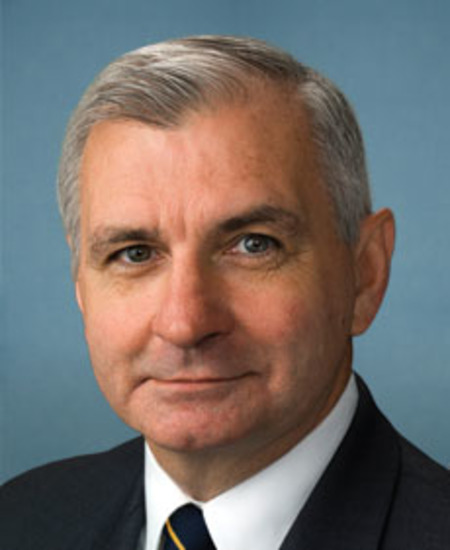
Sen. Jack Reed
Sponsored bills
Maddy summaryThe HCBS Access Act (S 762) requires states to provide Medicaid coverage for home and community-based services (HCBS) to eligible individuals with disabilities and older adults, aiming to eliminate waiting lists and ensure access to community-based care. The bill establishes a comprehensive definition of HCBS that includes personal assistance, transportation, respite care, housing support, and other services necessary for community living. It mandates states to develop implementation plans to expand access, improve compensation and working conditions for direct care workers, and report on quality measures and demographic data related to HCBS access. The bill also creates a national technical assistance center to support workforce development and ensures services are provided in settings meeting specific quality standards.
Maddy summaryThe Tax Fairness for Workers Act (S 738) allows employees to deduct certain work-related expenses from their taxable income. It creates an above-the-line deduction for union dues and adds a new exception permitting miscellaneous itemized deductions for other employee expenses, such as uniforms or tools, that were previously limited. This directly affects wage-earning workers who pay union dues or have unreimbursed job costs. The changes apply to taxable years beginning after December 31, 2022, and remove prior restrictions on these deductions.
Maddy summaryS 701, the Women’s Health Protection Act of 2023, prohibits states from imposing restrictions on abortion that are more burdensome than those for comparable medical procedures. It protects access to abortion before fetal viability (when a fetus could survive outside the womb) by banning requirements like unnecessary in-person visits, medically inaccurate counseling, or facility restrictions not applied to similar care. Post-viability abortions remain protected when medically necessary to safeguard a patient’s life or health. The bill preempts conflicting state laws and ensures enforcement through federal courts to uphold these access protections for patients and health care providers.
Maddy summaryThis bill eliminates waiting periods for disability benefits and Medicare coverage for people diagnosed with metastatic breast cancer. It amends two sections of the Social Security Act to add "metastatic breast cancer" to the list of conditions (alongside ALS) that qualify for immediate access to disability insurance benefits and Medicare coverage, bypassing the standard 24-month waiting period. Specifically, it modifies eligibility under Section 223(a) for disability benefits and Section 226(h) for Medicare coverage. The changes apply to applications or benefits filed/beginning after the bill's enactment date.
Maddy summarySRES 57 is a Senate resolution honoring David Ferdinand Durenberger, a former U.S. Senator from Minnesota (served 1978-1989). It commemorates his life and career, highlighting his role as the lead Republican sponsor of the Americans with Disabilities Act and his work protecting Minnesota's natural resources like the Boundary Waters Canoe Area Wilderness. The resolution directs the Senate to formally recognize his passing and transmit a copy to his family. This is a ceremonial resolution with no policy changes or direct impact on constituents.
Maddy summaryS 622, the Helping Heroes Act of 2023, creates a new Family Support Program to provide services for children of disabled veterans. It directly affects veterans with service-connected disabilities rated at 70% or higher and their children under 18. The bill requires the VA to place full-time Family Coordinators at each medical center to assess family needs, connect them to services like mental health support, educational assistance, and after-school programs, and coordinate with non-VA providers. The program mandates annual reporting on participants and outcomes, including demographic data and service effectiveness, and requires VA to include family support resources in military transition programs.
Maddy summaryThis bill authorizes the presentation of a Congressional Gold Medal to honor Navy pilot Everett Alvarez, Jr., for his service as a Vietnam War POW and subsequent public service. It directs the Speaker of the House and Senate President pro tempore to arrange for the medal's presentation, specifying it must bear his name and image. Bronze duplicates may be sold to cover production costs, with proceeds deposited into the U.S. Mint fund. The bill is purely ceremonial, recognizing Alvarez's 8+ years as a prisoner of war and his post-military career. It does not create new policies or affect any government programs.
Maddy summaryThe Child Labor Prevention Act amends the Fair Labor Standards Act to clarify that child labor protections apply to all work arrangements, including those involving independent contractors. It updates definitions by replacing terms like "employee" with "worker" and explicitly stating that "employer" includes anyone engaging a worker (including independent contractors) for remuneration. The bill also increases civil penalties for violations (with annual inflation adjustments) and adds criminal penalties for repeated or willful violations of child labor laws. These changes ensure existing child labor rules cover modern work structures without altering core prohibitions, such as age limits for employment.
Maddy summaryS 617, the COAST Anti-Drilling Act, prohibits the federal government from issuing oil and gas leases in four specific offshore areas: the Mid-Atlantic, South Atlantic, North Atlantic, and Straits of Florida planning areas. The bill amends federal law to require the Secretary of the Interior to deny all permits for exploration, development, or production of oil, natural gas, or minerals in these regions. This directly affects oil and gas companies seeking to operate in those federal waters and aims to prevent offshore drilling activities in these coastal zones.