Maddy summarySRES 342 is a symbolic Senate resolution congratulating the Czech Republic and Slovak Republic on the 30th anniversary of their independence as separate nations. It specifically recognizes their substantial support for Ukraine in response to Russia's invasion, including military, humanitarian, and economic aid. The resolution highlights historical ties between the U.S., Czech Republic, and Slovakia, including shared democratic values, NATO cooperation, and their joint commitment to Ukraine. As a commemorative resolution, it does not create new policies or obligations but serves as a formal expression of appreciation for these nations' contributions to transatlantic security.
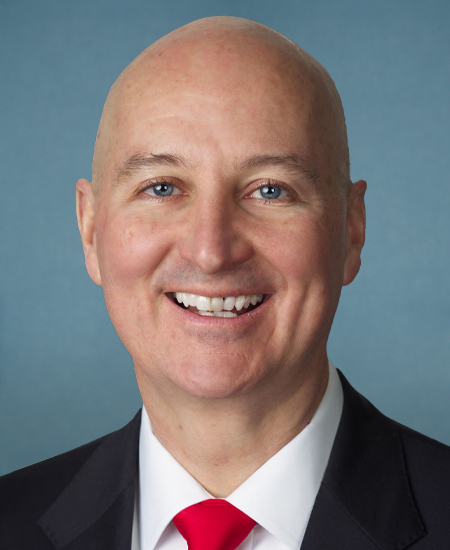
Sen. Pete Ricketts
Sponsored bills
Social Security Check Tax Cut Act This bill provides for a reduction in 2024 and 2025 of the inclusion in gross income of social security and railroad retirement benefits.
Maddy summaryThis bill requires the U.S. Fish and Wildlife Service (USFWS) and National Oceanic and Atmospheric Administration (NOAA) Fisheries to withdraw three specific proposed rules related to the Endangered Species Act. The rules would have changed how species are listed, habitats designated, and interagency cooperation is handled under the Act. The bill prohibits these agencies from finalizing, implementing, or enforcing the withdrawn proposals. It directly affects federal agencies' regulatory process for endangered species protection, halting these specific rulemaking efforts.
Maddy summaryS 2806, the Homeowner Energy Freedom Act, repeals three specific provisions from the Inflation Reduction Act that provided federal funding for home energy programs. It eliminates the high-efficiency electric home rebate program, state grants for contractor training, and assistance for adopting modern building energy codes. The bill also rescinds unobligated funds from these repealed programs and amends a related section to remove references to the repealed rebate program. This directly affects homeowners who would have accessed these energy efficiency programs and contractors who relied on the training grants. The bill makes no new program provisions but formally removes existing federal support for these specific home energy initiatives.
Maddy summaryThis bill requires AI companies to include visible watermarks on certain types of AI-generated content, such as material that impersonates people or falsely claims to be original artwork, news, or media. It directly affects AI-generating entities (like tech companies creating AI tools) producing "covered" content as defined by the law. The Federal Trade Commission (FTC) must establish watermark standards within 180 days of the bill's passage, with the requirement taking effect one year later. Violations would be enforced under existing FTC rules for unfair or deceptive practices.
Maddy summaryThis bill requires car manufacturers to include AM radio receivers as standard equipment in all new vehicles sold in the U.S., without additional cost to buyers. It mandates that AM radio controls be clearly visible on the dashboard for drivers. For vehicles sold before the rule takes effect, manufacturers must label them to disclose the absence of AM radio. The bill aims to maintain access to AM radio broadcasts, which are used for emergency alerts, but does not mandate new emergency systems.
Maddy summaryThis bill (S 2757) freezes current payment rates for veterans' transportation services provided through "special modes" (like non-emergency medical transport) starting January 1, 2023, preventing the VA from lowering these rates without strict conditions. It directly affects veterans relying on these transportation services and the contractors providing them. The key provision allows rate increases but requires the VA to conduct a detailed economic impact review, consult with veterans' groups and industry experts, and ensure new rates cover actual costs before any decrease can occur. This aims to protect veterans' access to care by preventing rate cuts that could disrupt transportation services.
Maddy summaryThis bill amends the Elementary and Secondary Education Act to allow schools to use existing federal funds for student sports clubs, teams, training, and related outdoor wellness activities. It directly affects K-12 schools by removing a previous restriction that barred such uses of ESEA funds. The key mechanism is an exception added to Section 8526(7), explicitly permitting these activities before the period ending that section. The change applies to funds already allocated under the ESEA, not creating new spending.
Maddy summaryThis non-binding Senate resolution expresses the chamber's support for nuclear power as a clean, reliable energy source critical to achieving a secure, low-emission grid. It commits the Senate to promoting nuclear energy development, including establishing domestic uranium production, strengthening the nuclear supply chain, and cultivating a skilled workforce. The resolution also highlights nuclear energy as an export opportunity for U.S. manufacturing expertise. As a procedural resolution, it does not create new laws or directly affect policy implementation.
Maddy summaryThe Flex Fuel Fairness Act of 2023 requires the Environmental Protection Agency (EPA) to adjust emission calculations for flexible fuel vehicles (FFVs) that run on E85 ethanol fuel. Specifically, within 120 days of enactment, the EPA must revise regulations to allow manufacturers to use a 31% lower CO2 emission value for FFVs compared to standard gasoline vehicles, based on the Argonne National Laboratory's GREET model findings. This change directly affects vehicle manufacturers by providing a reduced emissions credit for FFVs when meeting federal fleet average CO2 standards. The bill also permits future adjustments to this percentage if updated GREET model data supports a larger reduction. The policy change aims to align regulatory calculations with the demonstrated emissions benefits of E85 fuel.