Maddy summaryThis bill extends duty-free access for Haitian apparel exports under the Caribbean Basin Economic Recovery Act until September 30, 2035. It modifies eligibility rules to maintain a 60% or higher "applicable percentage" for preferential treatment and caps annual apparel imports at 1.25% of U.S. apparel imports. The bill also restores eligibility for specific Haitian products that lost duty-free status due to past tariff schedule changes, requiring the President to update tariff schedules and report to Congress before implementation. These changes directly affect Haitian apparel manufacturers and U.S. importers of Haitian-made goods.
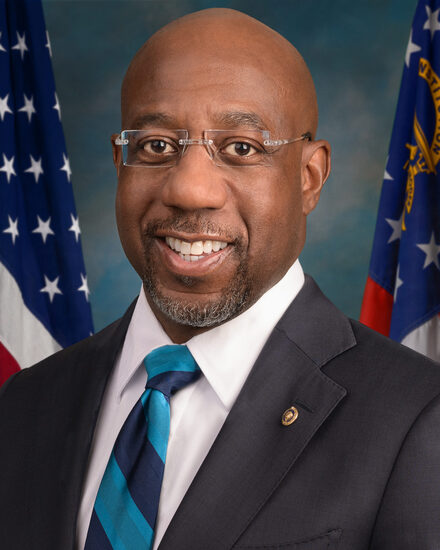
Sen. Raphael G. Warnock
Sponsored bills
Maddy summaryThis bill increases funding and expands the scope of federal efforts to address sickle cell disease. It boosts annual funding for research and treatment programs from $4.455 million (2019-2023) to $8.205 million (2025-2029) and updates language to specifically include "prevention and treatment of complications" alongside disease treatment. The bill also modifies grant procedures to allow more flexible funding mechanisms for organizations working on sickle cell disease and related heritable blood disorders. It directly affects federal health agencies, researchers, and healthcare providers serving patients with sickle cell disease, focusing on concrete policy changes in funding and program scope.
Maddy summaryThis bill amends the Individuals with Disabilities Education Act (IDEA) to require local school districts to notify parents of children with disabilities before the first annual IEP meeting each school year. Specifically, it mandates that schools inform parents they may invite additional individuals with knowledge or expertise about their child (such as related services staff) to join the IEP team. The key provision adds a new notification requirement within the IDEA framework, ensuring parents are aware of this option prior to meetings. This directly affects parents of students with disabilities and the school districts responsible for their education.
Maddy summaryThis bill creates a streamlined process for out-of-state healthcare providers to enroll in Medicaid or CHIP (Children's Health Insurance Program) in a state. It directly affects children under 21 enrolled in these programs and healthcare providers located in other states who already meet low fraud risk standards. The key provision requires states to adopt a simplified enrollment process using only basic provider information (like name and National Provider Identifier), granting eligible providers a 5-year enrollment period without repeated screening. This reduces administrative barriers for providers serving out-of-state children under 21 who qualify for Medicaid or CHIP coverage.
Maddy summaryThis bill extends a Medicaid payment floor ensuring primary care services (like check-ups and vaccinations) are paid at no less than 100% of Medicare rates for children. It directly affects Medicaid-eligible children by expanding access to care from a broader range of providers, including pediatricians, family doctors, nurse practitioners, certified nurse-midwives, and rural health clinics. Key provisions require managed care plans to meet these payment standards and mandate a study tracking enrollment changes, provider participation, and payment rates across states. The study will compare Medicaid payment rates to Medicare benchmarks and analyze state-level variations over time.
Maddy summaryThis bill establishes a mandatory $150 million funding stream (2025-2029) from the Commodity Credit Corporation to improve public access to conservation lands. It specifically allocates $3 million to encourage public access to wetland reserve easement lands through agreements with states and tribal governments. The program directly affects landowners holding these easements and state/tribal entities managing conservation areas. The key mechanism is using federal funds to incentivize voluntary agreements that make existing wetland conservation areas more accessible to the public.
Maddy summaryS 726, titled "Ethan's Law," requires gun owners to store firearms securely in homes where minors (under 18) or individuals ineligible to own guns (per federal/state law) reside. It makes unsecured storage unlawful if a person "knows or reasonably should know" access is possible, with exceptions for gun safes, secure locations, or carrying firearms on one's person. Violations incur $500 fines per offense, and enhanced penalties apply if injury or death occurs. The bill also creates a federal grant program to support states with similar secure-storage laws and states that non-compliance constitutes negligence. This law directly affects households with minors or prohibited individuals, aiming to reduce accidental shootings, youth access, and firearm thefts.
Maddy summaryS 697 establishes the Air Traffic Control Workforce Development Act of 2025 to strengthen training and retention for air traffic controllers. It creates a $20 million annual grant program (2026-2031) for colleges to develop enhanced curriculum, faculty support, and equipment for the Collegiate Training Initiative (CTI), directly benefiting institutions and future controllers. The bill also mandates a committee to modernize CTI curricula and the Air Traffic Skills Assessment exam, while adding retention bonuses for certified controllers. Additionally, it requires new mental health training for controllers and aviation medical examiners, and a report on airport radar systems. These changes aim to improve workforce pipeline efficiency and controller well-being.
Maddy summaryThe Tax Administration Simplification Act streamlines tax filing for small businesses and individual taxpayers. It extends the deadline for S corporations to make election filings to the due date of their tax return (including extensions), and shifts individual estimated tax payment due dates from June 15 and September 15 to July 15 and October 15. The bill also extends the "mailbox rule" to electronic filings and payments, treating them as filed on the transmission date if sent by the due date, even if received later. These changes apply to tax years beginning after the bill's enactment, with Treasury required to issue implementing regulations within one year.
Maddy summaryThis Senate resolution (SRES 88) designates March 7, 2025, as "National Speech and Debate Education Day" to recognize the value of speech and debate programs in schools. It directly affects educational institutions, teachers, and students by encouraging schools and communities to celebrate this day. The resolution does not create new laws or funding but formally acknowledges speech and debate education as vital for developing communication, critical thinking, and civic skills. It urges educational institutions, businesses, and the public to promote awareness of these programs. (Note: As a commemorative resolution, it has no binding policy impact.)