Maddy summaryThis resolution (SRES 108) is a non-binding Senate statement affirming constitutional principles regarding judicial review. It specifically affirms that Article III establishes federal courts, cites *Marbury v. Madison* as establishing judicial review (where courts interpret the law), and states that the executive branch must comply with federal court rulings. The resolution responds to recent public remarks suggesting the executive branch could disregard court decisions. It does not change laws or affect any specific group; it is a symbolic declaration of support for the judiciary's role in the constitutional system.
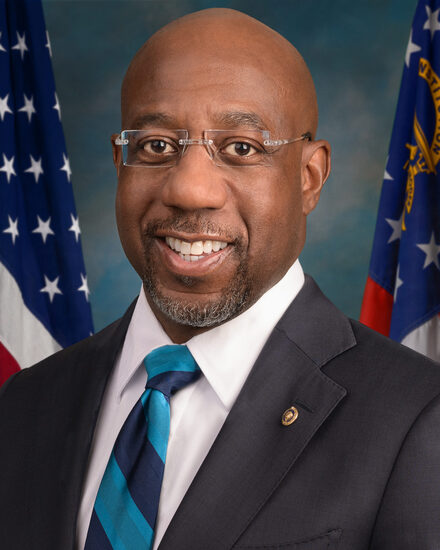
Sen. Raphael G. Warnock
Sponsored bills
Maddy summaryThis bill, the Richard L. Trumka Protecting the Right to Organize Act of 2025, aims to strengthen workers' rights to organize and bargain collectively. It would make it harder for employers to classify workers as independent contractors by changing the definition of "employee," restricts employers from threatening to permanently replace workers who strike, and prohibits them from requiring employees to give up their right to pursue class or collective claims. The bill also changes election procedures to make it easier for workers to form unions, requires employers to post notices about workers' rights in conspicuous locations, and increases penalties for unfair labor practices. It directly affects employers and workers across various industries by altering the landscape of labor organizing and collective bargaining.
Maddy summarySRES 105 is a Senate resolution condemning the February 2025 mass terminations of 2,400 Department of Veterans Affairs (VA) employees by Secretary Doug Collins, without justification or analysis of impacts on veterans. The resolution states the Senate opposes these terminations - specifically noting the lack of transparency about effects on critical services like mental health care, claims processing, and cybersecurity - and calls for all affected employees to be reinstated. This resolution does not change VA policy but expresses the Senate’s formal disapproval of the terminations and demands accountability. It was introduced by 30 Senators on March 4, 2025.
Maddy summaryThe School Bus Safety Act of 2025 requires all school buses with a gross vehicle weight over 10,000 pounds to be equipped with 3-point seat belts at every seating position, fire suppression systems for engine fires, and reinforced firewalls to prevent flames from reaching passengers. It also mandates automatic emergency braking systems, event data recorders, electronic stability control, and 8 hours of behind-the-wheel driver training for school bus operators. The bill establishes a grant program to help schools purchase or retrofit buses with these safety features and requires studies on pedestrian detection systems and seat belt alert systems. These requirements will apply to new school buses manufactured or imported after the Transportation Secretary finalizes the rules.
Maddy summaryThe SBA Disaster Transparency Act (S 371) requires the Small Business Administration (SBA) to publish specific disaster assistance reports on its website. It amends existing law to mandate that the SBA "publish on the website of the Administration" reports related to disaster loans and assistance, which previously only needed to be submitted to Congress. This change directly affects the SBA by altering its reporting process and makes disaster aid data more accessible to the public without creating new programs or eligibility rules. The bill focuses solely on increasing transparency through online publication of existing reports.
Maddy summaryThis bill requires the VA Secretary to create rules so veterans can get a physical copy of Form 10-3452 (used for travel expense reimbursement claims) by mail or at any VA medical facility. It directly affects veterans who need to submit this form to claim reimbursement for travel costs related to healthcare. The key provision mandates that VA facilities must accept and process these physical forms submitted in person or by mail, ensuring veterans have accessible options beyond digital methods. This changes how veterans interact with the VA for this specific reimbursement process.
Maddy summaryThe Invest to Protect Act of 2025 establishes a federal grant program to support local law enforcement agencies with fewer than 175 officers. Eligible communities - including counties, municipalities, and Tribal governments - can use funds for de-escalation training, mental health and domestic violence response training, officer retention bonuses, graduate education stipends, and access to behavioral health services for officers. The program requires grantees to report on outcomes and publicly disclose bonus amounts, with strict audit requirements to prevent misuse of funds. It authorizes $50 million annually from 2026 to 2030 to advance these concrete safety and support initiatives.
Maddy summaryThis bill establishes a new Office within the U.S. State Department to monitor and combat Islamophobia abroad, led by a Special Envoy appointed by the Secretary of State. It requires the State Department to include specific, detailed assessments of Islamophobic acts in three annual reports: the Country Reports on Human Rights Practices, the Foreign Assistance Act report, and the International Religious Freedom report. The reports must describe incidents like violence against Muslims or mosques, hate propaganda, government responses, and efforts to promote religious tolerance in foreign countries. This policy change directly affects how the U.S. government documents and tracks Islamophobia internationally, without altering existing laws or imposing new sanctions.
Maddy summaryS 807, the Guarding Readiness Resources Act, clarifies how the National Guard Bureau handles reimbursement funds from states and territories. It requires that money received from states (like California or Puerto Rico) for using military property must be returned to the specific account that covered the original costs or a similar account. These funds can only be used by the Department of Defense for repairing, maintaining, replacing, or similar upkeep of assets directly used by National Guard units during state duty. The bill directly affects the National Guard Bureau and state/territorial governments managing these reimbursements.
This resolution recognizes Black History Month as an opportunity to reflect on U.S. history and to commemorate the contributions of African Americans. It calls for the United States to (1) honor the contribution of pioneers who helped to ensure its legacy; and (2) move forward as a nation "indivisible, with liberty and justice for all."