

Maddy summaryHR 4200, the End DED Act, prohibits federal funding for the Deferred Enforced Departure (DED) program, which provides temporary immigration protections to individuals from specific countries. It directly affects approximately 100,000 people currently covered under DED from nine nations (including Haiti, El Salvador, and Venezuela), who would lose their work authorization and travel privileges if the program is defunded. The bill’s key provision bans all federal funds from being used to implement or administer DED or any successor program. This addresses congressional concerns that DED - a policy created solely by executive action without statutory authority - undermines Congress’s constitutional power over immigration, which it delegated to Temporary Protected Status (TPS) instead.
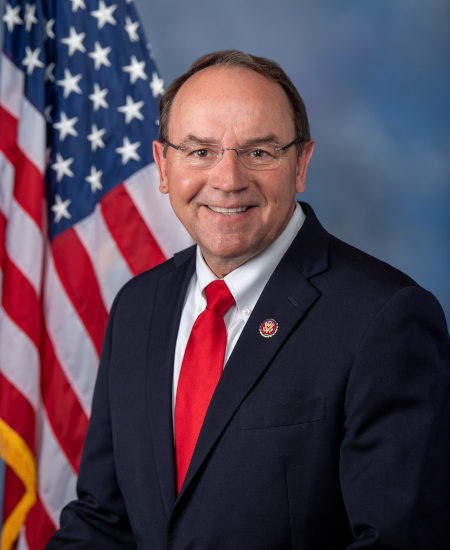
Rep. Thomas P. Tiffany
Sponsored bills
Maddy summaryThis bill (HR 3820) renames the women's health clinic at Milwaukee's Clement J. Zablocki VA Medical Center as the "Anna Mae Robertson VA Well Woman Clinic." It directly affects the clinic's official designation and all future references to it in U.S. government documents, maps, and records. The key provision is a simple name change requiring all federal materials to update the clinic's name to honor Anna Mae Robertson, with no policy or service changes to the clinic itself.
Maddy summaryH.J. Res. 93 would withdraw U.S. congressional approval of the World Trade Organization (WTO) Agreement, which was originally approved under the Uruguay Round Agreements Act of 1994. This action would end the United States' legal obligation to participate in the WTO, removing the country from the global trade organization. The bill specifically targets the approval granted by Congress, not the executive branch's role in trade. As a result, U.S. trade policy would no longer be subject to WTO rules or dispute resolution processes.
Maddy summaryHR 3966 requires certain tax-exempt organizations, including think tanks and cultural nonprofits, to annually disclose foreign contributions exceeding $10,000 from foreign governments, political parties, or entities controlled by them. The bill mandates that these organizations report the name of the foreign source and the total amount received, with this information made publicly available in a searchable IRS database. It directly affects nonprofits receiving significant foreign funding, aiming to increase transparency about potential foreign influence operations. The legislation targets funding from sources like foreign governments or entities linked to the Chinese Communist Party, as highlighted in congressional findings about influence campaigns. The policy change creates a new reporting requirement under the Internal Revenue Code, effective for tax years after enactment.
Maddy summaryThis bill declares U.S. policy that Somalia's territorial claims over Somaliland are invalid, and authorizes the President to formally recognize Somaliland as an independent country. It directly affects U.S. foreign policy decisions regarding Somaliland's status and the Federal Republic of Somalia. The key provision is the presidential authorization to extend recognition, without creating new programs or altering existing laws. This is a procedural resolution focused solely on U.S. diplomatic recognition, not on implementing new policies for Somaliland.
Maddy summaryThis bill requires U.S. Customs and Border Protection (CBP) to update its Northern Border Security Threat Analysis every five years, including specific new elements. It mandates assessments of current staffing levels versus projected needs, future retirement surges (noting a 400% increase expected by 2028), housing challenges, and local recruitment plans for northern border ports. The bill also requires CBP to develop and update a plan addressing retirement surges, staffing shortages, and the feasibility of recruitment tools like bonuses or student loan repayment. These provisions directly affect CBP staffing at northern border ports, which face unique challenges like harsh weather and housing shortages that hinder officer retention.
Maddy summaryHR 3894, the SAFE Cities Act, requires the Attorney General to publish and update every 180 days a list of jurisdictions (states or local governments) that refuse to stop violence and property destruction, based on specific criteria like blocking police intervention or defunding law enforcement. The bill directs the Office of Management and Budget to issue guidance restricting federal grant eligibility for these jurisdictions, to the extent permitted by law. It would directly affect local or state governments meeting the defined criteria, potentially limiting their access to federal funding. The law focuses on creating a federal mechanism to identify and financially disfavor jurisdictions with policies deemed insufficient for public safety.
Maddy summaryHR 649, the Whole Milk for Healthy Kids Act of 2025, amends the National School Lunch Act to allow schools participating in the program to offer students both organic and non-organic whole milk, in addition to reduced-fat, low-fat, and fat-free options. Key provisions include clarifying that milk fat in whole milk should not count toward saturated fat limits for meal compliance, prohibiting schools from purchasing milk from Chinese state-owned enterprises, and ensuring schools cannot be barred from offering the full range of milk types listed. The bill directly affects public and private schools serving the National School Lunch Program by expanding their milk options for students. It focuses on concrete policy changes to dietary offerings and sourcing restrictions within the school nutrition program.
Maddy summaryThis bill would reform immigration parole by requiring the Secretary of Homeland Security to grant temporary entry only on a case-by-case basis for urgent humanitarian needs or significant public benefit, reversing what the bill describes as systemic overuse. It imposes a strict annual cap of 3,000 paroles starting in fiscal year 2029, restricts parole for nationals of designated "countries of concern" without a State Department waiver, and allows states to sue if they claim financial harm exceeding $100 from parole decisions. The bill directly affects immigrants seeking temporary entry and DHS officials administering the program. Key mechanisms include the new cap, country restrictions, and state lawsuit provisions to enforce compliance.
Maddy summaryThis resolution (HRES 459) is a symbolic gesture recognizing National Poppy Day, observed the Friday before Memorial Day. It supports the tradition of wearing red poppies as a symbol honoring U.S. military veterans who died in service, referencing the historical connection to World War I poetry and veterans' organizations. The resolution encourages all U.S. citizens, residents, and visitors to wear poppies on this designated day to express appreciation for those who died preserving freedom. It does not create new laws, funding, or obligations, but formally acknowledges the poppy's role in commemorating military sacrifice.