Maddy summaryThis bill (HR 4564) amends federal law to expand who can administer epinephrine in schools during emergencies. It replaces "school personnel" with "trained personnel" and allows non-employee volunteers (like parents or community members) to be treated as trained if they meet requirements and their state attorney general certifies the program. The bill also updates terminology from "auto-injectable epinephrine" to "epinephrine delivery systems" to include all administration methods. It directly affects schools, non-employee staff/volunteers, and state health authorities responsible for certification. The changes aim to make emergency allergy response more flexible while maintaining state oversight.
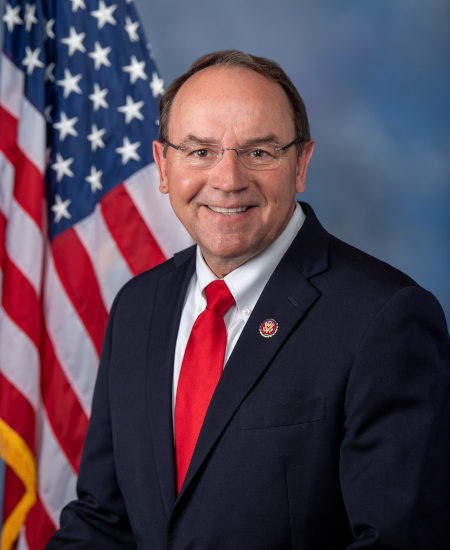
Rep. Thomas P. Tiffany
Sponsored bills
Maddy summaryHR 4546, the FIRE Act, prohibits federal, state, and local governments from restricting or banning firearm magazines based on their capacity (how many rounds they hold). It bans federal enforcement of such restrictions, nullifies state or local laws imposing capacity-based limits on magazines, and defines "firearm magazine" and "capacity" for clarity. This directly affects firearm owners who use magazines of certain capacities and law enforcement agencies responsible for enforcing firearm regulations. The law takes effect 30+ days after enactment.
Maddy summaryHR 1919, the "Anti-CBDC Surveillance State Act," prohibits the Federal Reserve from developing, testing, or issuing any central bank digital currency (CBDC) or similar digital assets. It specifically bans the Fed from offering direct financial products to individuals, maintaining individual accounts, or issuing CBDCs directly or indirectly through intermediaries like banks. The bill also blocks the Fed from using any digital asset for monetary policy and clarifies that physical currency's privacy protections remain intact. This policy directly affects the Federal Reserve System's ability to create or manage digital monetary tools.
Maddy summaryHR 4468, the Federal Interviews Reform Act, requires U.S. Department of Justice (DOJ) officers to electronically record all interviews with people suspected of federal crimes during investigations - whether the person is in custody or not, and even if they're abroad. This applies to interviews related to federal offenses or joint investigations with state/local agencies, but excludes communications with confidential informants. Unrecorded statements cannot be used as evidence in federal court, and recordings must be kept for 10 years (or indefinitely if related to a capital case). The law aims to increase transparency in federal law enforcement interviews without requiring consent from the person being interviewed.
Maddy summaryHR 4474, the Equal Shot Act of 2025, prohibits the Small Business Administration (SBA) from denying financial assistance - such as loans or guarantees - to firearm businesses solely because of their industry. It directly affects firearm manufacturers, distributors, trade associations, and affiliated entities like shooting ranges or training providers. The bill requires the SBA to treat these applicants equally under existing law, removing any policy that would block them based on their connection to firearms. This is a concrete policy change ensuring firearm-related businesses have the same access to SBA programs as other eligible applicants.
Maddy summaryHR 4382 authorizes the U.S. Mint to produce commemorative coins for the 2028 Los Angeles Olympics/Paralympics and 2034 Salt Lake City Winter Olympics/Paralympics. It specifies gold, silver, and half-dollar coin designs with defined mintage limits (e.g., up to 100,000 $5 gold coins for each event), all bearing inscriptions like "2028" or "2034" and standard coin features. A surcharge ($5-$50 per coin) is added to sales, with all funds directed to the respective Olympic committees to support event hosting and legacy programs like youth sports. The bill ensures no net cost to the government by requiring surcharge revenues to cover all design, production, and marketing expenses before funds are disbursed.
Maddy summaryHR 875 amends immigration law to make non-citizens with DUI convictions inadmissible (preventing entry) and deportable (requiring removal after entry). It applies to any conviction for driving while intoxicated or impaired under state, tribal, or local law, regardless of whether the offense is classified as a misdemeanor or felony. The bill directly affects non-citizens convicted of driving under the influence of alcohol or drugs, including impairment from other substances. This policy change expands immigration consequences for DUI offenses beyond current standards.
Maddy summaryHR 4201, the TPS Reform Act of 2025, changes how Temporary Protected Status (TPS) is granted to immigrants from foreign countries facing crises. It requires Congress, not the executive branch, to pass a specific law designating a country for TPS, based on strict criteria like ongoing armed conflict, major natural disasters, or extraordinary conditions preventing safe return. The law sets clear time limits: initial designations last up to 18 months, with extensions capped at 12 months, and mandates Congress to find that crisis conditions continue for any extension. This directly affects immigrants from designated countries who would otherwise be allowed to live and work temporarily in the U.S. due to unsafe conditions in their home countries. The bill also shifts administration from the Attorney General to the Secretary of Homeland Security.
Maddy summaryThis bill requires the U.S. government to treat any World Health Organization (WHO) pandemic prevention or response agreement as a treaty needing Senate approval with a two-thirds vote. It directly affects U.S. foreign policy decisions regarding WHO agreements, ensuring the Senate must consent before such treaties take effect. The bill mandates that any WHO pandemic agreement - like the one adopted at the 2025 World Health Assembly - must follow the constitutional treaty process, not be implemented as a less formal executive agreement. This policy change aims to address concerns about WHO's pandemic management and independence, as highlighted by congressional findings.
Maddy summaryHR 4194 would shield manufacturers of critical infrastructure equipment from lawsuits related to wildfires caused by their products, unless they intentionally caused harm through willful misconduct. This law applies to companies defined as critical infrastructure manufacturers under existing federal law (per the Cyber Incident Reporting Act of 2022). It creates legal immunity for these manufacturers against both federal and state lawsuits regarding wildfire-related losses, but requires proof of intentional wrongdoing to override the protection. The bill directly affects companies producing essential infrastructure equipment like power grid components and communication systems.