Maddy summaryThis bill mandates a Government Accountability Office (GAO) report to assess how effectively the federal government supports military voters under existing law. It requires the GAO to analyze ballot transmission, counting rates, rejection reasons, and assistance from military voting officers, while also studying ways to improve voter registration access for service members and their families. The report, due by September 2027, will be submitted to relevant congressional committees and focuses on gathering data to identify gaps in voting access for military personnel and their dependents. This is a procedural measure to inform future improvements, not a direct policy change.
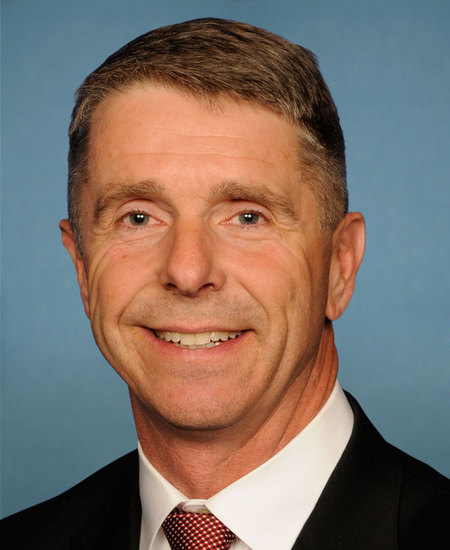
Rep. Robert J. Wittman
Sponsored bills
Maddy summaryHR 1919, the "Anti-CBDC Surveillance State Act," prohibits the Federal Reserve from developing, testing, or issuing any central bank digital currency (CBDC) or similar digital assets. It specifically bans the Fed from offering direct financial products to individuals, maintaining individual accounts, or issuing CBDCs directly or indirectly through intermediaries like banks. The bill also blocks the Fed from using any digital asset for monetary policy and clarifies that physical currency's privacy protections remain intact. This policy directly affects the Federal Reserve System's ability to create or manage digital monetary tools.
Maddy summaryThis bill extends funding deadlines for sport fish restoration and recreational boating programs through 2031, updating prior expiration dates. It clarifies funding for interstate fisheries commissions and adds new definitions for alternative marine fuel infrastructure, including facilities dispensing fuels derived from recycled oils or plant materials. The bill also establishes a 3% tax rate (down from 10%) for portable, electronically-aerated bait containers sold by manufacturers. These changes primarily affect recreational boaters, sport fishing programs, and facilities seeking to install alternative fuel infrastructure.
Maddy summaryHR 4382 authorizes the U.S. Mint to produce commemorative coins for the 2028 Los Angeles Olympics/Paralympics and 2034 Salt Lake City Winter Olympics/Paralympics. It specifies gold, silver, and half-dollar coin designs with defined mintage limits (e.g., up to 100,000 $5 gold coins for each event), all bearing inscriptions like "2028" or "2034" and standard coin features. A surcharge ($5-$50 per coin) is added to sales, with all funds directed to the respective Olympic committees to support event hosting and legacy programs like youth sports. The bill ensures no net cost to the government by requiring surcharge revenues to cover all design, production, and marketing expenses before funds are disbursed.
Maddy summaryHR 4370, the SAMS Act of 2025, codifies five existing executive orders into law to strengthen U.S. mineral supply chains. It gives legal force to orders focused on securing critical minerals (like lithium and rare earths) for national security and economic resilience, directly affecting federal agencies implementing these strategies. Key provisions require agencies to follow these established policies - addressing reliance on foreign mineral sources, supporting domestic mining, and prioritizing national security in mineral processing - without creating new regulations. The bill does not alter current mineral policies but formally enshrines them as binding federal requirements.
Maddy summaryThis non-binding House resolution expresses the House's support for maintaining F-35C fighter squadrons at Naval Air Station Oceana in Virginia Beach. It urges the Navy to avoid concentrating all F-35C operations on the West Coast (specifically opposing sole basing at Lemoore, California) and instead preserve East Coast capability for carrier-based strike operations. The resolution requests the Navy provide a detailed plan for integrating F-35C squadrons at Oceana, citing the base's existing infrastructure, proximity to carrier homeports, and strategic role in supporting Atlantic Fleet readiness. It does not mandate action but formally states congressional preference for a dual-coast basing strategy.
Maddy summaryHR 4344, the Resilient LEO PNT Act, directs the Air Force to fund a demonstration project with U.S.-based commercial satellite companies to develop a backup system for GPS. The bill requires this system to operate without GPS, work with existing civilian GPS equipment, resist jamming/spoofing better than current GPS, and deliver high-precision timing (under 10 nanoseconds) and positioning (under 30 centimeters). It specifically targets commercial providers meeting U.S. office and service criteria, aiming to create a resilient low-Earth orbit satellite capability. The demonstration must be completed within 18 months, with potential follow-on contracts for successful providers to move toward operational use.
Maddy summaryHR 4333, the Qualified to Serve Act, changes medical standards for joining the U.S. military. It prohibits disqualifying applicants solely based on a medical condition diagnosed before age 13 that required no treatment in the past five years, provided a current medical evaluation confirms fitness for service and the military determines it won't impact readiness. The bill establishes a uniform review process for medical disqualifications and allows waivers for national security reasons. It also requires the Secretary of Defense to annually report to Congress on disqualifications, approved waivers, and updates to medical standards. This directly affects potential recruits with qualifying childhood medical histories who previously faced disqualification.
Treat and Reduce Obesity Act of 2025 This bill expands Medicare coverage of intensive behavioral therapy for obesity. Specifically, the bill allows coverage for therapy that is provided by (1) a physician who is not a primary care physician; or (2) other health care providers (e.g., physician assistants and nurse practitioners) and approved counseling programs, if provided upon a referral from, and in coordination with, a physician or primary care practitioner. Currently, such therapy is covered only if provided by a primary care practitioner. The bill also allows coverage under Medicare's prescription drug benefit of drugs used for the treatment of obesity or for weight loss management for individuals who are overweight.
Maddy summaryThe CONNECT for Health Act of 2025 expands Medicare telehealth coverage by removing geographic restrictions that limited where patients could receive care, expanding the types of health care providers who can offer telehealth services, and eliminating the requirement for an in-person visit before receiving telemental health services. The bill includes specific provisions to support telehealth use for Native American health facilities, rural health clinics, and Federally Qualified Health Centers. It requires the Centers for Medicare & Medicaid Services to collect and publish data on telehealth usage and impacts, and to develop resources to improve accessibility for people with disabilities and limited English proficiency. Program integrity measures are added to monitor telehealth billing practices and prevent fraud while maintaining coverage for telehealth services during public health emergencies.