

Maddy summaryHR 756, the 287(g) Program Protection Act, makes it easier for state and local law enforcement agencies to partner with federal immigration authorities under the 287(g) program. It requires the Secretary of Homeland Security to enter written agreements with any state or local agency that requests participation within 90 days, prohibits arbitrary denials without 180 days' notice to Congress, and bans termination of existing agreements without compelling reasons and 180 days' notice. The bill also mandates uniform federal training standards for participating officers, requires annual reports on program performance (including apprehensions, removals, and compliance), and establishes dedicated funding for the program. This directly affects state and local police departments seeking to enforce federal immigration laws within their jurisdictions.
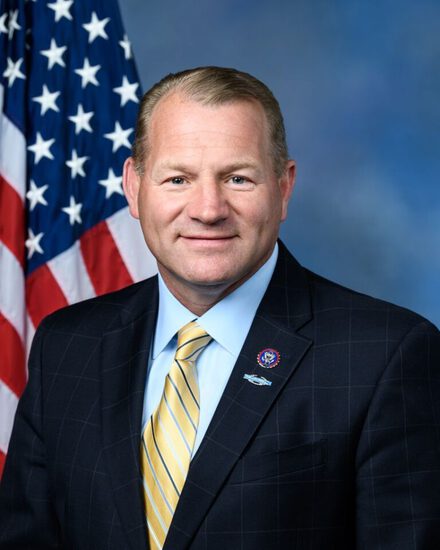
Rep. Troy E. Nehls
Sponsored bills
Maddy summaryThis bill requires the Congressional Budget Office (CBO) to publicly publish the models, data, and detailed methodology it uses to estimate the costs and effects of legislation. Specifically, it mandates that the CBO make available all fiscal models, data routines, and the underlying assumptions behind its cost estimates, allowing independent verification. This applies to all CBO analyses of proposed bills, including the specific data and computational details needed for others to replicate the results. The requirement applies to all users of CBO reports - lawmakers, researchers, and the public - except for data legally restricted from disclosure, which would still require a public list of variables and descriptive statistics.
Maddy summaryHR 21, the Born-Alive Abortion Survivors Protection Act, requires medical staff at abortion facilities to provide the same immediate care and hospital admission to any infant born alive during an abortion as they would for any newborn. It mandates reporting failures to provide this care to law enforcement and imposes penalties of up to 5 years in prison for violations, with harsher penalties for intentional killing. The bill also allows women who undergo abortions to sue for civil damages, including triple the abortion cost, and provides for attorney fees. It defines "abortion" to exclude procedures performed after viability to preserve a live birth. This law directly affects healthcare providers at abortion facilities and creates new federal legal obligations for them.
Maddy summaryHR 645, the National Constitutional Carry Act, would prevent all U.S. states and localities from requiring permits or imposing penalties for carrying firearms in public. It directly affects eligible U.S. citizens (including non-residents) who legally possess firearms under state and federal law, removing current permit requirements for public carry. The bill’s key provision amends federal law to invalidate any state or local law that criminalizes or discourages public firearm carry, except where private property owners clearly prohibit firearms or security screening occurs. This would override existing state permit laws, making permitless carry legal across all states and territories for qualified individuals.
Maddy summaryHR 696, the "End Unaccountable Amnesty Act," restricts immigration benefits by making Temporary Protected Status (TPS) more difficult to obtain. The bill requires new legislation for each country's TPS designation, mandates specific findings about armed conflict or disasters, and limits TPS to 12-month periods with possible 12-month extensions. It also limits immigration parole to 1,000 people annually for specific urgent humanitarian reasons or public benefits, and repeals "cancellation of removal" provisions that allowed some individuals to adjust their immigration status. These changes primarily affect immigrants seeking temporary protections or parole in the United States.
Maddy summaryHR 650, the Families’ Rights and Responsibilities Act, protects parents’ fundamental right to direct their child’s education, moral or religious upbringing, and health care decisions. It prohibits government (including agencies and officials) from substantially interfering with these parental choices without proving a "compelling governmental interest" using strict scrutiny. The bill applies to all federal laws and programs, allowing parents to challenge government actions in court and seek remedies if their rights are violated. It specifically exempts cases involving serious child safety risks but aims to prevent government overreach in parenting decisions based on disagreement with parental choices. This bill directly affects parents of children under 18 and sets a legal standard for how government can interact with family decisions.
Maddy summaryThis bill amends the legal definition of "firearm silencer" and "firearm muffler" under federal law. It clarifies that these terms include any device designed to reduce firearm noise, as well as the outer tube or primary housing component that serves as the main structure for noise-reduction parts. The definition specifically covers devices intended to attach to a firearm (directly or via mounts) and excludes other firearms. This change affects how silencers are legally categorized under federal regulations, not who can own them. It does not create new restrictions but refines the scope of existing definitions.
Birthright Citizenship Act of 2025 This bill limits birthright citizenship by redefining what it means to be subject to the jurisdiction of the United States. Currently, a person born in the United States and subject to U.S. jurisdiction is entitled to citizenship. Under the bill, a person is subject to U.S. jurisdiction if he or she is born to a parent who is (1) a U.S. citizen or national, (2) a lawful permanent resident residing in the United States, or (3) a non-U.S. national ( alien under federal law) with a lawful immigration status who is performing active service in the Armed Forces. The bill does not affect the citizenship or nationality status of any person born before the bill's enactment date.
Maddy summaryHR 578, "Sarah’s Law," requires mandatory detention for certain non-citizens (aliens) charged with crimes resulting in death or serious bodily injury. It directly affects non-citizens facing such charges and their victims' families. Key provisions mandate that the Department of Homeland Security detain these individuals immediately and notify victims or their closest living relatives (like parents or spouses) about the alien’s identity, immigration status, custody details, and removal efforts. The bill adds specific categories of non-citizens to the mandatory detention list, including those whose visas were revoked or who are deportable for prior immigration violations. This creates a formal process for victim notification while expanding detention requirements under immigration law.
Maddy summaryHR 563 requires the Bureau of Alcohol, Tobacco, Firearms and Explosives (ATF) to destroy all firearm transaction records from discontinued businesses within 90 days of the law's enactment. It also amends a federal law to prevent future registration of such transactions by removing language that required these records to be delivered to the Attorney General. The bill mandates that the ATF submit a report to Congress detailing how many records were destroyed. This legislation directly affects ATF record-keeping procedures, not individual gun owners or firearm ownership rights.