Maddy summaryThis bill, titled "Prison Rape Prevention Act of 2025" (HR 1015), actually establishes rules for housing and medical care in federal prisons, not rape prevention. It requires the Bureau of Prisons to house and transport inmates only with others of the same biological sex (defined by reproductive anatomy) and prohibits providing gender-related medical treatments. This includes banning treatments like hormone therapy, surgeries (e.g., hysterectomy, phalloplasty), or puberty blockers for transgender inmates, except for specific medical conditions like disorders of sex development or injuries from prior treatments. The bill directly affects all federal prison inmates and applies only to the Bureau of Prisons.
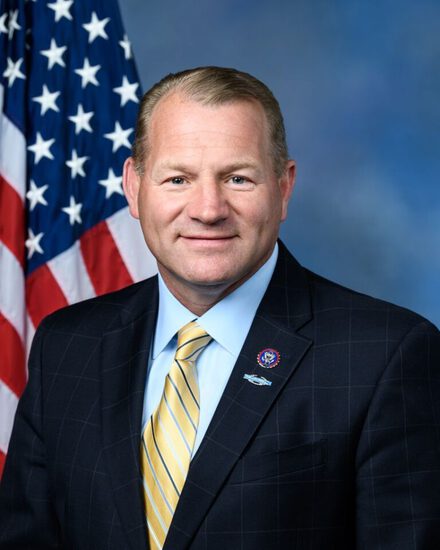
Rep. Troy E. Nehls
Sponsored bills
Maddy summaryHR 908, the "Stop the Censorship Act," would amend Section 230 of the Communications Act to change how online platforms can moderate user content without losing legal immunity. It specifically revises the definition from removing "objectionable" material to only removing "unlawful" material, and adds a new provision stating platforms cannot be shielded for allowing users to restrict access to other content. This bill directly affects online platforms hosting user-generated content, such as social media sites and forums. The key change shifts the standard for immunity from subjective "objectionable" content to legally prohibited "unlawful" content.
Maddy summaryHR 925, the "Dismantle DEI Act of 2025," would eliminate diversity, equity, and inclusion (DEI) programs across federal government operations. The bill requires federal agencies to close DEI offices, rescind related executive orders, and prohibit the use of federal funds for DEI training, offices, or initiatives. It defines "prohibited diversity, equity, or inclusion practice" as any activity that discriminates based on race, ethnicity, religion, biological sex, or national origin, or requires employees to complete training asserting that certain groups are inherently superior or inferior. The legislation also prohibits requiring employees to sign statements about race, ethnicity, or gender, and establishes private lawsuits for violations with potential damages of $1,000 per violation per day. This bill would directly affect federal agencies, contractors, grantees, and advisory committees receiving federal funding.
Maddy summaryHR 691 would rename Washington Dulles International Airport in Virginia as "Donald J. Trump International Airport" upon the bill's enactment. It requires all federal references in laws, documents, and maps to use the new name instead of the current designation. This is a purely ceremonial renaming bill with no impact on airport operations, funding, or policy.
Prison Staff Safety Enhancement Act This bill requires the Department of Justice to adopt national standards for the prevention, reduction, and punishment of sexual harassment and sexual assault by incarcerated individuals against correctional officers or other employees of the Bureau of Prisons.
Maddy summaryHR 863, the National Human Trafficking Database Act, requires state law enforcement and public health agencies to collect and report human trafficking data to the federal government. Covered state agencies must gather annual data on prosecutions, survivor services, anti-trafficking organization locations, and anonymized trafficking trends by county, then submit it to the Justice Department. The data will be published online in a public database showing county-level rates, top trafficking areas, and federal prosecution numbers, while strictly protecting survivor identities. States will receive $50 million annually in grants to support this data collection effort. The law mandates confidentiality for survivors and prohibits using the data for funding decisions or publicizing personal details.
Maddy summaryHR 899 would end the U.S. Department of Education by December 31, 2026, terminating its federal agency status. This bill directly affects all federal education programs and operations currently managed by the Department, such as student aid and school funding. The key mechanism is a fixed termination date, requiring the transfer of the Department's responsibilities to other federal agencies without specifying new administrative structures. The bill focuses solely on ending the agency's existence, not altering education policy or funding mechanisms.
Maddy summaryHRES 76 is a symbolic resolution recognizing "Gold Shield Families" - the families of fallen police officers, firefighters, EMTs, correction officers, emergency dispatchers, and emergency service providers who died in the line of duty. It formally honors these families for their sacrifices and resilience, affirming that their struggles should not be forgotten. The resolution does not create new policies or funding but serves as a public statement of national appreciation. It directs the House to transmit a copy to the President and make it publicly available for recognition. This is a commemorative measure with no binding policy changes.
Maddy summaryHRES 71 is a symbolic House resolution condemning Mexico for not meeting annual water delivery obligations to the U.S. under the 1944 U.S.-Mexico treaty governing the Colorado, Tijuana, and Rio Grande rivers. The resolution specifically states that the House "condemns the Government of Mexico for failing to fulfill its water deliveries" as required by the treaty. It does not impose new requirements or penalties but serves as a formal expression of disapproval. This resolution directly addresses the U.S. government's position regarding Mexico's compliance with the existing treaty terms. As a procedural resolution, it has no binding legal effect on water delivery operations.
Maddy summaryHR 809 bans members of the Chinese Communist Party (CCP) and entities controlled by the CCP from purchasing any public or private real estate in the United States. The law applies to all U.S. states, territories, and possessions, including Puerto Rico and Guam. The President must take necessary actions to enforce this prohibition, directly affecting CCP-affiliated individuals and organizations seeking U.S. property investments. It creates a specific restriction on real estate transactions without altering broader foreign ownership rules.